

Why posting on social media every day doesn’t always bring in customers, and a simple test to find out what your posts are missing.
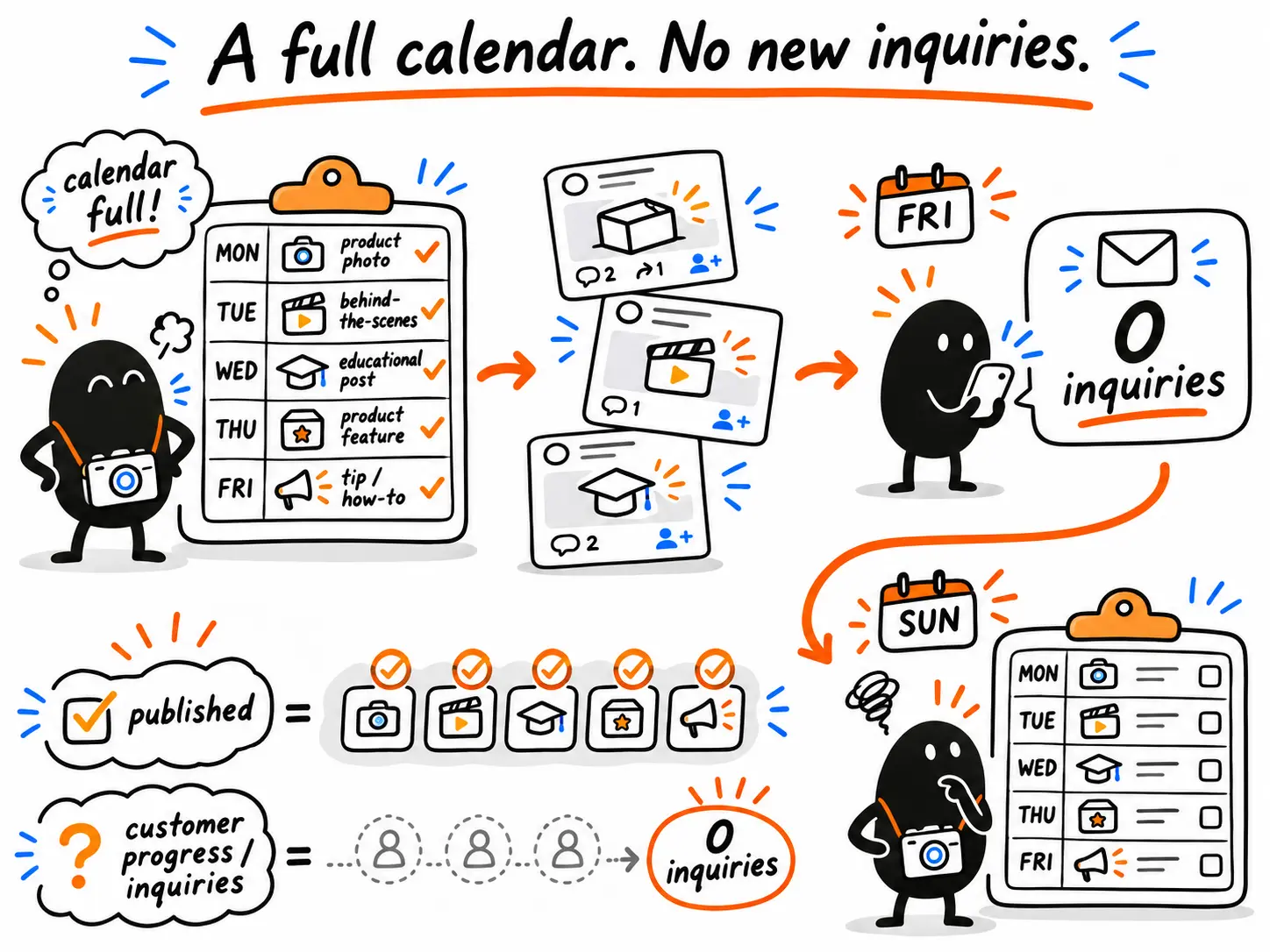
Imagine it’s Sunday evening and you’re planning another week of content for your business. Monday gets a product photo. Tuesday is a behind-the-scenes video. Wednesday needs something educational, so you scroll through your saved ideas until you find a question you could turn into a post.
Choosing photos takes longer than you expected. One caption sounds too promotional, so you rewrite it, and then the next one feels too generic. You change a few words, read it again, and decide it’s good enough.
Eventually, the calendar is full, and it’s a small relief. You’ve made dozens of decisions and taken one more thing off your mind.
All week, the posts go out as planned. A few people comment, someone shares a video, and you pick up some new followers. Then Friday arrives, you check your messages, and there are no new inquiries.
You tell yourself marketing takes time, and one quiet week doesn’t prove anything. Still, on Sunday you’re back at the same calendar, trying to decide what to post next.
The calendar answers one question very well: did everything you planned get published? It’s much worse at the question that matters more, which is whether any of it helped someone get closer to becoming a customer.
Why Posting Every Day Feels Like Progress
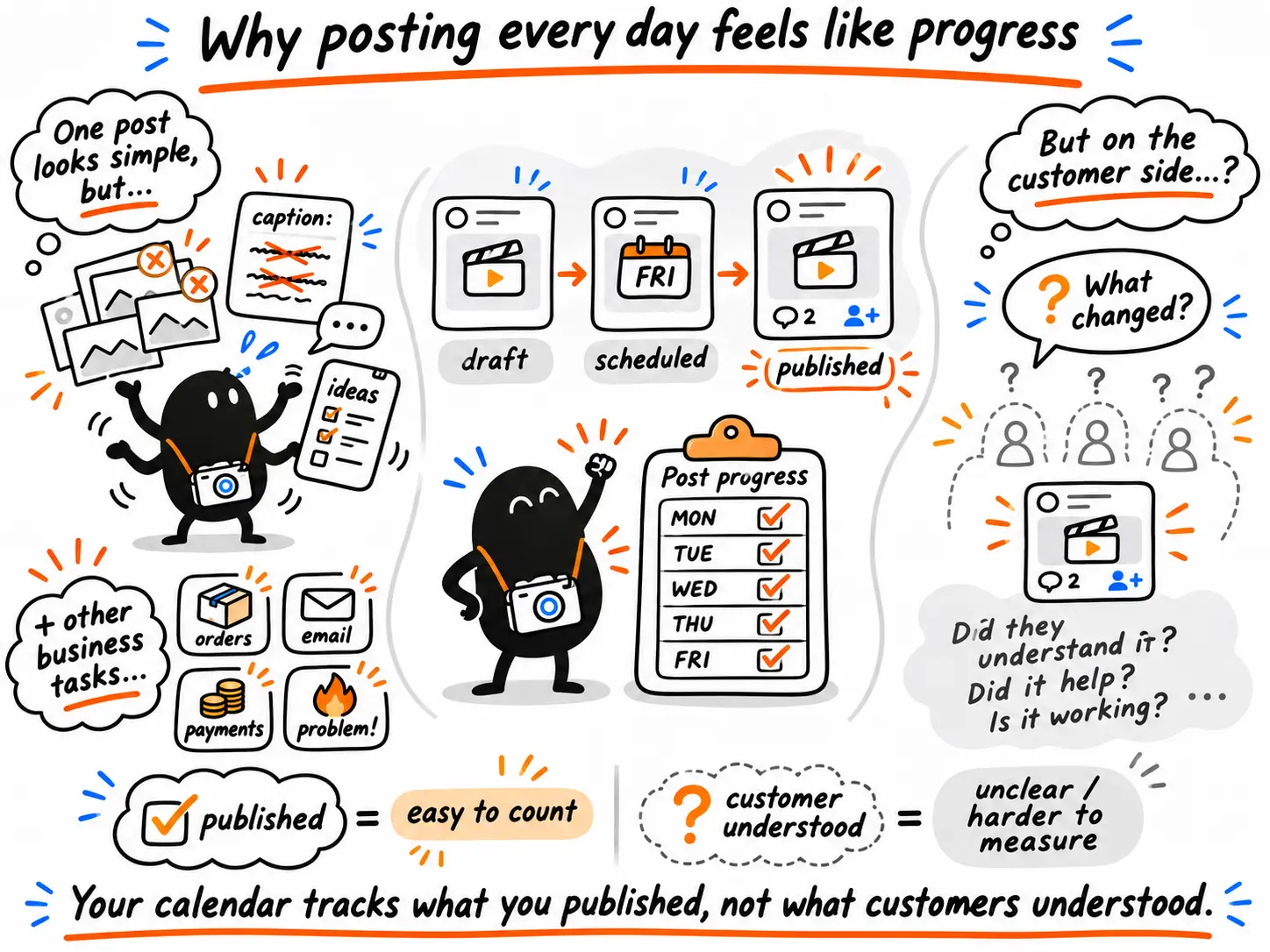
There’s a surprising amount of thinking behind an ordinary social media post. A customer sees a photograph and a caption. They don’t see the five other photographs you considered, the sentence you deleted, or the ten minutes you spent wondering whether your business sounded too formal. They don’t see you answering comments between customer calls or saving ideas over lunch.
And content is rarely the only thing competing for your attention. There are orders to fulfill, emails to answer, payments to chase, and problems that can’t wait until tomorrow. So when you manage to publish something every day, it feels like an achievement. It is one.
The trouble is that publishing gives you a very satisfying kind of progress. You can watch a post move from draft to scheduled to published, count it, and check it off. Knowing what that post changed for a potential customer is much harder, and when you’re short on time, it’s natural to track the progress you can see.
Your content calendar measures what you published. It doesn’t measure what your customers understood.
The Customer Questions Missing From Your Content Calendar
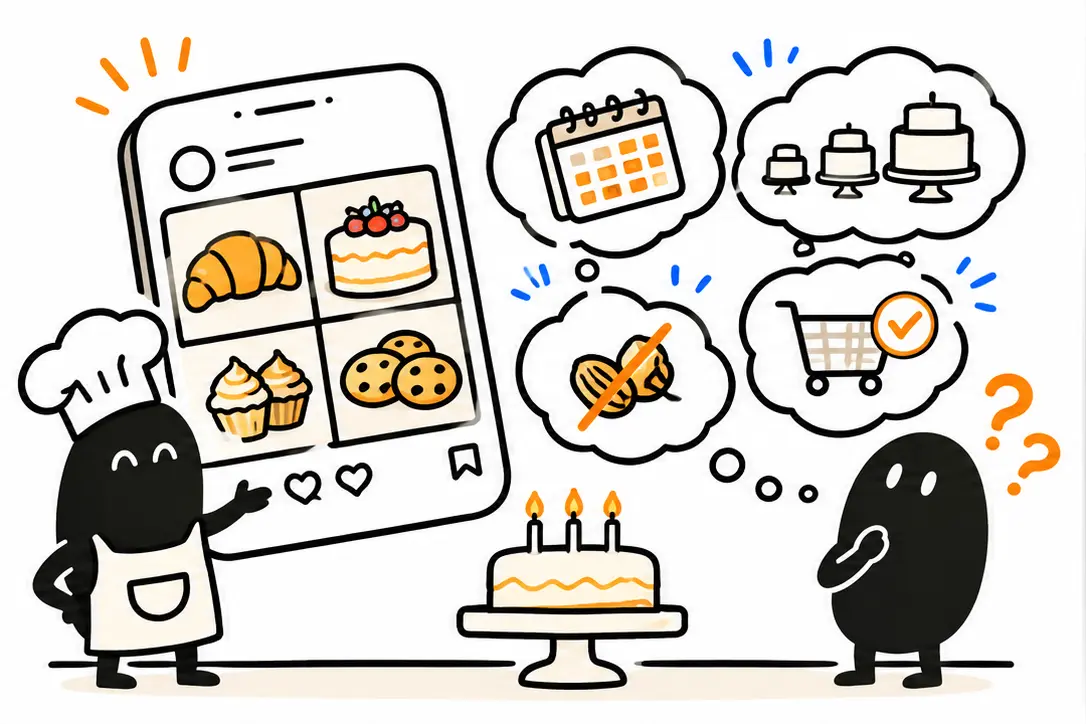
Picture a neighborhood bakery. It’s made up, but you’ve probably followed one like it. Its Instagram is full of beautiful photographs: croissants in morning light, a cake being decorated, and a tray of cookies coming out of the oven. The owner puts care into every post, and people seem to enjoy them.
The bakery also makes custom birthday cakes. A parent planning a party might love those photos and still not know the basics. How much notice does the bakery need? What sizes are there? Can they leave out nuts? How does ordering even work?
The owner has probably answered these questions dozens of times, and that may be exactly why they rarely make it into the calendar.
The longer you run a business, the more ordinary your own expertise becomes. You know which cakes need three days’ notice, which ingredients can be swapped, and what happens after someone places an order. None of it feels interesting anymore. It’s just how things work. But those ordinary details are often what a new customer needs most: the small customer pain points that make someone hesitate before reaching out. Because they’re so familiar to you, they’re easy to leave out.
The same gap can show up on a sales page, where a buyer is ready to book but one unanswered question gets in the way. In your social posts, it shows up week after week in what you choose to publish.
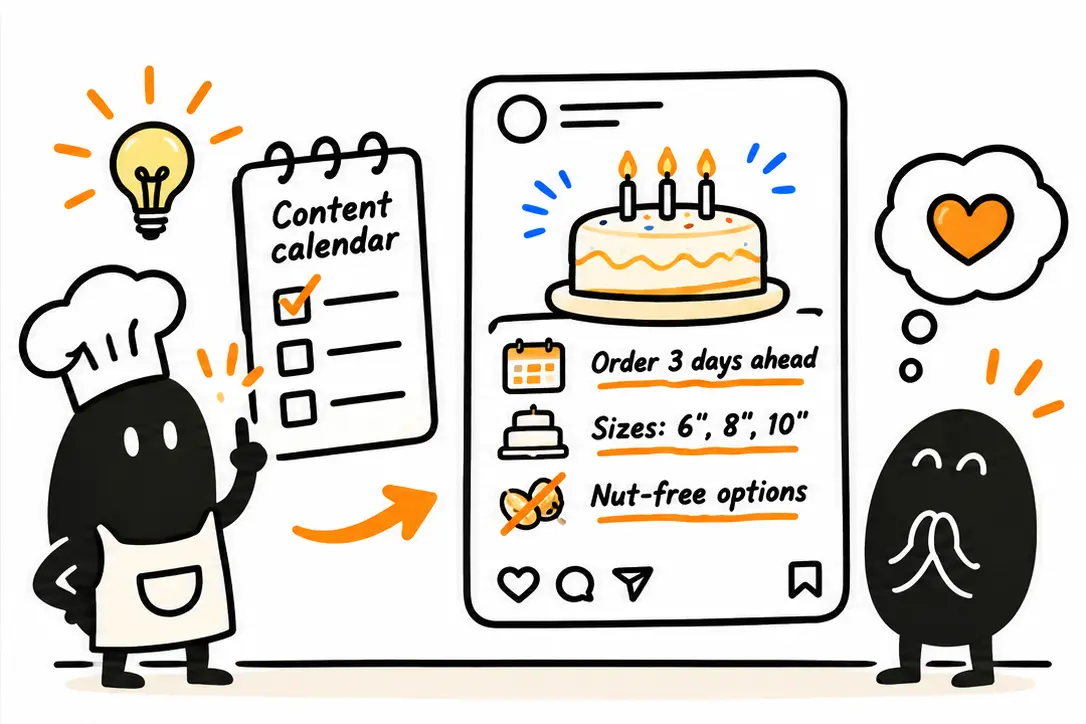
The bakery doesn’t have to give up its beautiful photographs. A cake-decorating video could mention how far ahead to order. A photo of a finished cake could show the sizes and where to find ordering details. The account would still look like the bakery. It would just make the next step easier for someone who’s close to buying.
Neither the owner nor the customer is wrong. They’re standing in different places. One is deciding what’s worth posting today, and the other is trying to figure out whether this bakery can handle one specific birthday. Experience makes you better at serving customers, and it also makes it easy to forget what they don’t know yet.
Add One Column to Your Content Calendar
Most content calendars are organized around dates, formats, and channels. There’s a place for the topic, the caption, the image, and the status of each post, and once everything is scheduled, the week looks finished. I think that’s where it quietly goes wrong: the calendar has a place for everything you need to post, and nowhere to write down what the reader needs to understand.
So add one more column: What does this help a potential customer understand?
It sounds small, but it changes how you plan. A product photo might help someone recognize what you sell. A behind-the-scenes video might show them how you work. An answer to a common question might make the next step feel less uncertain. Some posts can simply be fun, and that’s fine, as long as you know which job each post is doing.
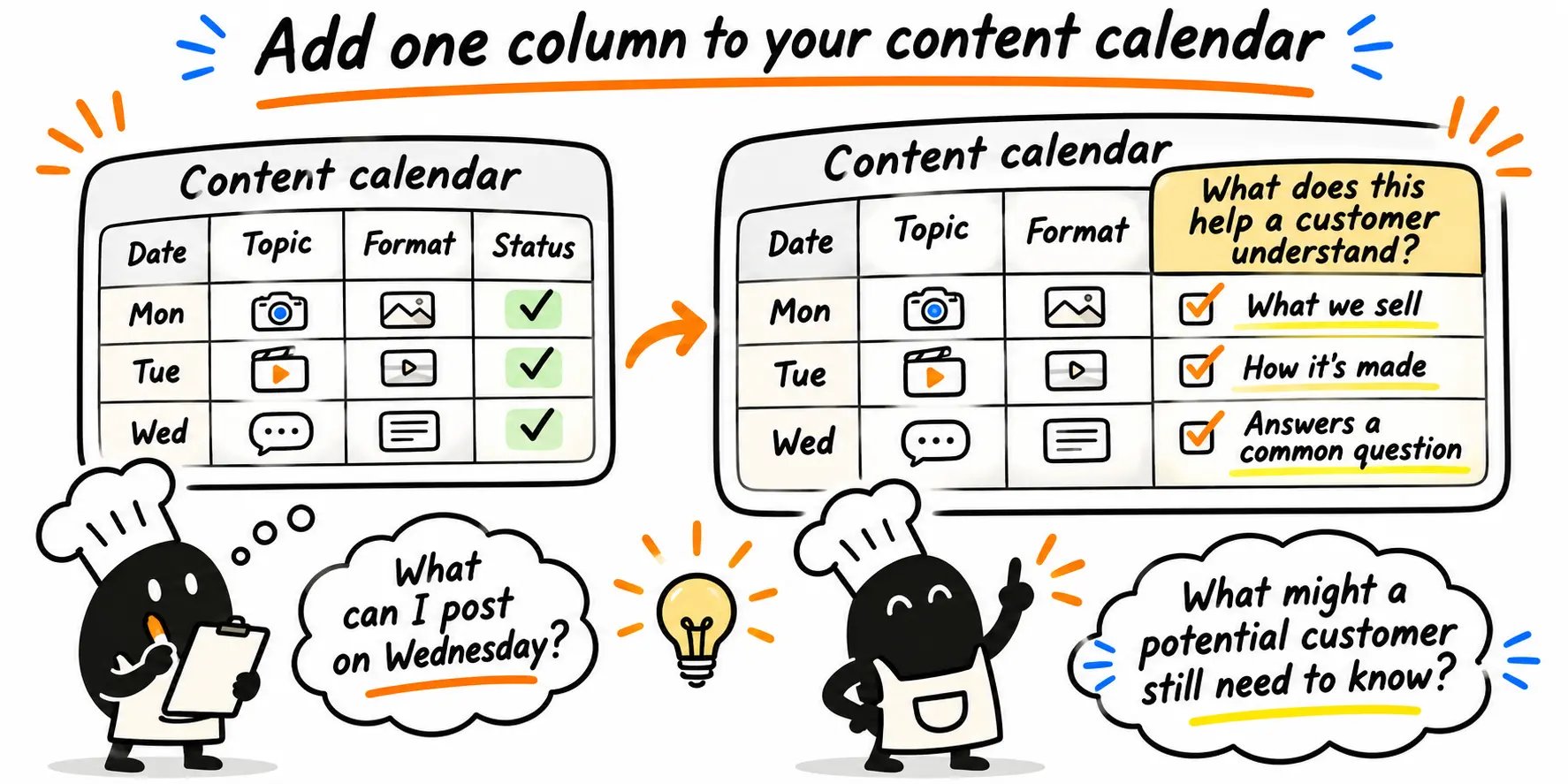
Instead of asking what to publish on Wednesday, you start asking what someone considering your business still needs to know. A post with lots of likes can still leave people unsure about your offer, while a quiet one answers the exact question that makes contacting you feel possible.
A Simple Test: Does Your Post Leave Buyers Guessing?
Before you plan another week, look somewhere other than the calendar. Open your customer emails and think back over recent conversations. What do people ask before deciding whether you’re right for them? You’ll probably find something you’ve answered so many times that you no longer think of it as a content idea.
It might be the question a dog groomer hears before every first appointment: how long will it take? Or the one a cleaning company gets on almost every call: do I need to be home? The answer feels too basic to post because you’ve given it a hundred times. But everyone who asks was interested enough to get in touch, and there may be others who wondered the same thing and never asked.
I’ve written about this pattern before in Your Best Campaign Idea Is Probably Hiding in a Complaint You Stopped Hearing. Repeated questions are easy to overlook precisely because they’re such an ordinary part of running the business.
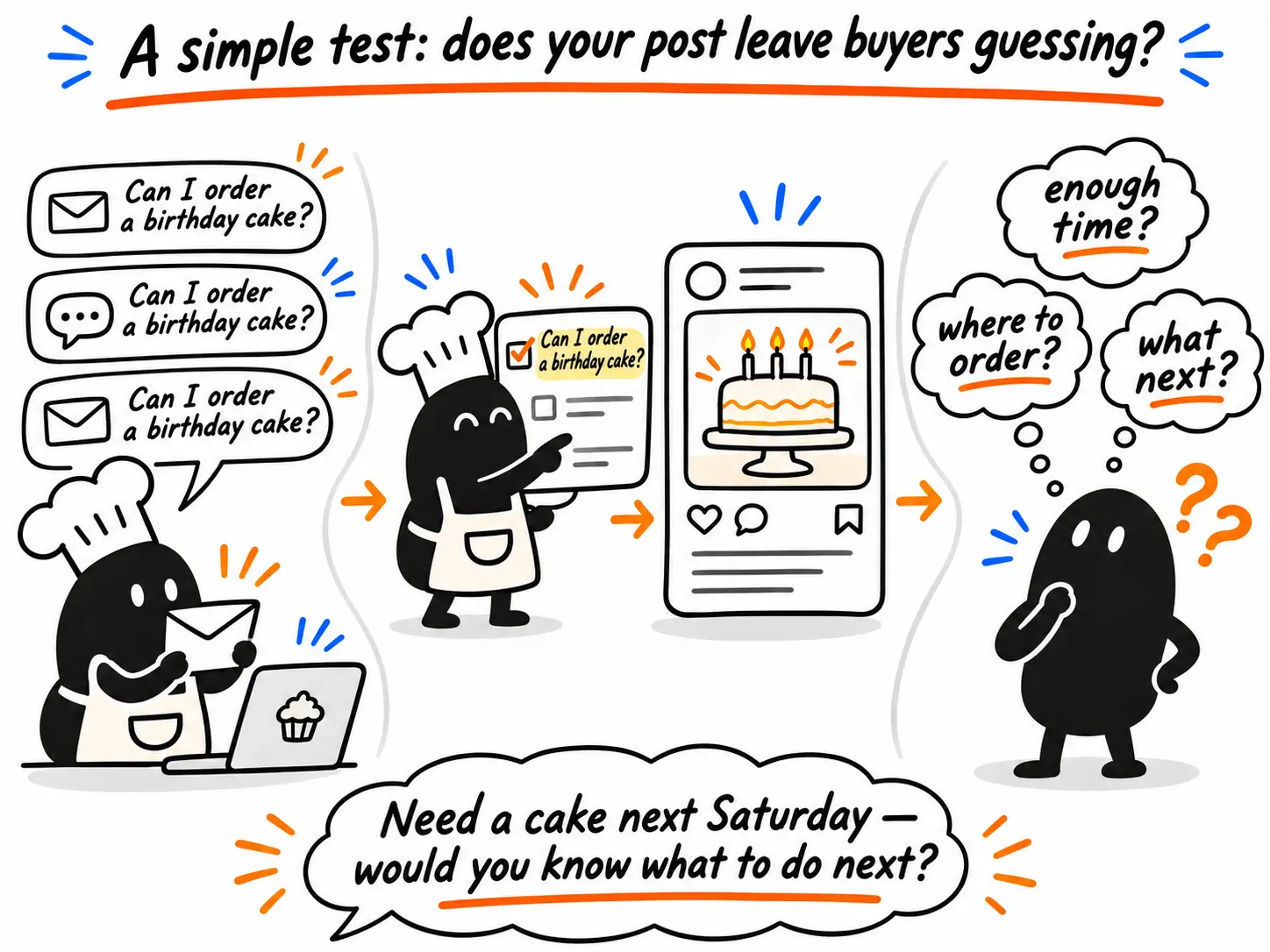
Pick one question and make it the subject of your next post. Then show that post to someone who might realistically buy from you but never has. For the bakery, that could be a parent with a birthday coming up, and the question would be: “If you needed a cake for next Saturday, what would you do next?” If they can’t tell whether there’s still time to order or where to find the details, you’ve found something worth fixing.
Three things are worth checking.
- What do they understand? Can they explain what you offer without relying on information you left out?
- Is it relevant to them? Can they tell who the offer is for and what problem it solves? Understanding an offer isn’t the same as wanting it, especially for people who don’t yet see the problem you solve.
- Do they know what comes next? If they were interested, would they know how to ask a question, get a quote, or place an order? If your posts already send people to your website and they still leave without buying, the gap may be on the page itself. These reasons visitors don’t convert are a good place to look.
This won’t predict sales. What it will show you is where your message still leaves people guessing.
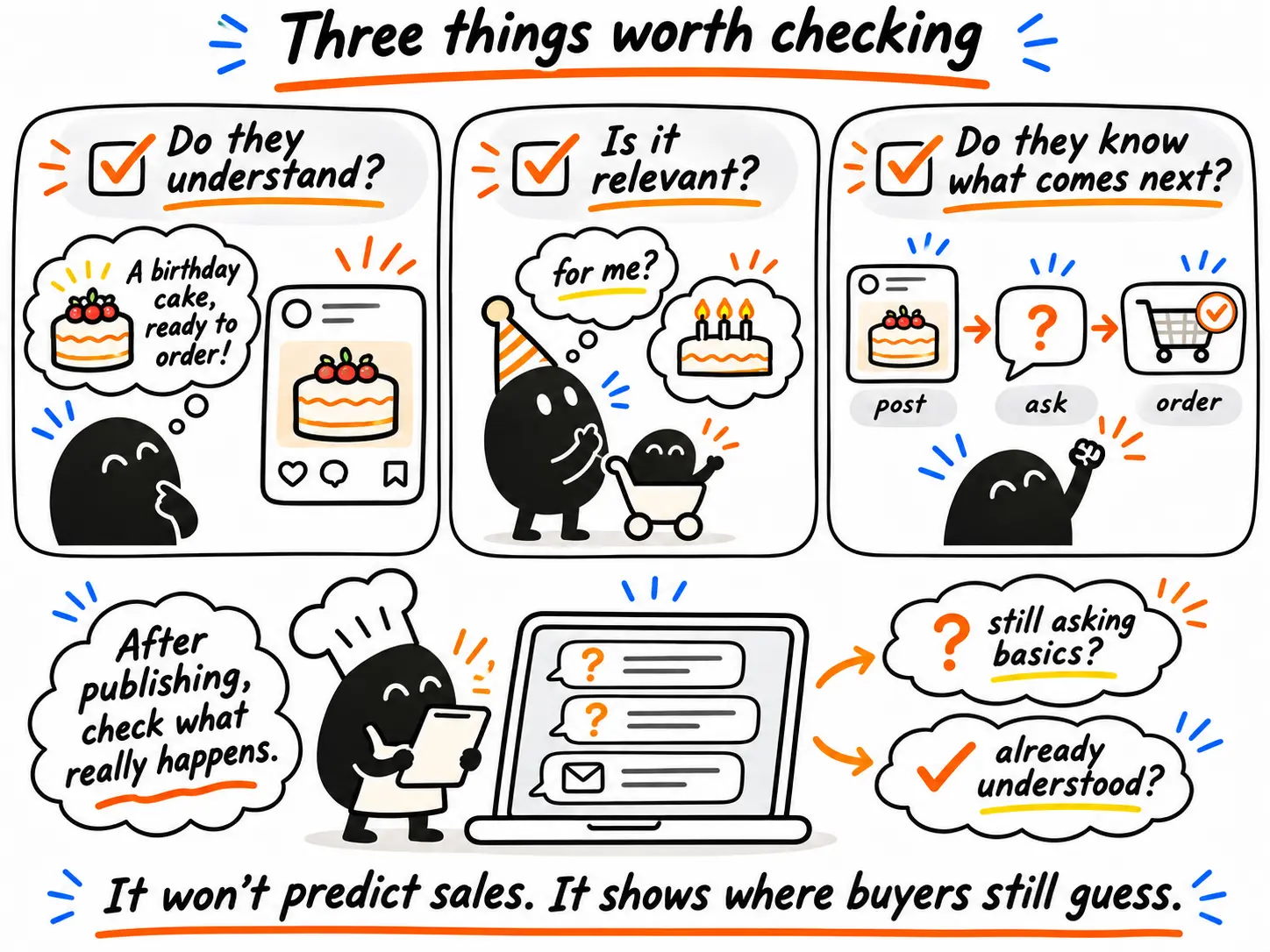
After the post goes live, pay attention to real conversations. Are people still asking the same basic questions? When someone mentions the post, what do they already understand, and what do they still ask? If inquiries are still rare, look at what you do have: questions in the comments, a DM asking about price, or the answers from the people you tested the post with. You may find your content was already doing its job. Or you may realize you’ve been explaining the important things in private messages while publishing something else entirely. Either way, your next decision rests on something better than a full calendar.
What a Full Content Calendar Should Mean
Posting every day can be the right choice. So can posting less and spending that time talking to customers. If you’re deciding where limited hours should go, it helps to prioritize marketing as a team of one. Either way, the calendar stays useful for organizing ideas and making room for marketing in busy weeks.
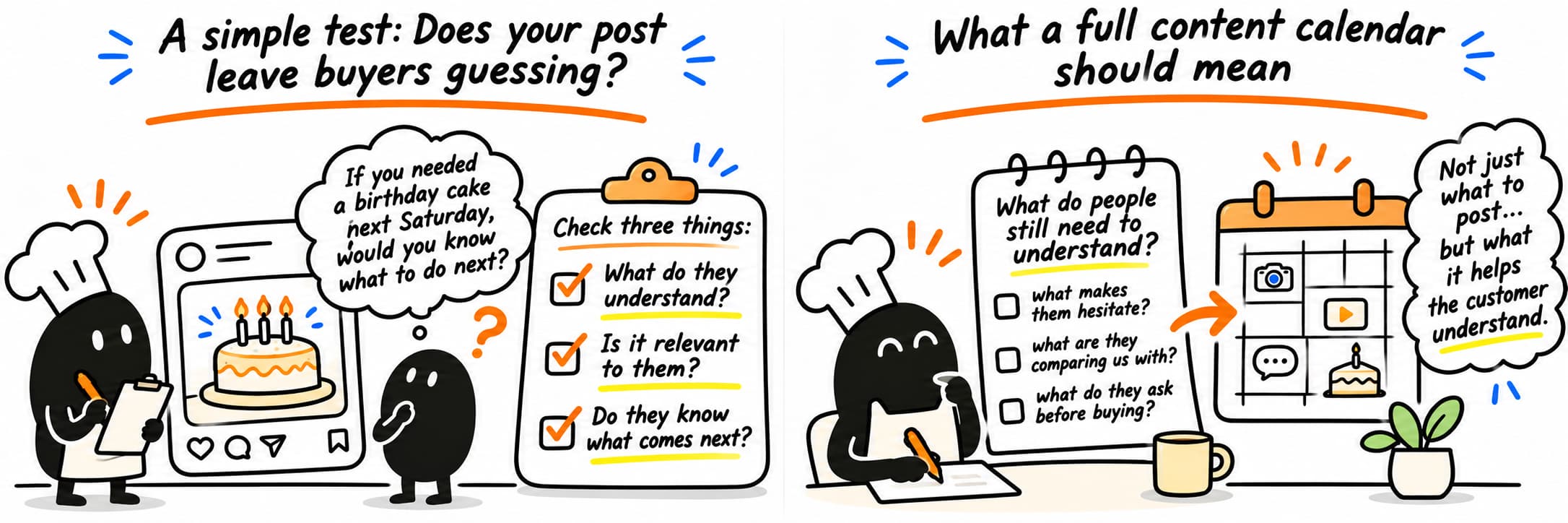
Next Sunday, though, before you assign posts to Monday, Tuesday, and Wednesday, leave the calendar empty for a few minutes. Write down what people still need to understand about your business: what makes them hesitate, what they’re comparing you with, and what they ask right before they’re ready to buy. Then decide which stories, photos, demonstrations, or explanations might help.
You may still publish five posts. And when Friday comes, there may still be no new inquiries, because a clearer message doesn’t guarantee an immediate customer.
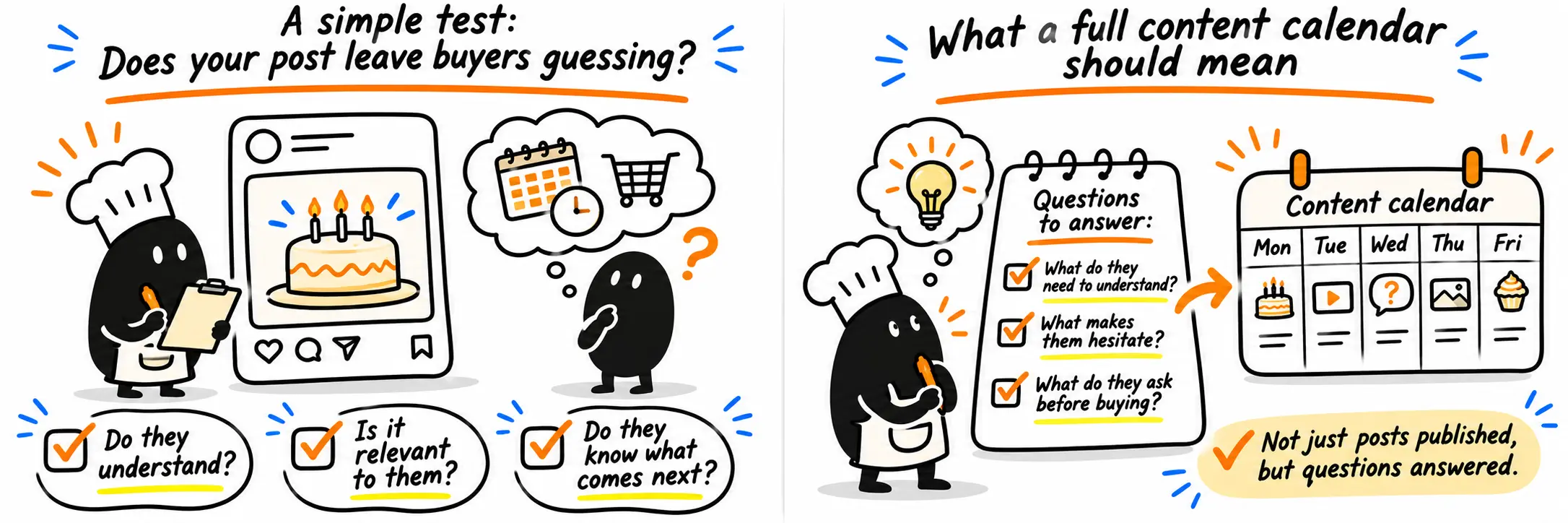
But you’ll know more than whether five posts went live. You’ll know which questions you tried to answer, what the responses told you, and which questions are still waiting.
That’s a more useful place to begin next Sunday.
FAQ
Why is my social media not bringing in customers? Sometimes the posts show what the business does but don’t answer the questions people have before buying, such as price range, timing, availability, or how to order. Engagement can be healthy while those questions stay unanswered. Look at the questions customers ask you privately and check whether any of your posts answer them.
Does posting every day help a small business get customers? It can help people discover and remember you, but frequency alone doesn’t explain your offer. Five posts that answer real buyer questions can do more than daily posts that don’t. How often to post depends on how much time you have and what else that time could go toward.
How do I know if my social media posts are working? Watch the conversations that follow. Repeated basic questions are worth checking: is the answer missing from your posts, hard to find, or simply not reaching the people who need it? If people mention your posts and arrive with a clearer understanding of your offer, that’s a useful sign. Look for patterns over several weeks rather than judging one post.
What should a small business post to get customers? Start with the questions you answer most often in emails, calls, and messages. Turn one of them into a post in the format you already use, such as a photo, a short video, or a behind-the-scenes clip. Then show it to someone who could be a customer but has never bought from you, and ask whether they’d know what to do next.
Running marketing on your own? Nova Express is being built around seven specialized AI marketing agents that share one business context, for solo marketers and small teams. It’s currently in pre-launch. Explore Nova Express.
Nova Express Resources
- AI Tools for Marketers in 2026
- Best AI Video Generators for Marketers in 2026
- 2027 Holiday Marketing Calendar
- 2026 Holiday Shopping Statistics: Spending & Trends
- GPT Image 2 for Marketers: How to Finally Get Readable Text in AI Images
- Do Sales Funnels Still Work? Why More Steps Don’t Mean More Sales
- Nano Banana Pro: The Complete Guide for Marketers 2026
- What Are AI Tokens? A Marketer’s Guide to Context, Cost, and Limits
- AI Image Color Palette: How to Borrow One From Nature
- Nano Banana Prompts
About the author
Serafima Osovitny is a Marketing Manager at Nova Express, where she focuses on digital marketing, search visibility, content strategy, and marketing workflows. She writes practical guides that help marketing teams research their audiences, develop strategies, and put their plans into action.
Explore her work at serafima.digital and follow her on X: @OSerafimaA.







Leave a Comment