

For a small business owner, asking for a review can feel awkward, especially when a customer has just said something kind.
Picture a neighborhood baker who starts work at five in the morning. By opening time, the first croissants are cooling, and the coffee is brewing. Someone wants a birthday cake by Saturday. A regular stops in for their usual order. Before noon, the almond croissants are gone, and he’s explaining to the next customer when there’ll be more.

Near closing time, someone takes the last bite of a pastry and says, “That was the best croissant I’ve had all week.” It’s the kind of compliment a small business owner might carry home. And somewhere in that moment is a question the baker might hesitate to ask: would you mind leaving us a review?
So how do you ask without making that moment awkward? If your review platform allows requests, keep the invitation brief and neutral, make the link easy to find, and let customers decide whether to respond.
Why a simple request can feel uncomfortable
For a small business owner, a review can be valuable. It gives someone who has never visited the shop a glimpse of what customers experienced, and it’s one of the ways a first-time visitor decides whether a business can be trusted. Being hard to verify is one of the common reasons website traffic doesn’t turn into sales.
But the person standing at the counter may see the situation differently. They came in for a croissant, paid for it, enjoyed it, and said something kind. Now they’re being asked to do something else.

Even a friendly request can feel like an obligation when it comes from the person who just served you. Perhaps the owner is standing there waiting for an answer. Perhaps other customers are listening. Perhaps saying no feels unnecessarily rude.
The business owner might be thinking about how difficult it is to get noticed, while the customer might simply be thinking about getting home. Neither person is doing anything wrong. They just have different reasons for being in that conversation, and that’s what makes asking for reviews more delicate than it first appears. The words matter, but so does the freedom to decline without having to explain yourself.
Give people an invitation they can ignore
Consider two ways a bakery might ask for feedback. Here’s one that can create pressure:
We’d really appreciate a five-star review. It would mean so much to our small business.
And here’s one that leaves room to say no:
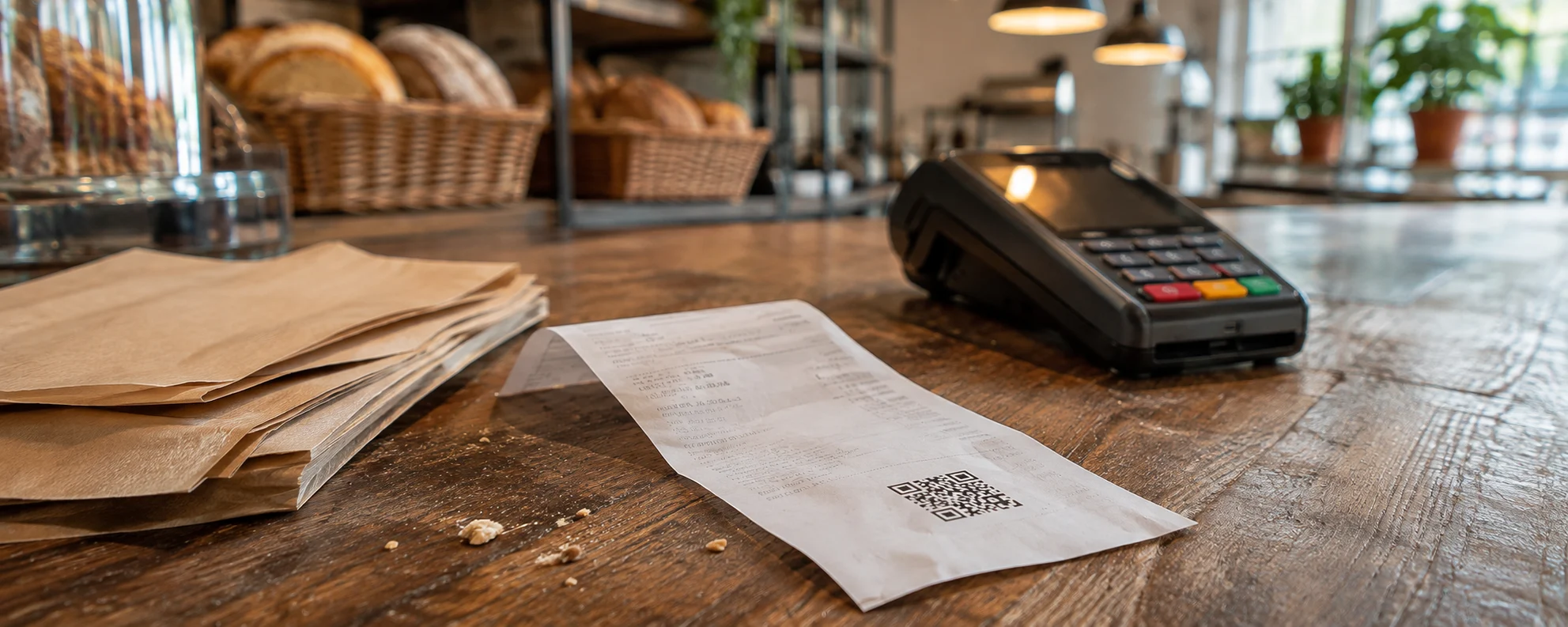
Thanks for visiting. If you’d like to share your experience, there’s a review link on your receipt.
The second version doesn’t require the customer to reassure the owner, promise anything, or decide on a rating before they’ve even opened the review page. It’s also easier to ignore.
That may sound like a disadvantage if the goal is to collect as many reviews as possible. But a review request shouldn’t become another part of the service that customers feel required to complete. A customer who enjoyed the experience may choose to write something. Someone else may have useful criticism. And many people simply won’t leave a review. All three responses are possible, and the invitation needs to leave room for them.
There’s another detail worth considering. It’s tempting to ask only when someone offers a compliment, because that seems like the perfect moment: the customer is happy, and the owner knows it. But if you only invite feedback after a compliment, you’re not giving every customer the same opportunity to share their experience. A more balanced approach is to make the same neutral invitation available to everyone, whether they seem delighted, disappointed, or somewhere in between.
Platform rules matter here, too. Google allows businesses to invite genuine reviews, but its Maps content policy says merchants shouldn’t selectively ask for positive reviews, offer discounts or free goods in exchange for any review, pressure customers to leave a rating while they’re still on the premises, or ask for reviews that include specific content. Yelp goes further. Its guidance for businesses asks owners not to request reviews from anyone at all and warns that reviews that look prompted may not be recommended.
The same rule applies to software. Some review tools first ask customers how their visit went and show the Google link only to people who pick four or five stars. That’s the selective asking Google rules out, and the U.S. Federal Trade Commission (FTC) gives the same advice in its guide for marketers: don’t ask for reviews only from customers you think will leave positive ones. Before building a review process, check what the platform actually permits and what any tool you use does behind the scenes.
Make the next step easy, then let it go
A customer shouldn’t need to search for the business, guess which listing is correct, or follow a complicated set of instructions. For platforms that permit review invitations, a short link or QR code can make the process easier. Google Business Profile has a tool for this: open Read reviews, then Get more reviews, and copy the link or save the QR code.
A bakery might print a small message at the bottom of every receipt, and a local service business might include a review link in its standard follow-up message after the job is complete. That message can be just as short:
Thanks for choosing us to repair your dishwasher. If you’d like to share your experience, here’s the review link: [link]
It goes to every customer once the job is done, whether everything went perfectly or not. Sending it later, instead of asking in person, also means nobody has to answer while you’re standing in front of them.

What matters most is what happens afterward. Once the invitation is there, let the customer decide. They don’t need to open the link at the counter or promise to write something later, and there’s no reason to interrupt the conversation again to ask whether they remembered. The request has already done its job by making an option available. The invitation should feel as ordinary as telling someone where to find the opening hours.
Read the words, not just the stars
Getting a review is only part of the work. Imagine the bakery receives two comments. One says the croissants are excellent and the staff is friendly. The other reads like this:
The birthday cake was delicious, but picking it up was confusing. My confirmation email said to come to the side door, so I waited there for ten minutes before someone told me orders are handed out at the front counter.
It’s easy to know what to do with the first comment: thank the customer, perhaps share the compliment with the team, and move on. The second requires more attention. A defensive response might explain how busy the bakery was that day or insist the front counter was mentioned on the website. A more useful response would acknowledge the experience and look into what happened:
Thank you for telling us. I’m glad you enjoyed the cake, and I’m sorry the pickup instructions left you waiting. I’ll check our confirmation email so we can make the directions clearer.

That response doesn’t promise a solution that hasn’t happened yet. It simply treats the customer’s experience as information worth examining. Public replies can help other readers understand how a business handles problems, and they remind the owner that reviews are conversations with people, not just ratings attached to a profile.
Sometimes the most useful review isn’t the nicest one
Suppose several customers mention that they weren’t sure where to pick up their orders. The owner could reply to each review individually and consider the matter closed. Or they could walk through the ordering process as if they were visiting for the first time. Is the pickup information easy to find on the website? Does the confirmation message explain which door to use? Is there a sign inside the shop? Perhaps everything is clear, or perhaps one small sentence needs changing. The repeated comments don’t prove the cause of the problem, but they give the owner somewhere specific to look.
This is where reviews become more useful than a collection of compliments. A thoughtful review might reveal something a customer expected but didn’t receive or point to a detail that employees have stopped noticing because they’re so familiar with the process. Competitors’ reviews can offer useful clues, too: recurring complaints in their one- and two-star reviews may point to customer pain points worth investigating.
Of course, one unhappy review doesn’t automatically mean the whole business needs to change. People have different expectations, and occasionally a complaint reflects something outside the owner’s control. But when similar comments appear repeatedly, there’s a reason to investigate. Feedback isn’t limited to what it tells future customers. It can also help a business notice what the owner has become too accustomed to seeing. If familiar complaints have started to sound like background noise, the article on campaign ideas hiding in customer complaints explains how to notice them again.
Back at the bakery
The next time someone tells the baker the croissant was wonderful, he can simply say thank you. He doesn’t have to turn every compliment into an opportunity. If he uses a review platform that permits requests, he can keep a small, neutral invitation on every receipt, and customers who want to share their experience will know where to go.
When the reviews arrive, he can read them with the same attention he gives to the questions people ask at the counter. One person may mention the croissants, while another points out that the pickup instructions need work. Both have told him something.
He starts baking at five in the morning, and by the time the shop closes, he’s done plenty of things his customers never see. He doesn’t need them to write about how hard he works. He needs to know what it was actually like to buy from him.
Frequently asked questions
Is it OK to ask customers for Google reviews?
Yes. Google allows businesses to invite genuine reviews as long as the request stays neutral: no incentives, no pressure while the customer is on the premises, and no asking only the customers who seem happy. The simplest approach is to make the same invitation available to everyone, such as a review link on every receipt, and let customers decide whether to use it.
How do you ask for a review without sounding pushy?
Keep the request brief and optional: “Thanks for visiting. If you’d like to share your experience, there’s a review link on your receipt.” Make the next step easy, then let the customer decide. There’s no need to wait for them to open the link or promise to write something.
Does Yelp allow businesses to ask for reviews?
No. Yelp’s official guidance tells businesses not to ask anyone for reviews and warns that reviews that appear prompted may not be recommended. Instead, Yelp recommends focusing on a memorable customer experience without asking for a review in return.
How should a small business respond to a negative review?
Acknowledge the specific problem without getting defensive, apologize where it’s warranted, and look into what happened before promising a fix. A calm public reply shows future customers how the business handles problems, and repeated complaints often point to a process worth changing.
Running marketing on your own? Nova Express is being built around seven specialized AI marketing agents that share one business context, for solo marketers and small teams. It’s currently in pre-launch. Explore Nova Express.
Nova Express Resources
Explore more guides from the Nova Express Blog on understanding your audience, planning seasonal campaigns, and choosing marketing tools.
Marketing Strategy
Holiday Shopping Insights
- Black Friday Statistics 2026: Spending Forecasts & Shopping Trends
- 2026 Holiday Shopping Statistics: Spending & Trends
AI Research and Planning
About the author
Serafima Osovitny is a Marketing Manager at Nova Express, where she focuses on digital marketing, search visibility, content strategy, and marketing workflows. She writes practical guides that help marketing teams research their audiences, develop strategies, and put their plans into action.
Explore her work at serafima.digital and follow her on X: @OSerafimaA.







Leave a Comment