

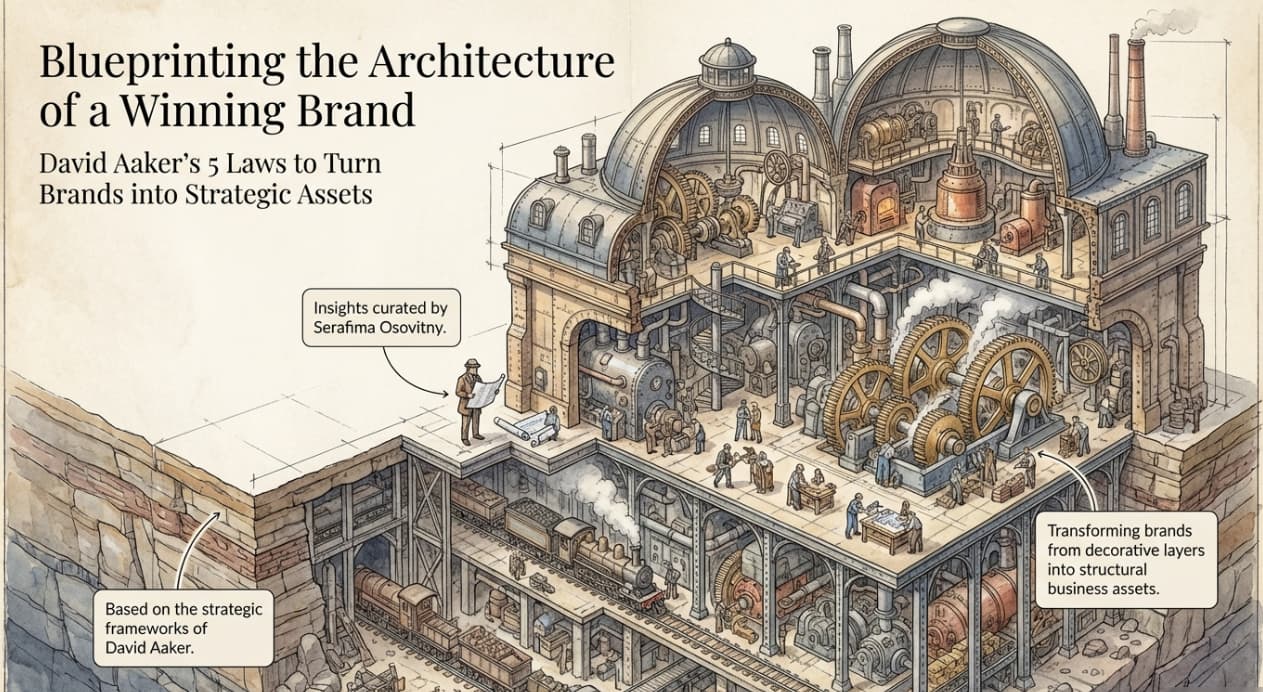
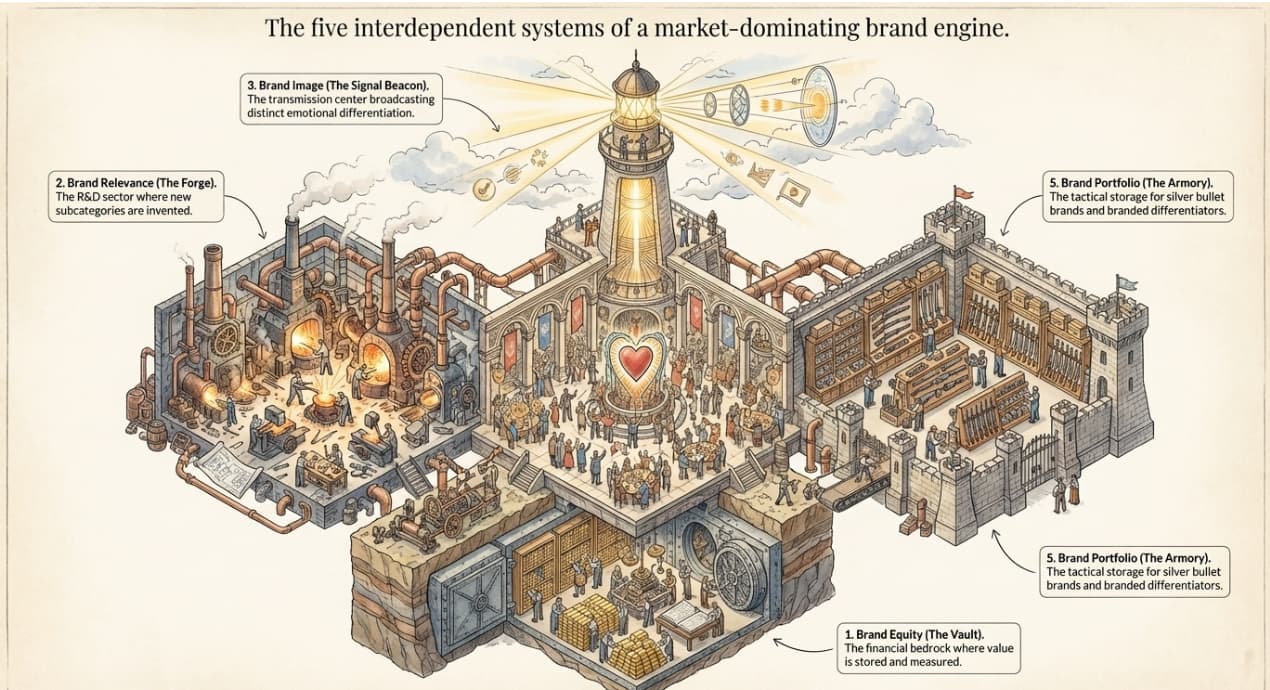
If your brand feels like background noise despite a solid product and budget, the problem isn’t your strategy; it is the fundamental game you’re playing. David Aaker, the “father of modern branding” and author of 18 books, has spent decades proving that brand equity is a growth engine rather than a cost center. In the updated edition of Aaker on Branding, he unpacks his “5Bs” framework: Brand Equity, Relevance, Image, Loyalty, and Portfolio.
Most companies mistake logos and taglines for branding, but Aaker argues that real branding must be deep and organizational. This system moves beyond surface-level “decorations” to build brands that drive actual growth. This article breaks down each of the 5Bs with real-world examples, showing why mastering them is the crucial difference between lasting success and being forgotten.
1. Brand Equity: It is an Asset, Not a campaign.
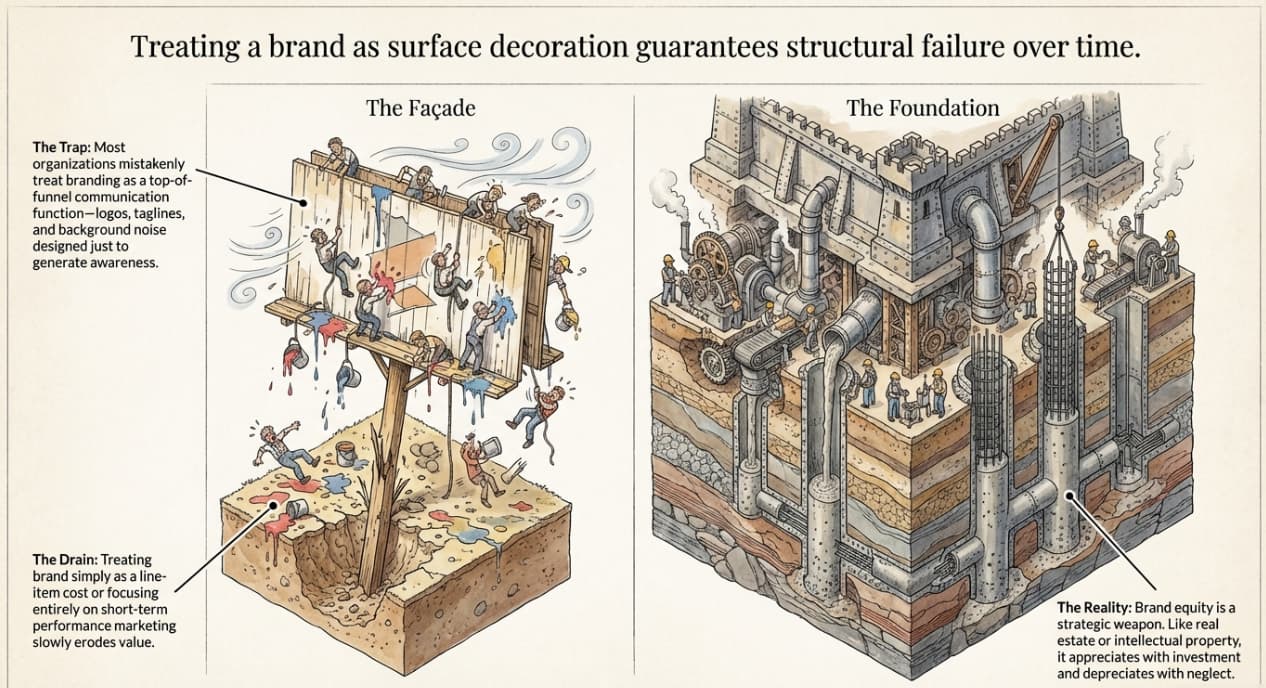
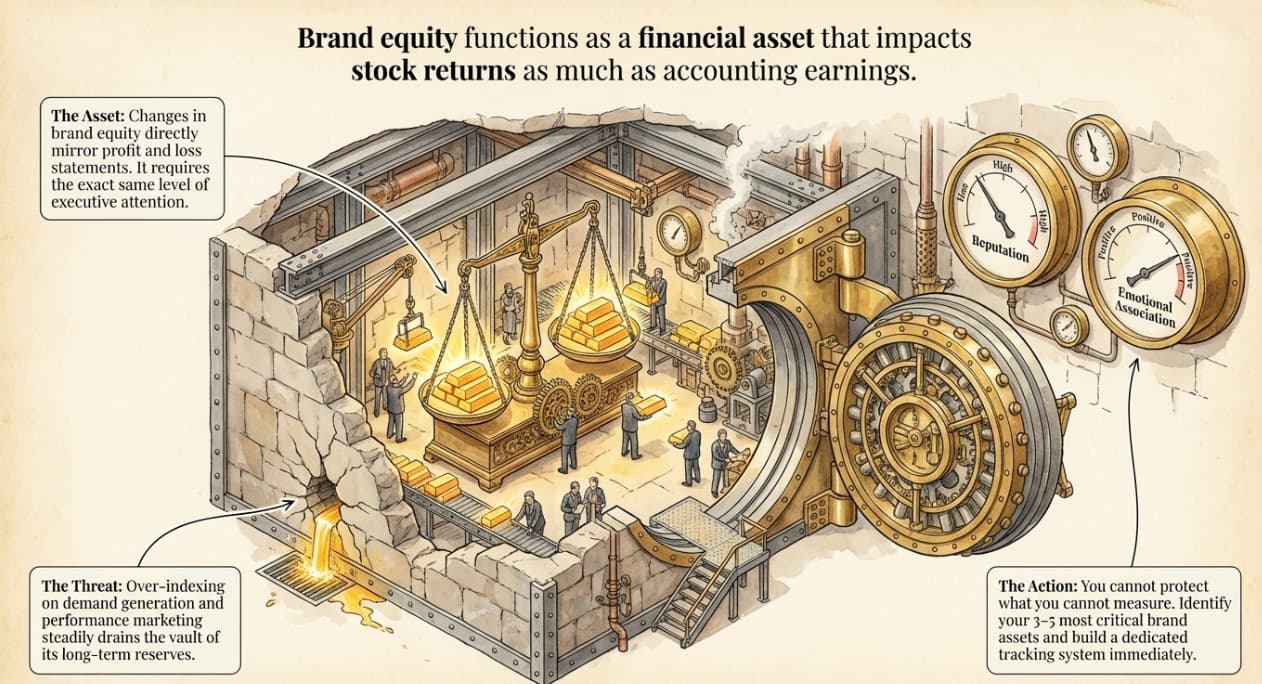
Most organizations mistakenly treat branding as a communication function designed to generate awareness. Aaker argues this is fundamentally backwards because brand equity is a strategic asset. Much like real estate or intellectual property, it appreciates with investment and depreciates with neglect. The moment you view branding as a line item instead of an investment, you have already lost.
The modern temptation to focus solely on “demand marketing” or “performance marketing” often erodes brand equity. Aaker’s statistical analysis reveals that changes in brand equity have nearly as much impact on stock returns as accounting earnings. Your brand is literally as valuable as your profit and loss statement, yet it rarely receives the same level of executive attention.
To protect this asset, you must first be able to measure it. Ask your leadership team what your brand is worth; if they cannot answer, you have a measurement problem. Start by identifying your three to five most critical brand assets, such as reputation or emotional associations, and build a dedicated tracking system around them.
2. Brand Relevance: Stop competing. Start creating.
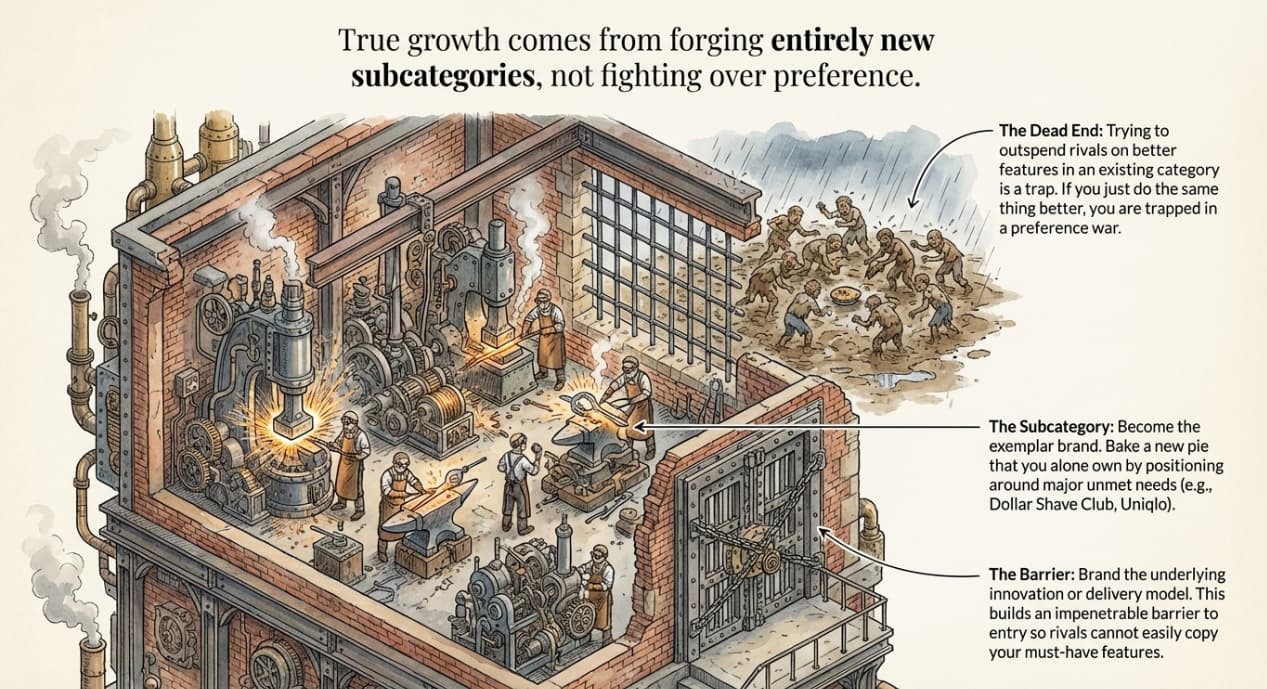
Conventional marketing focuses on brand preference; it encourages you to outspend rivals and highlight superior features. Aaker calls this a dead end. His research shows that real growth comes from creating entirely new subcategories where competitors are not even part of the conversation. The single best predictor of success is not the size of your budget but how significantly your offering differs from what already exists.
To achieve this, you must become the “exemplar brand” for your new subcategory. This involves two critical tasks: positioning the subcategory around “must-have” features that customers cannot find elsewhere and building barriers to entry. Successful brands like Uniqlo or Dollar Shave Club do not just sell products; they brand the underlying innovation or delivery model so that competitors cannot easily copy them.
If your strategy is simply to do the same thing better than others, you are trapped in a preference war. To break free, identify one major unmet need in your market and build your entire positioning around it. Ask yourself whether you are fighting for a larger slice of an existing pie or if you have successfully baked a new one that you alone own.
3. Brand Image: If You’re Not Different, You’re Invisible
Most companies make the same mistake: they define their brand by what they do rather than how they are different. David Aaker says it clearly: the phrase “we sell software” is just a job description, not a brand image. In today’s crowded world, where people are overwhelmed by information and constant ads, being unique is the only way to stand out. If your message is too safe and forgettable, it effectively disappears.
To build a resonant image, Aaker suggests three strategies. First, invest in emotion and high-impact content that has the potential to go viral. Second, look beyond traditional advertising toward experiential marketing and sponsorships that sidestep ad fatigue. Third, use specific taglines to anchor your campaigns. A well-chosen tagline ensures that your marketing efforts are not just ad hoc noise but part of a cumulative, durable brand story.
To test your current positioning, ask whether a competitor could claim the same thing. If the answer is yes, you are not yet differentiated. You must rewrite your positioning around a unique claim that your audience genuinely values, ensuring it is something only your brand can authentically own.
4. Brand Loyalty: The Equity Nobody Talks About
Most marketers treat loyalty as a mere output of a successful brand, but Aaker argues that loyalty is the equity. When you acquire a brand, you are primarily acquiring its loyal customer base; without that foundation, the brand remains an empty shell. This shift in perspective means loyalty is not something to measure after the fact but an asset to be actively built and protected. Consequently, chasing new customers at the expense of existing ones is a fundamental strategic mistake.
Aaker elevates this concept through brand communities, which represent the ultimate expression of loyalty. In these communities, members share a passion and derive self-expressive value from belonging, while the brand acts as a fellow member rather than a distant broadcaster. Examples ranging from Harley-Davidson to Sephora demonstrate that when a brand facilitates shared interests or social causes, it transcends the product and creates a durable bond that digital tools now make easier than ever to maintain.
To apply this, identify the shared passion that unites your best customers, which is usually something broader than your specific product. Design one initiative, such as a forum or a social cause, that brings them together around this interest. By connecting your brand to what they already care about, you move from simple transactions to a self-sustaining community.
5. Brand Portfolio: Nobody Wins Alone
Growth-oriented brands rarely rely on a single identity; instead, they manage a portfolio of supporting sub-brands and what Aaker calls “silver bullet brands.” These are branded features, processes, or programs specifically designed to differentiate the product, energize the brand, or provide credibility. If your core differentiator lacks a name and a visual identity, it remains difficult to communicate and prioritize, making it easy for competitors to claim they offer the same value.
Strategic assets such as the “HP Way” or Dove’s “Real Beauty” campaign demonstrate how branding a culture or a social program can transform a business. Aaker emphasizes that most brands eventually need an injection of energy. A branded energizer, whether it is a sponsorship or a creative partnership, allows a company to transcend a basic product category. For example, while a bar of soap may be inherently unexciting, a branded program tied to self-esteem creates a powerful emotional connection that drives massive growth.
To unlock untapped equity, identify your company’s three primary competitive advantages and determine if they are currently branded. If they are not, select the most impactful differentiator and give it a unique name and identity. By turning a feature into a “silver bullet brand,” you create a managed asset that is far more difficult for rivals to replicate authentically.
The Bottom Line
Aaker’s framework isn’t about logos or color palettes. It’s about a fundamental mindset shift: brands are strategic assets, not communication tasks.
Build equity by investing long-term, not just chasing short-term results. Create relevance by inventing new subcategories instead of fighting for preference in the old ones. Differentiate your image so aggressively that competitors can’t claim the same thing. Treat loyalty as the core of your equity, not a byproduct. Build a portfolio of branded elements that work together, because no brand wins alone. And tell a signature story that makes your brand unforgettable.
The brands that will win in 2026 and beyond aren’t the ones with the biggest budgets. They’re the ones that understand branding is strategy, and strategy is everything.
Nova Express Resources
- Customer Pain Points: Why Your Marketing Isn’t Working
- AI Tools for Marketers in 2026
- NotebookLM for Marketers
- Stop Selling to People Who Don’t Know They Have a Problem
- Nano Banana Pro: The Complete Guide for Marketers 2026
- Storytelling elements for high-converting marketing campaigns
- 7 Midjourney V7 Prompts for Marketing Ads
- NotebookLM Infographic: The Complete Guide to Turning Your Data Into Visual Stories
- Brand DNA: The Missing Piece Between Your Brand and AI
About the author
Serafima Osovitny is a Marketing Manager at Nova Express, where she focuses on digital marketing, search visibility, content strategy, and marketing workflows. She writes practical guides that help marketing teams research their audiences, develop strategies, and put their plans into action.
Explore her work at serafima.digital and follow her on X: @OSerafimaA.








Leave a Comment