

Imagine a photographer who decides to offer photo sessions for independent professionals and small brands. Everyone gives him the same advice: build a funnel first. Don’t sell the session right away. Introduce yourself, build a relationship, and gradually lead people toward the purchase.
He spends six weeks creating a free guide called “How to Prepare for Your Photo Session,” writing a sequence of five emails, recording a webinar, and building a long sales page with a countdown timer at the bottom. Launch week arrives. A couple hundred people download the guide, a handful attend the webinar, and nobody books.
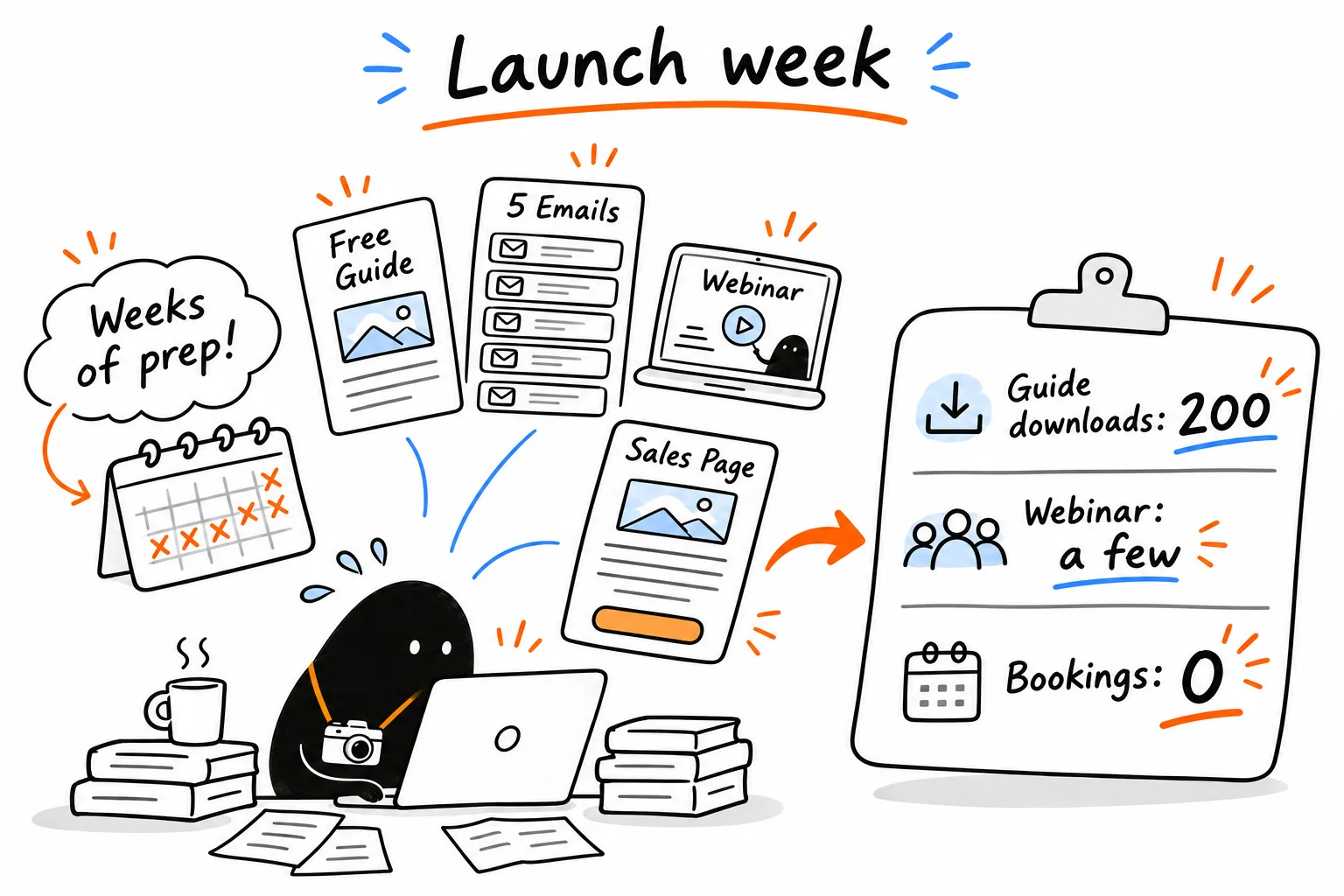
The tempting conclusion is that funnels are dead.
It’s a convenient explanation. The problem wasn’t the offer, the audience, or the six weeks of preparation. The model simply stopped working.
But imagine the person on the other side of that funnel. They really do need new photos for their website and social media. They like the photographer’s work. The price seems reasonable. But they don’t know how to pose, have no idea what to wear, and can already picture themselves standing awkwardly in front of the camera.
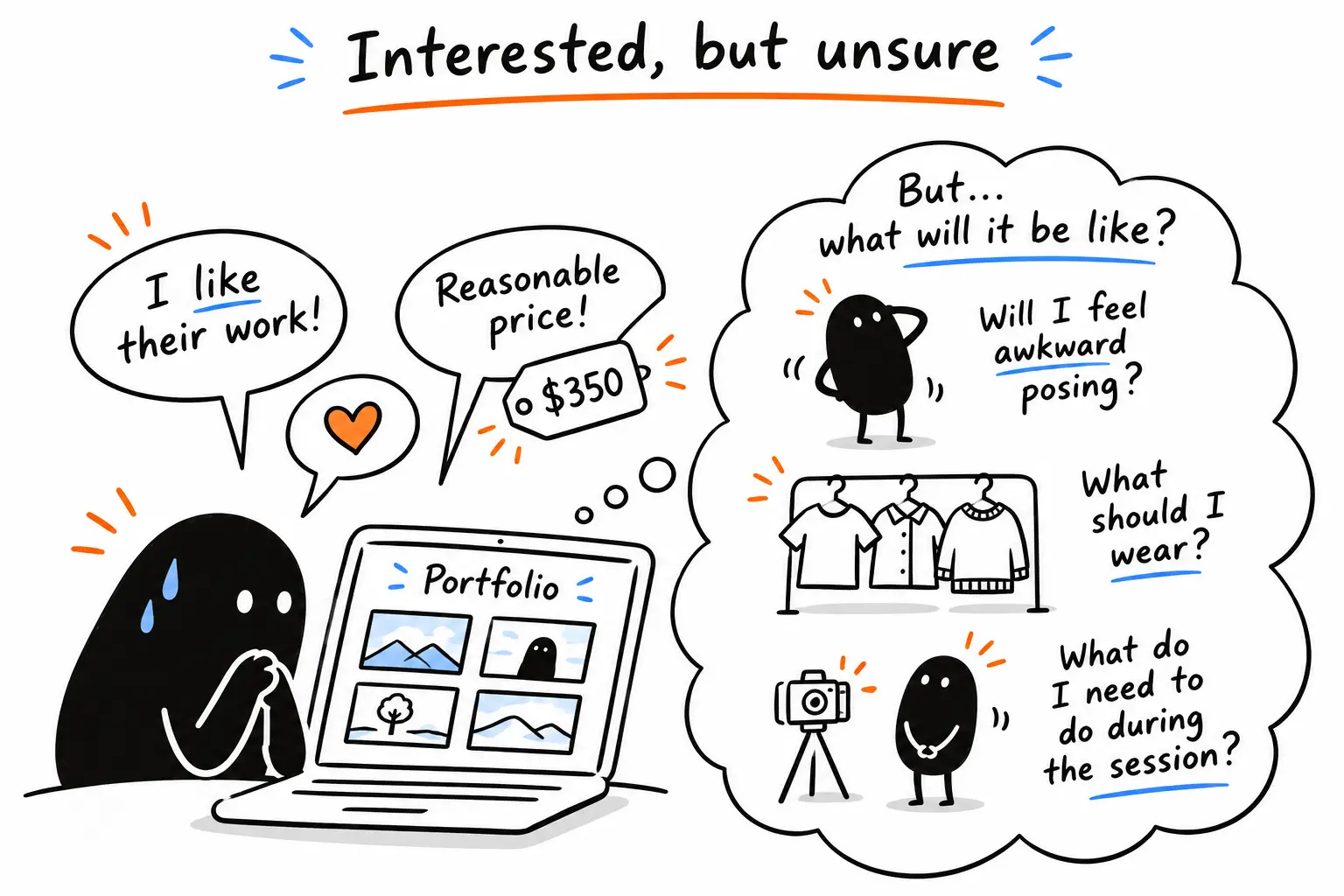
The photographer sends them an email about the importance of a strong visual identity. They’re waiting for an answer to a different question: “Will you help me with all of this, or am I supposed to arrive knowing what to do?”
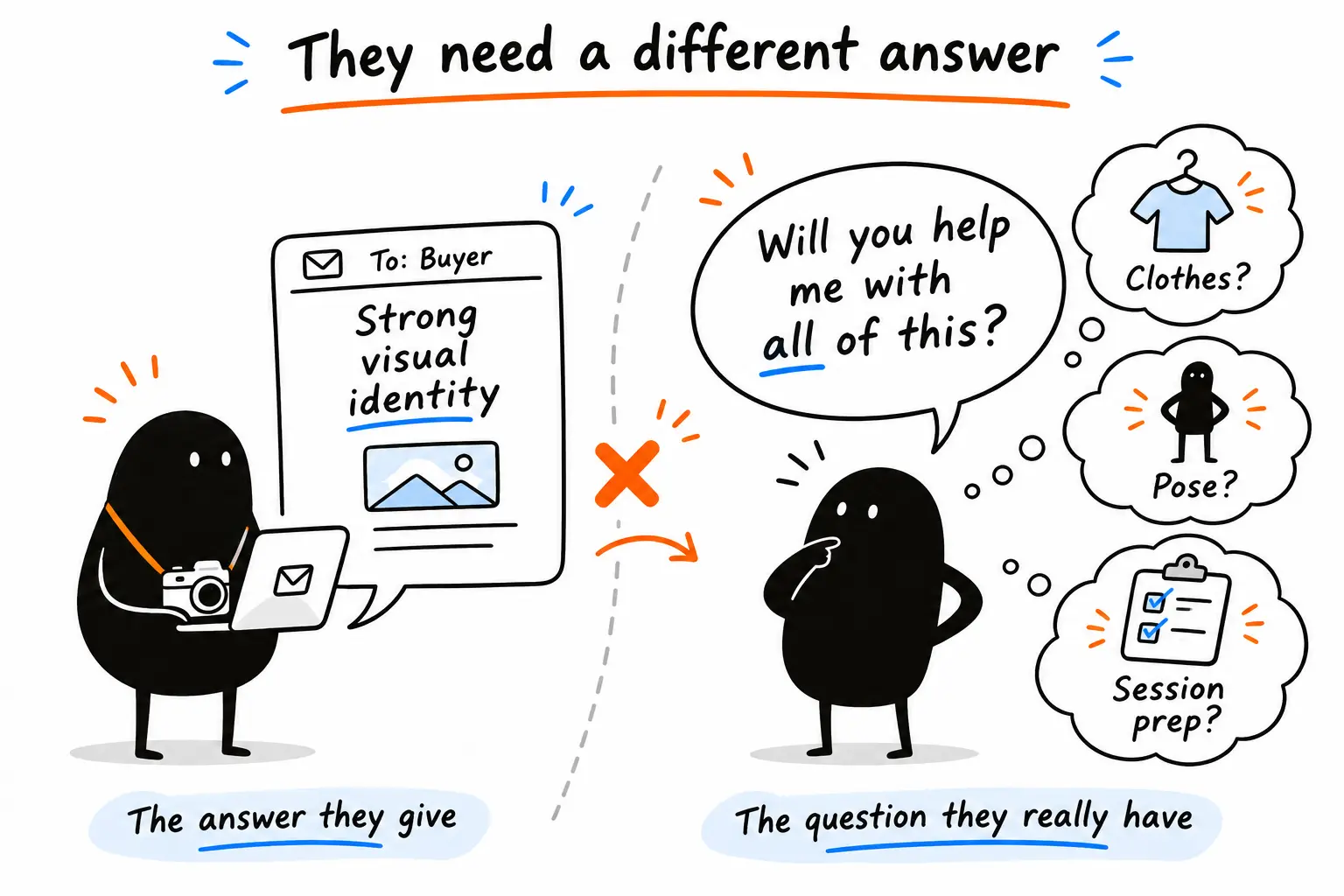
Maybe the photographer already helps clients choose outfits, plans the shots with them, and gives direction throughout the session. But the buyer doesn’t know that yet.
Sometimes the gap between interest and purchase isn’t a lack of nurturing. It’s one unanswered question.
What Is a Sales Funnel Supposed to Do?
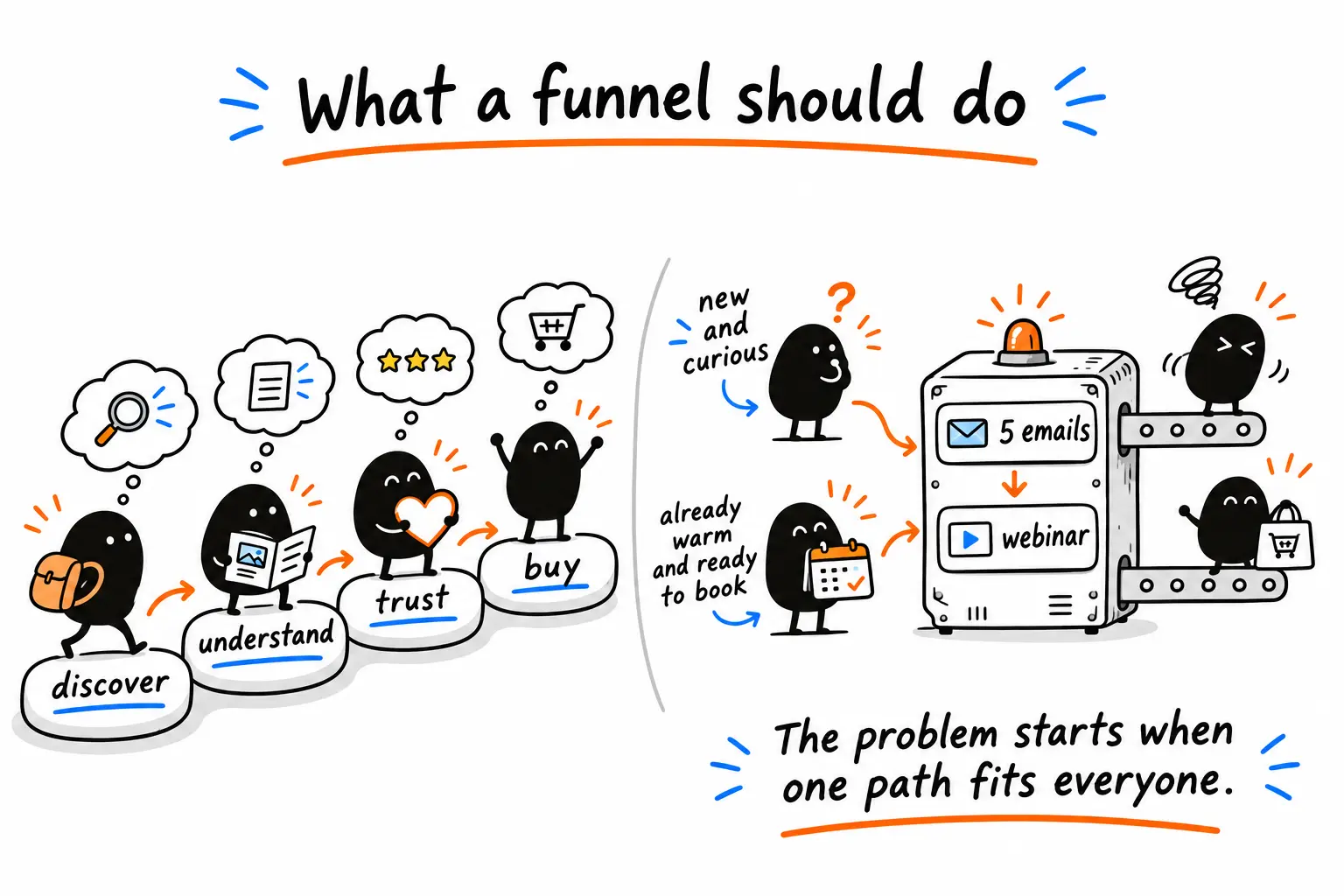
The logic behind a funnel is reasonable. Someone discovers your business, learns how you can help, finds reasons to trust you, and decides whether to buy. If you’re new to the model, the basics of a sales funnel are a useful place to start.
The problem begins when that journey becomes a mandatory sequence everyone has to follow.
Someone seeing the photographer’s work for the first time might need a little time to look around. Someone who has followed him for six months might only need an available date, a price, and an explanation of how the session works.
Send both people through five emails and a webinar, and one might learn something useful. The other will be waiting for permission to book.
That’s why arguing about whether emails, webinars, and long sales pages work doesn’t lead anywhere useful. What matters is the job they do.
An email that helps someone choose clothes for a session can ease a real concern. An email explaining for the third time why professionals need good photos might change nothing. The reader already agrees. That’s why they’re here.
For every step, ask what the buyer gets in return for their time.
If the answer is clear, the step may belong. If it exists only because “that’s how a proper funnel works,” it deserves another look.
Why More Traffic Doesn’t Always Lead to More Sales
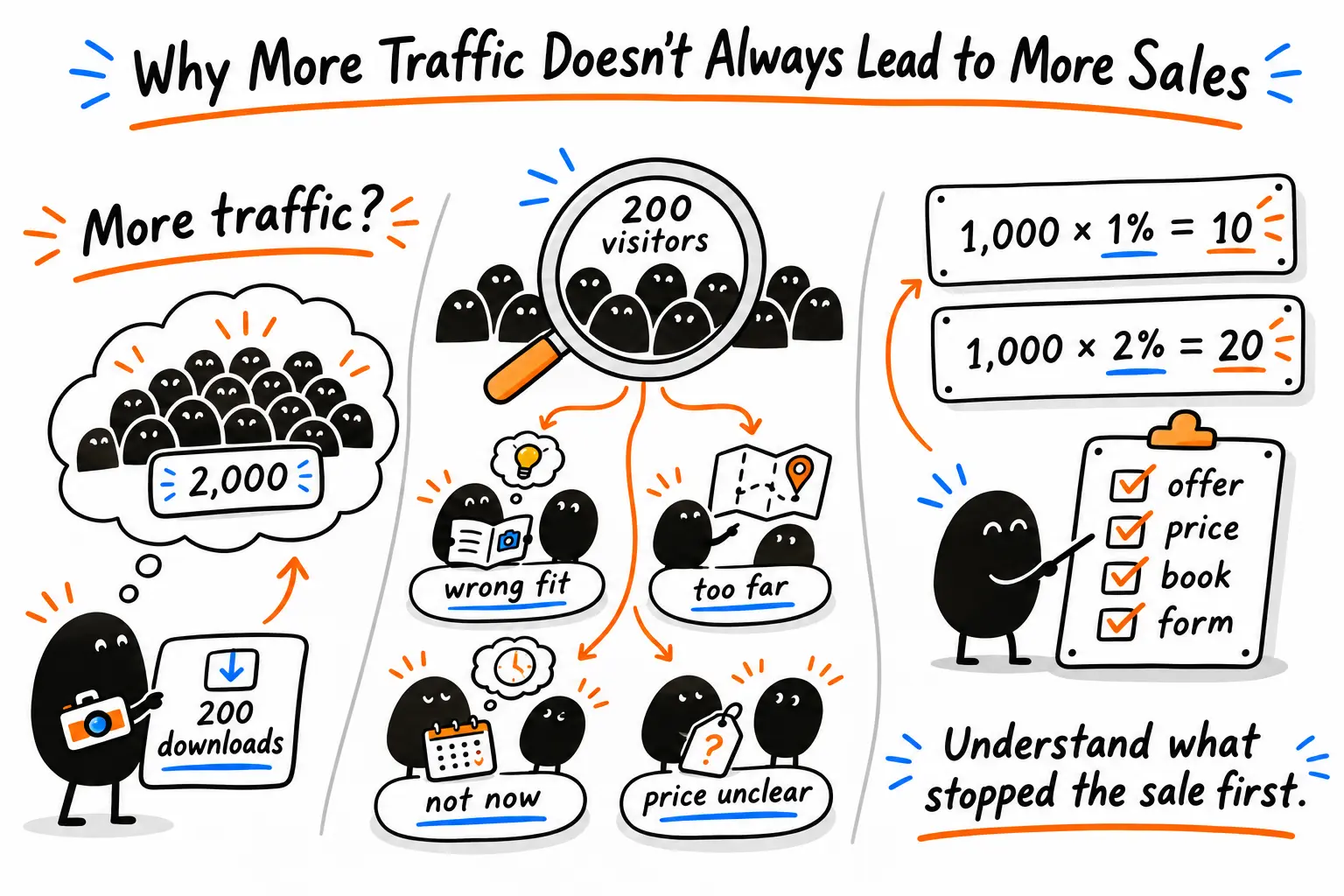
After the disappointing launch, the photographer might decide he simply needs more people. Two hundred downloaded the guide, so surely two thousand would do it.
Maybe. But first, it’s worth finding out what happened with the original two hundred.
Some might have been beginner photographers looking for ideas for their own guides. Others might live too far away. Some might want a session someday, but not now. And some might have been ready to book but never understood what the price included.
Those are different situations. More traffic won’t explain which one prevented the sales.
Imagine a page that receives a thousand visitors a month and brings in ten customers. Increasing the conversion rate from 1% to 2% would produce twenty customers. Bringing in two thousand equally suitable visitors at the original rate would produce the same number.
That calculation alone doesn’t tell you which route is better. The work and cost involved in each matter.
But if a thousand people visit and nobody buys, it’s worth investigating before bringing in the next thousand. Were those visitors looking for this service? Did they understand the offer? Could they find the price? Could they book? Did the form work?
The guide on why websites get traffic but no sales walks through common places to start.
Once the right people are buying, and each new customer costs less to win than they bring in, the priorities change. Another week rewriting the headline might achieve less than putting the offer in front of more people with the same need. For ideas on where to find them, see 50 places to find your first client.
The point isn’t that traffic always matters more than conversion. It’s that you shouldn’t endlessly polish something that already works or scale something you haven’t understood yet.
How to Make Your Offer Clearer and Easier to Buy
Suppose the photographer returns to his page and reads it, for the first time, as someone about to step in front of a camera.
“Brand photography for independent professionals. Two hours. Thirty edited images.”
Nothing is wrong with those three sentences. But almost every concern the prospective client has remains unanswered.
Do they need to find a studio? How many outfits should they bring? What if they don’t know how to pose? When will the photos be ready? Will they get images for their website and posts, or just a new profile picture?
The photographer knows the answers because this is his everyday work. The buyer may be doing it for the first time.
Now imagine the page says this instead:
Before the session, we’ll have a call to discuss where you’ll use the photos. I’ll help you choose a studio and outfits and guide you on how to stand and where to look throughout the shoot. Within seven days, you’ll receive thirty edited images for your website and social media. No experience in front of a camera is needed.
The promised outcome hasn’t become more ambitious. The photographer isn’t guaranteeing higher sales or thousands of new followers.
But the buyer can now picture what happens after payment. They won’t have to figure it all out alone. They understand what help they’ll receive and when the finished photos will arrive.
It’s easy to keep promising a more impressive result. Sometimes the stronger move is simply to remove uncertainty.
For someone who feels uncomfortable in front of a camera, “I’ll guide you throughout the session” might be more convincing than another paragraph about building a powerful personal brand.
What Can You Actually Guarantee?
Once you start noticing buyers’ doubts, it’s tempting to remove them with one bold promise.
The photographer could write: “Attract ten new clients after your session, or get your money back.”
It sounds compelling. But new clients depend on more than photographs. What the person sells, who sees their content, how they explain their service, and what happens after an inquiry all play a part.
The photographer could do excellent work, and those ten clients might still never appear.
That doesn’t make guarantees useless. It means they’re better grounded in things you can take responsibility for.
You can commit to a delivery date. Explain what editing includes. Agree in advance on how technical mistakes will be corrected and what happens if you have to reschedule.
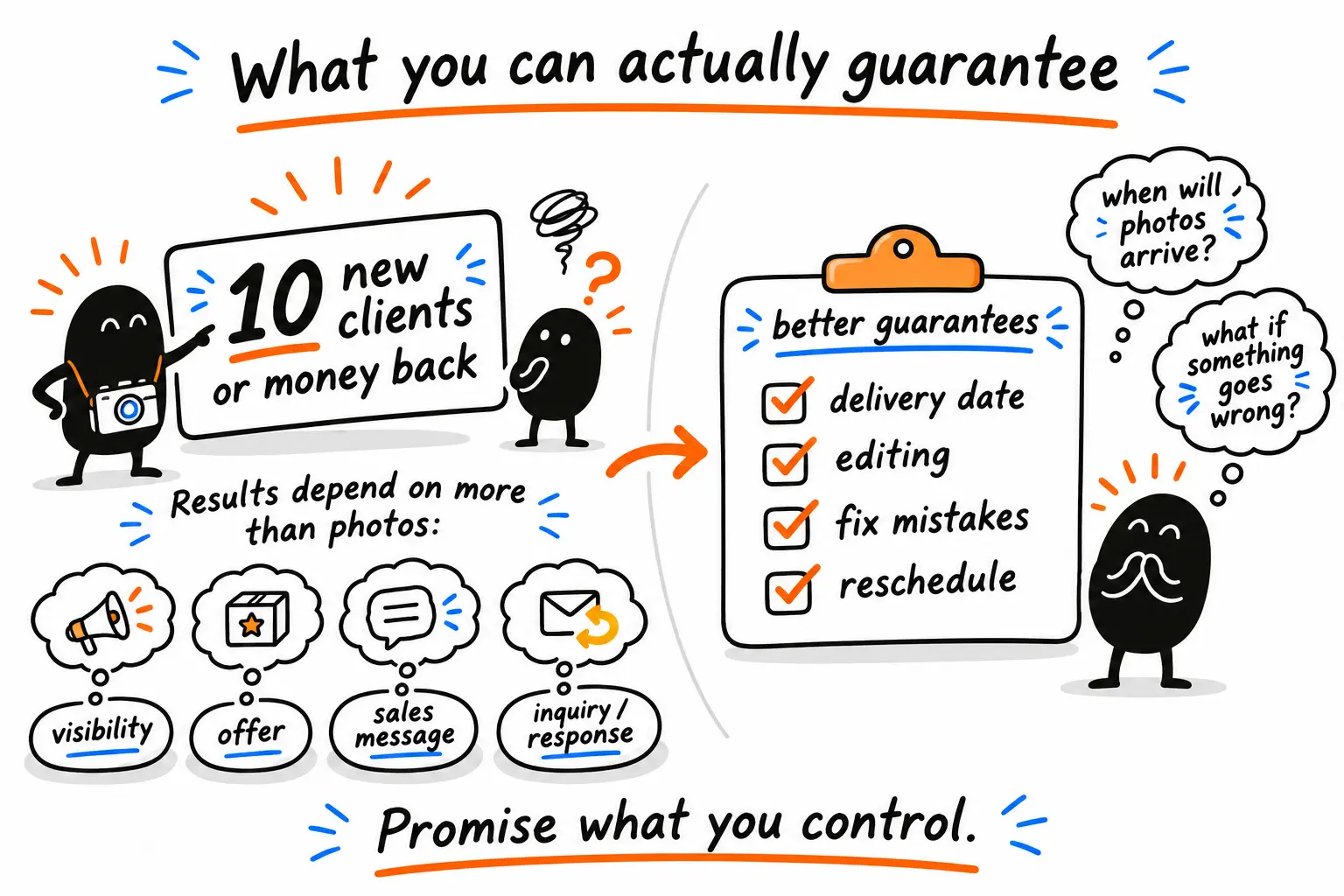
Those commitments sound less dramatic than a promise of new clients. But they answer questions that can stop someone from booking.
What if the photos take two months to arrive? What if I don’t receive the shots we agreed on? What happens if the photographer cancels?
A useful guarantee doesn’t have to remove every possible risk. It should make clear which part of the work the seller takes responsibility for and what they’ll do if they don’t deliver as agreed.
How to Sell a Service When Results Are Hard to Measure
But what about outcomes that don’t fit neatly into a deadline, an image count, or a list of completed tasks?
Someone might hire a photographer for more than pictures. They want to stop hiding behind an old profile photo, feel more comfortable talking about their work, and finally see themselves in images they actually like.
That matters. But promising everyone greater confidence after two hours in a studio would be a stretch.
Instead, you can explain how the work will happen and agree on a concrete milestone connected to the client’s real goal.
For example, you might discuss where the photos will be used and plan the shots accordingly: a portrait for an about page, a horizontal image for the website, and several working shots for social posts. At the end, you can check whether those agreed needs have been met, rather than trying to measure an abstract transformation.
But be careful what you choose to measure. If the offer promises a hundred photos in an hour, quantity becomes the selling point. The client may only need ten images they feel good about putting on their website.
Giving them more isn’t necessarily the same as giving them what they need.
Even then, one question remains: why should the buyer believe you can help?
How to Build Trust Before the Sales Conversation
Imagine a future client discovering the photographer through a post about a recent session.
The post doesn’t just show beautiful images. The photographer explains why he avoided a formal studio, suggested clothes the client already felt comfortable wearing, and spent the first twenty minutes without asking them to look at the camera.
In another post, he shows what a pose looks like from the side and how it appears in the finished photograph. In a third, he explains what he does when someone says, “I always look terrible in photos.”
Gradually, the prospective client sees more than a portfolio. They begin to understand how they’ll be treated.
By the time they visit the service page, some of their questions have already been answered. Not because they completed a mandatory sequence, but because they saw the answers in the photographer’s work.
That’s the practical purpose of a personal brand. Not fame for its own sake, and not a requirement to share your entire life. It’s a way for people to become familiar with your approach before they contact you.
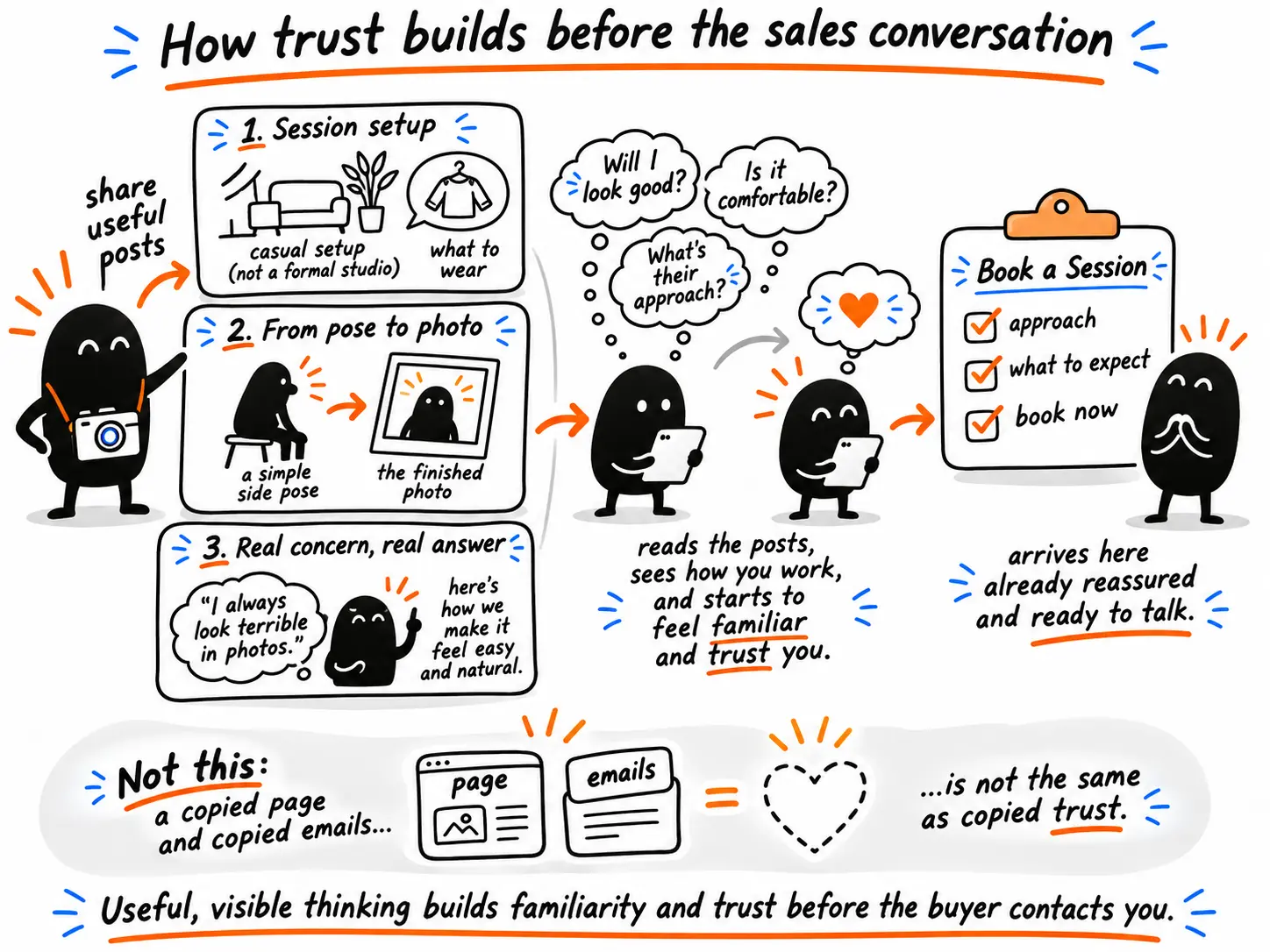
The finished result shows what you can do. Explaining your decisions helps people understand how you work and what working with you might feel like.
For a photographer, that might be a story about changing the plan during a session. For a video editor, it might be an explanation of why a beautiful shot didn’t belong in the final cut. For a consultant, it might be a discussion of why a popular solution wasn’t right for a particular client.
All of this remains part of the path to purchase. That path just doesn’t have to begin with an email form.
This is why someone else’s funnel can be so easy to copy on the surface and so difficult to reproduce in practice. You can copy the page and the emails. The trust they spent months building doesn’t come with them.
What Customer Questions Reveal About Your Offer
“Will you help me prepare, or am I supposed to do everything myself?”
If the photographer keeps hearing this question, he may not need more emails. He may need to explain what’s included.
If preparation help is part of the service, say so. If it isn’t, consider whether your clients need it.
Look beyond the question itself. Someone asking about delivery times may have a website launching in two weeks. Someone asking about outfits may need photos for two different businesses. Understand the reason before writing the sales pitch.
Reviews reveal similar clues. One client felt rushed. Another appreciated help choosing clothes. A third finally felt comfortable in front of a camera. Repeated comments suggest what deserves attention in your service and your offer.
We’re building Nova Express to help marketers turn customer feedback into clearer offers. We haven’t launched yet, but you can start today: read thirty reviews of a competitor. What do customers praise? What disappoints them? What did they wish they’d known sooner?
Your funnel may not need another step. Your buyer may simply need an answer.
Do You Need a Longer Funnel or a Clearer Offer?
The photographer may not need to abandon his funnel. He needs each part to do a useful job.
The email helps someone prepare. The webinar shows how a session works. The page explains what’s included and how to book.
And perhaps, after speaking to the people who didn’t book, he discovers that the problem wasn’t the funnel.
They liked his work. The price was right. But nobody had clearly explained that he would help them prepare and guide them throughout the session.
The answer had been part of his work all along. It just hadn’t become part of the offer.
Funnels aren’t dead. But every step should help the buyer make a decision, not delay it.
When the offer is clear, the trust is there, and the buyer is ready, a link and a checkout page may be enough.
Nova Express Resources
- AI Tools for Marketers in 2026
- Best AI Video Generators for Marketers in 2026
- 2027 Holiday Marketing Calendar
- GPT Image 2 for Marketers: How to Finally Get Readable Text in AI Images
- NotebookLM for Marketers
- Nano Banana Pro: The Complete Guide for Marketers 2026
- NotebookLM Infographic: The Complete Guide to Turning Your Data Into Visual Stories
- What Are AI Tokens? A Marketer’s Guide to Context, Cost, and Limits
- AI Image Color Palette: How to Borrow One From Nature
- Nano Banana Prompts
About the author
Serafima Osovitny is a Marketing Manager at Nova Express, where she focuses on digital marketing, search visibility, content strategy, and marketing workflows. She writes practical guides that help marketing teams research their audiences, develop strategies, and put their plans into action.
Explore her work at serafima.digital and follow her on X: @OSerafimaA.







Leave a Comment