
Building an email list is one of the most effective ways to grow your business or personal brand. Whether you’re a small business owner, a freelancer, or someone starting a passion project, an email list gives you direct access to your audience. But starting from zero can feel overwhelming. Where do you even begin? The following guide will walk you through the entire process, from understanding the basics to launching your first email campaign. By the end, you’ll have the tools and strategies you need to build an email list from scratch.
Why Is an Email List Important?
Before we get into the how-to, let’s talk about why email lists matter:
- Direct Access to Your Audience: Unlike social media, where algorithms control who sees your content, emails go straight to your subscribers’ inboxes.
- Higher Engagement Rates: Studies show that email marketing has a higher engagement rate than social media platforms.
- Better Conversions: Email marketing consistently delivers better ROI compared to other marketing channels.
- Ownership of Your Audience: Social media accounts can be suspended or hacked, but your email list is yours.
Step 1: Define Your Goals and Target Audience
Before you start collecting email addresses, it’s essential to know why you want an email list and who you’re targeting.
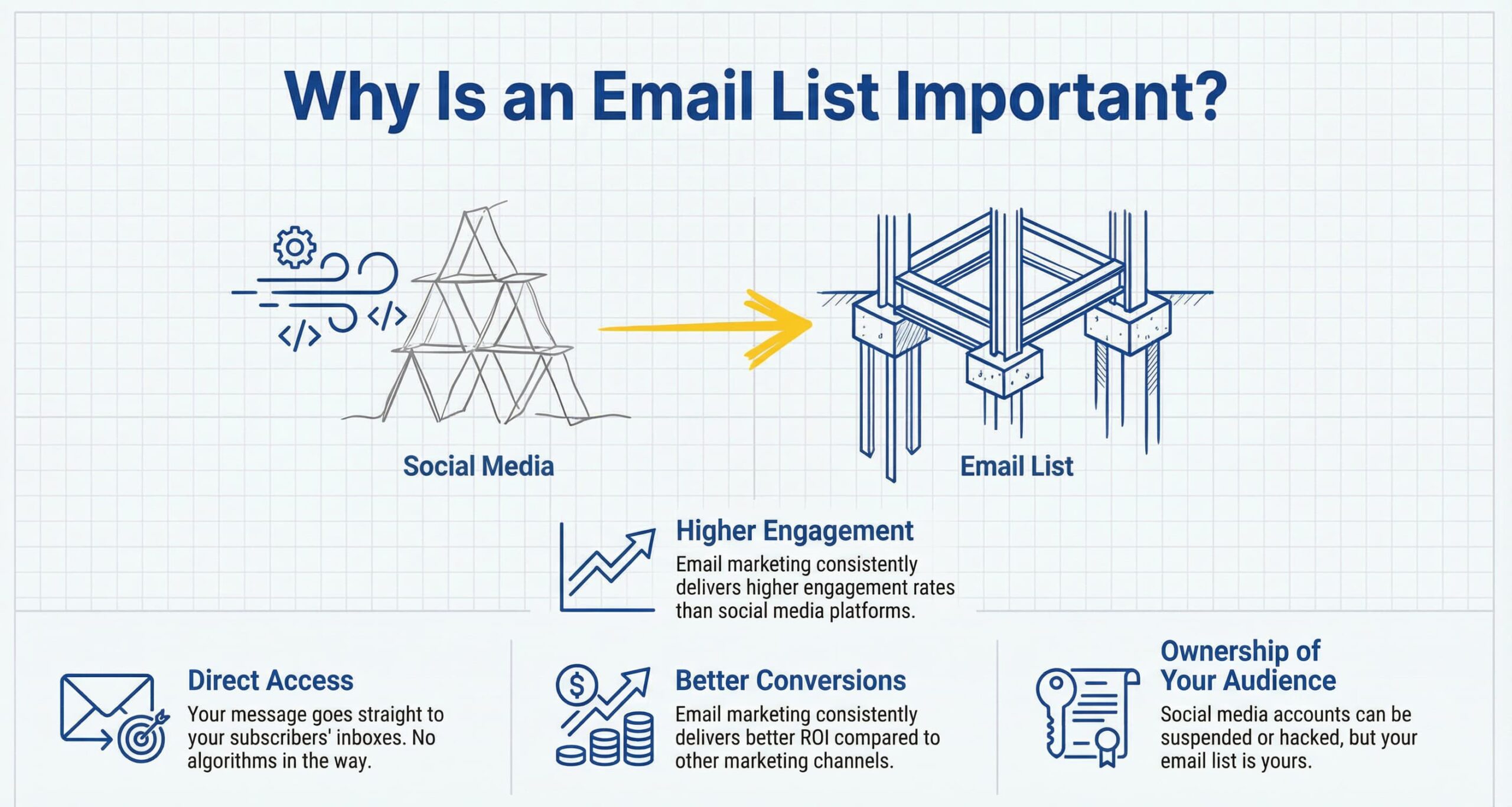
- What is your purpose? Determine whether you’re promoting products, offering services, sharing valuable content, or building a community. Your purpose will guide your messaging and lead magnet.
- Who is your ideal subscriber? Consider demographics, interests, and pain points. What problems can you solve for them, and what content would keep them engaged?
- What value will you provide? Think about the benefits subscribers will gain by joining your list. Defining this will help you create compelling offers and campaigns.
Step 2: Choose an Email Marketing Platform
Choosing the right email marketing platform is essential for managing your list, automating emails, and tracking performance. With so many platforms available, it’s important to know what features to look for before making a decision.
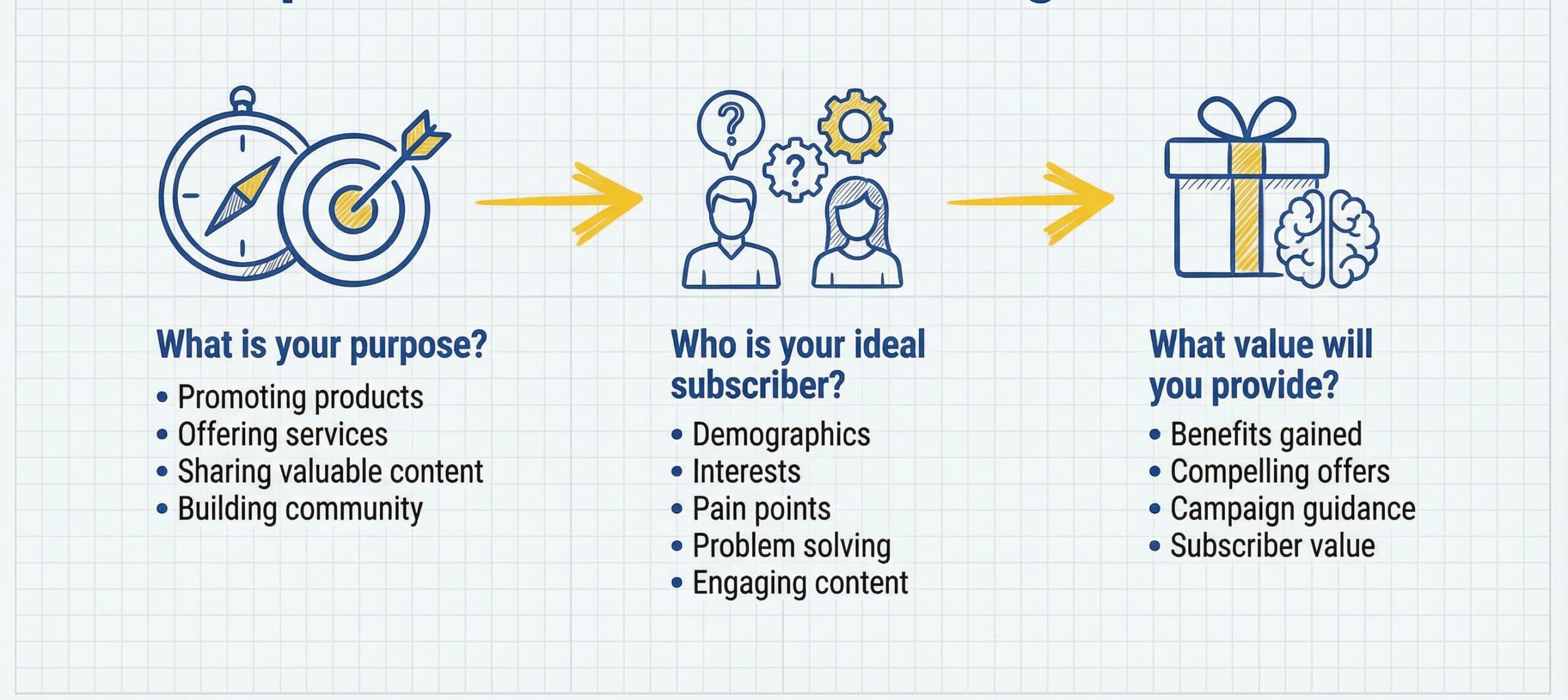
- Ease of Use: Look for an intuitive interface that’s easy to navigate, even if you’re new to email marketing.
- Automation Tools: Make sure the platform offers automation features, such as welcome emails, drip campaigns, and behavior-based triggers.
- Segmentation Options: The ability to segment your list based on subscriber behavior, demographics, or preferences is key for sending targeted emails.
- Analytics and Reporting: Choose a platform that tracks open rates, click-through rates, and conversions so you can monitor performance and optimize campaigns.
- Templates and Design Tools: Look for pre-designed templates and drag-and-drop editors to create professional-looking emails quickly.
- Scalability and Pricing Plans: Ensure the platform can grow with your list and offers pricing that fits your budget.
- Integration Options: Check if the platform integrates with other tools you’re already using, such as CRM software, e-commerce platforms, or social media.
When comparing platforms, it’s also important to understand different email marketing pricing models; some charge per contact, while others charge per send, which can dramatically affect your costs as your list grows.
Step 3: Create an Irresistible Lead Magnet
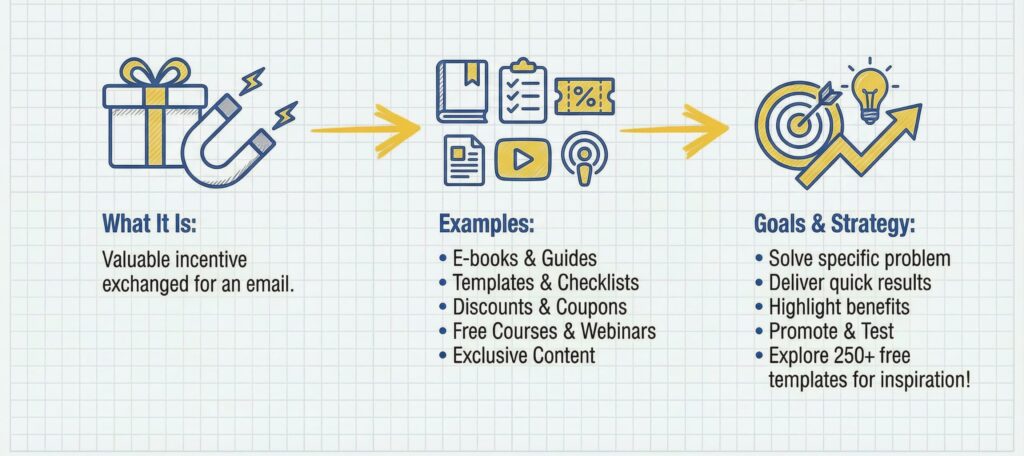
A lead magnet is something valuable you offer in exchange for someone’s email address. It acts as an incentive to encourage sign-ups. Examples include:
- E-books or Guides: Provide insights, solutions, or step-by-step instructions on relevant topics.
- Templates or Checklists: Offer tools to simplify tasks, streamline workflows, or save time.
- Discounts or Coupons: Perfect for e-commerce businesses looking to attract buyers and increase sales.
- Free Courses or Webinars: Teach valuable skills, share strategies, or solve specific problems for your audience.
- Exclusive Content: Share podcasts, videos, or articles that can’t be accessed anywhere else, making subscribers feel special.
Your lead magnet should address a specific problem your audience faces and deliver quick, tangible results. Be sure to highlight its benefits clearly and promote it through your website, social media channels, and collaborations. Additionally, test different types of lead magnets to see what resonates most with your audience.
If you need inspiration, explore our collection of 250+ free email templates that you can customize for your lead magnets and welcome sequences.
Step 4: Design an Opt-In Form
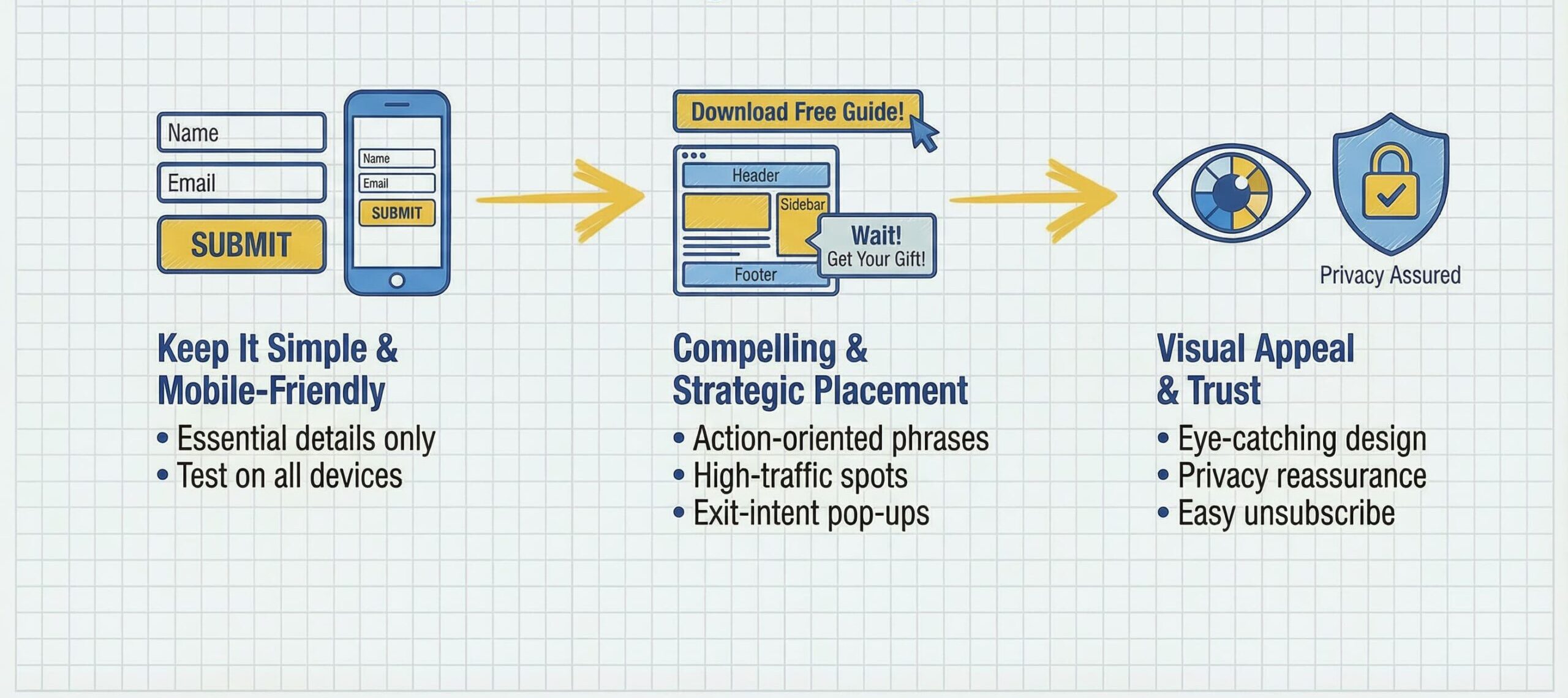
An opt-in form is how people sign up for your email list. To make it effective:
- Keep It Simple: Request only essential details, like a name and email address. Avoid asking for too many details upfront, as this can reduce sign-ups.
- Make It Compelling: Use action-oriented phrases like “Download Your Free Guide” or “Join Our VIP List.” Focus on what the subscriber will gain by signing up.
- Place It Strategically: Embed forms on high-traffic areas of your website, such as the homepage, blog posts, sidebar, and footer. Use exit-intent pop-ups to capture visitors before they leave your site.
- Design for Mobile: Ensure your opt-in form is mobile-friendly, as many users access websites on their phones. Test the form on different devices to guarantee it works everywhere.
- Offer Visual Appeal: Incorporate eye-catching colors, images, and buttons that match your branding. A visually attractive form can increase conversions.
- Add Privacy Reassurances: Include a brief statement about how you’ll protect subscribers’ information and avoid spam, which builds trust. Make sure you also include an easy unsubscribe option, learn why easy unsubscribes actually improve deliverability.
Step 5: Promote Your Sign-Up Form
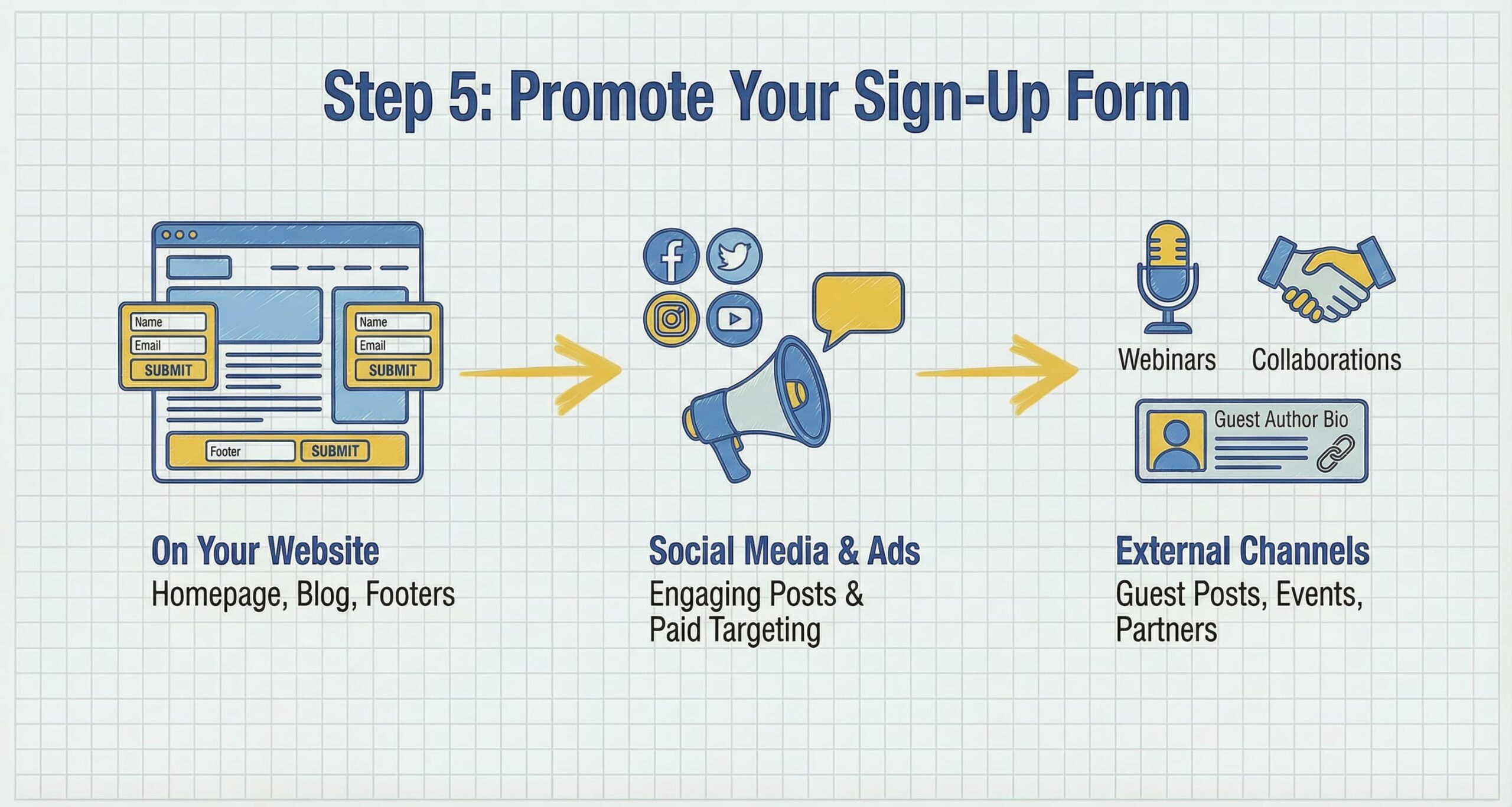
Promotion is key to getting your opt-in form in front of the right audience. Use multiple channels to boost visibility and encourage sign-ups.
- On Your Website: Add forms to your homepage, landing pages, and blog posts, as well as sidebars and footers.
- Social Media: Promote your lead magnet regularly with engaging captions and visuals. Use paid ads to target your ideal audience.
- Guest Blogging: Write guest posts for websites in your niche and include links to your opt-in form in your author bio.
- Webinars and Events: Collect emails during live webinars, workshops, and events, both online and in-person.
- Collaborations: Partner with influencers, bloggers, or complementary businesses to cross-promote your email list.
Step 6: Offer Value Through Your Emails
Delivering value is the key to keeping your subscribers engaged and loyal. Once someone signs up, it’s vital to continue offering content that aligns with their interests and expectations.
- Welcome Emails: Start with a warm introduction, thank subscribers for joining, and deliver your lead magnet immediately. If you’re new to email marketing, learn how to start your first email campaign with our step-by-step guide.
- Exclusive Offers: Reward subscribers with discounts, giveaways, or early access to products or services to make them feel valued.
- Regular Newsletters: Share actionable tips, updates, and resources that keep readers engaged and coming back for more. Understanding what a newsletter is and how to structure one effectively will help you maintain consistent engagement.
Step 7: Use Segmentation to Personalize Content
Segmentation enables you to deliver content that is more tailored and relevant to your audience. Grouping subscribers based on their preferences, actions, or demographics helps create emails that resonate.
As your list grows, email marketing efficiency becomes critical. Segmentation helps you scale your campaigns without sacrificing personalization or deliverability.
- Tag Subscribers: Group people based on demographics, behaviors, or past purchases to create more relevant messaging.
- Targeted Campaigns: Send personalized emails based on subscriber actions like clicks, downloads, or sign-ups.
- Automation: Set up drip campaigns or email sequences to nurture leads and guide them toward specific goals, such as purchases or event registrations.
Step 8: Monitor and Optimize Performance
Tracking and improving performance is crucial for long-term success. Keeping an eye on your email metrics ensures you’re meeting your goals and identifying areas for improvement.
To make data-driven decisions, you need to track the right numbers. Here are the 10 key email marketing metrics to analyze regularly:
- Open Rates: Measure how many subscribers open your emails to gauge subject line effectiveness. Learn how to write subject lines that get opened to improve this metric.
- Click-Through Rates (CTR): Track how many readers click your links to measure engagement.
- Unsubscribes: Monitor trends to understand when and why subscribers leave your list.
Step 9: Keep Growing Your List
Expanding your email list is an ongoing process that requires you to be consistent. As your audience grows, you’ll need to keep attracting new subscribers while maintaining relationships with existing ones.
- Networking: Attend events, conferences, and webinars to meet potential subscribers and collect email addresses.
- Collaborations: Partner with other businesses, influencers, or brands to expand your reach and cross-promote.
- SEO Strategies: Use blog posts and search-optimized content to attract organic traffic and capture leads.
Final Thoughts
The bottom line is that starting an email list from scratch doesn’t have to be complicated. With the right tools and strategies, you can create a system that attracts, engages, and converts subscribers. For inspiration, check out real-world email marketing examples that convert to see what successful campaigns look like in action.
Focus on providing value, promoting your lead magnet, and optimizing your campaigns as you go. Avoid common email marketing mistakes that can hurt your sales and engagement rates.
Whether you’re launching a business, building a personal brand, or creating a community, your email list can be one of your most valuable assets. So, start today and watch your audience grow.
Ready to grow your email list with irresistible lead magnets and targeted campaigns? Start with Nova Express to build and manage high-converting email lists effortlessly!
Frequently Asked Questions (FAQ)
1. How fast can I build an email list from scratch?
Realistic timelines depend on your niche and marketing efforts. With a solid strategy — including a strong lead magnet, SEO-optimized content, social media, and targeted promotion — you can gain your first 100–500 subscribers within 1–3 months. Consistency and testing different channels are key.
2. What type of lead magnet works best for beginners?
For starters, checklists, templates, and short guides (under 10 pages) tend to perform best. They’re quick to create, solve a specific problem, and deliver instant value. Examples: “Checklist: 7 Steps to a Perfect Morning Routine” or “Free Weekly Planner Template for Freelancers.”
3. Where should I place opt-in forms on my website?
Top-performing locations include:
- Exit-intent pop-ups — can convert up to 15%.
- Above the fold on your homepage or blog — high visibility.
- At the end of blog posts — readers are already engaged.
- Sidebar or footer widgets — great for sites with consistent traffic.
- Dedicated landing pages — ideal for paid ads or social promotions.
4. Can I grow an email list using only Instagram or TikTok?
Yes, especially if you have a strong personal brand. Use:
- The link in your bio leading to a signup page.
- Videos with calls like “Get the free guide — link in bio.”
- Problem-solution Reels or TikTok videos that end with a lead magnet offer.
Just remember, social platforms aren’t yours. Always drive traffic to your own email list to build ownership.
5. How do I avoid going to spam with my first email?
Follow these best practices.
Understanding what is spam and how email filters work is crucial for deliverability. Follow these best practices:
- Avoid spam-trigger words like “FREE,” “!!!”, or “Act Now!” in subject lines.
- Set up SPF, DKIM, and DMARC records through your email service provider.
- Start with a warm, friendly welcome email, thank the subscriber and deliver your lead magnet.
- Don’t send to your entire list at once. Warm up your domain by sending 50–100 emails per day at first.
Nova Express Resources
- What is Nova Express?
- How to Start Email Marketing
- How to Start Your First Email Campaign
- Amazon SES Integration Guide
- Mailgun Integration Guide
- Email Warm-Up Guide
- AI Tools for Marketers
- NotebookLM for Marketers
- Nano Banana Pro: The Complete Guide for Marketers 2026
- 2026 Holiday Marketing Calendar
Start building that story today
About the author
Serafima Osovitny is a Marketing Manager at Nova Express, where she focuses on digital marketing, search visibility, content strategy, and marketing workflows. She writes practical guides that help marketing teams research their audiences, develop strategies, and put their plans into action.
Explore her work at serafima.digital and follow her on X: @OSerafimaA.








Thank you for this helpful article, really appreciate it.