

People don’t scroll past what makes them laugh.
Not because they’re looking for jokes, but because laughter breaks patterns. It’s a vague direction that leads to cringe-worthy Super Bowl ads and brand tweets that age like milk.
Humor is a behavioral trigger. Used right, it doesn’t just entertain, it changes how people react to your message.
Humor: The Ultimate Pattern Break
The average person sees thousands of ads every day. Most of them look and sound the same, so our brain just skips them. A bit of humor is one of the few things that can actually make someone pause.
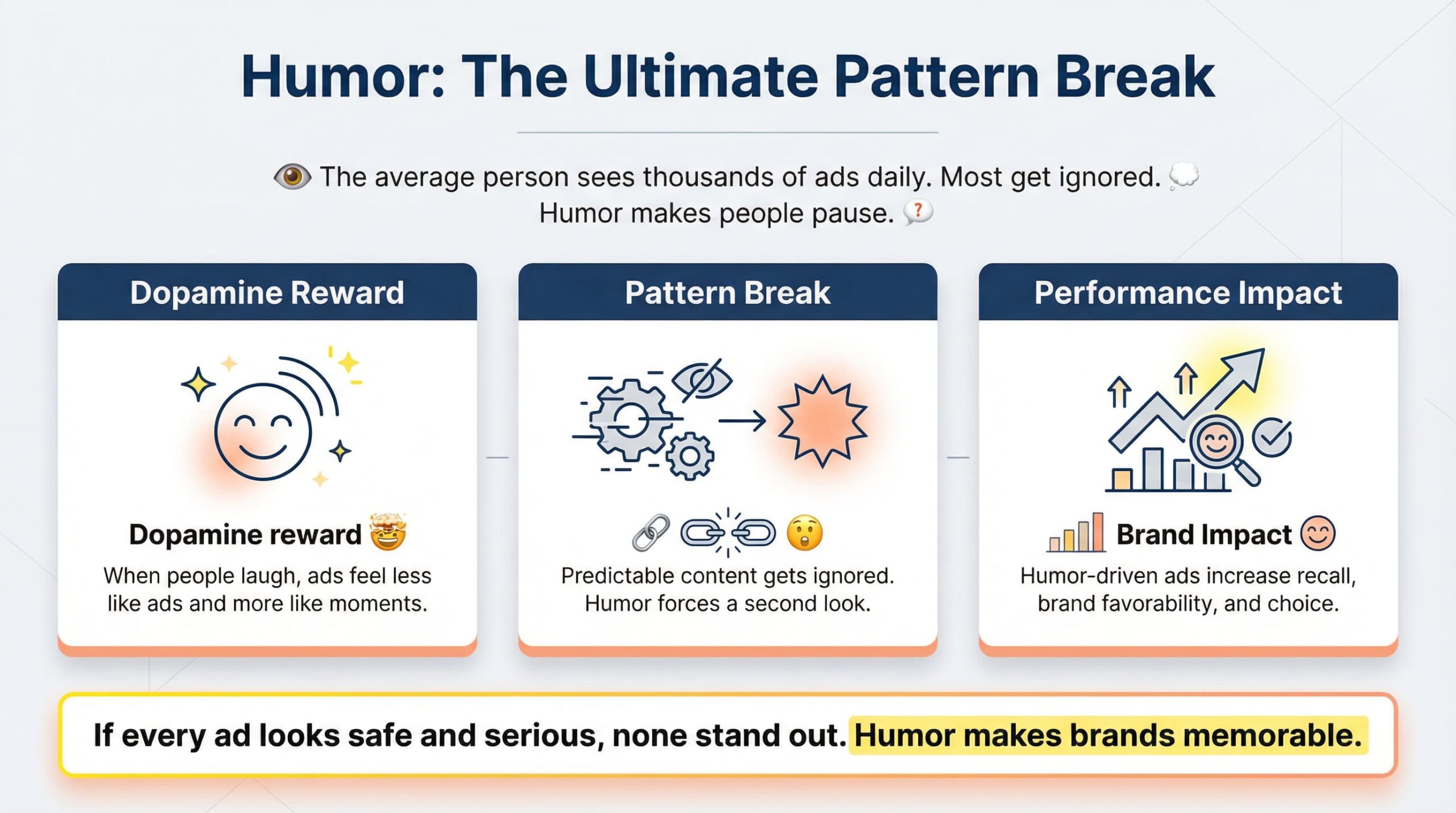
Why it works:
- Dopamine reward
When an ad makes you smile, it feels less like an ad and more like a tiny joke someone shared with you. That short laugh leaves a warm feeling about the brand, even if no purchase happens. - Pattern break
Predictable content gets filtered out. Humor forces a second look. - Hard data
Multiple studies from major measurement firms, including Nielsen and Kantar, show that people are more likely to remember a humorous ad than a straightforward one. Industry research from Oracle and others also finds that most consumers say they recall brands better when the advertising makes them laugh.
Bottom line: If every ad looks safe and serious, almost none of them stand out. A little smart humor can make your message feel human and much easier to remember.
The Engagement Multiplier Effect
Most content gets seen. Very little gets interaction. Humor changes that.
- Shareability: People share what makes them feel something, and funny posts get shared far more than dry, informative ones.
- Watch time: Jokes keep viewers watching to see the punchline, so platforms push your videos to more people.
- Comments: Funny ads spark tags, quotes, and jokes in the comments instead of silent scrolling.
- Brand impact: Well‑done humorous ads are remembered better and make people like and choose the brand more often.
The Types of Humor That Work in Advertising
Not all humor is created equal. Some styles build brands. Others burn them. Here’s a breakdown of the types that consistently perform.
1. Observational Humor
This is the “you know what’s annoying?” style. It points out a shared frustration or everyday absurdity that the audience already recognizes. It works because it creates an instant sense of “this brand gets me.”
Example: Mint Mobile’s ads with Ryan Reynolds often start by pointing out how wireless carriers overcomplicate pricing. The humor comes from saying out loud what everyone already feels: big carriers charge more and make everything needlessly complicated. It’s simple, relatable, and it positions the product as the sane alternative.
What this means for marketers: if your audience already thinks it, say it first. It signals that the brand occupies the same reality as the customer, not a polished fantasy world.
2. Self-Deprecating Humor
Brands that can laugh at themselves become more likable. It’s disarming. In a landscape where every company claims to be the best, the one that says “yeah, we know our name is weird” feels more honest.
Example: Old Spice’s “The Man Your Man Could Smell Like” campaign leaned into the absurdity of body wash advertising. It didn’t pretend the category was important. It acknowledged the ridiculousness and leaned all the way in, resulting in a 125% increase in sales.
Why it works: self‑deprecation lowers the audience’s defenses. People don’t feel like they’re being sold to; they feel like they’re part of the joke.
3. Exaggeration and Absurdity
Taking a simple benefit and turning it into something wildly over-the-top. This works especially well when your real-world benefit is hard to make visually exciting.
Example: Axe’s recent “Power of Sweetness” campaign pushes this to the limit. The new fragrance is so “irresistible” that even a baby, a teddy bear, and a pet dog get comically jealous whenever someone wears it. The joke is the exaggeration: a nice scent is treated like a supernatural force that unhinges everyone around you.
Why it works: Absurdity is naturally shareable and visually memorable. Competitors can copy your “long-lasting fragrance” line, but copying a world where even stuffed animals lose their minds over your scent would just look like a bad imitation.
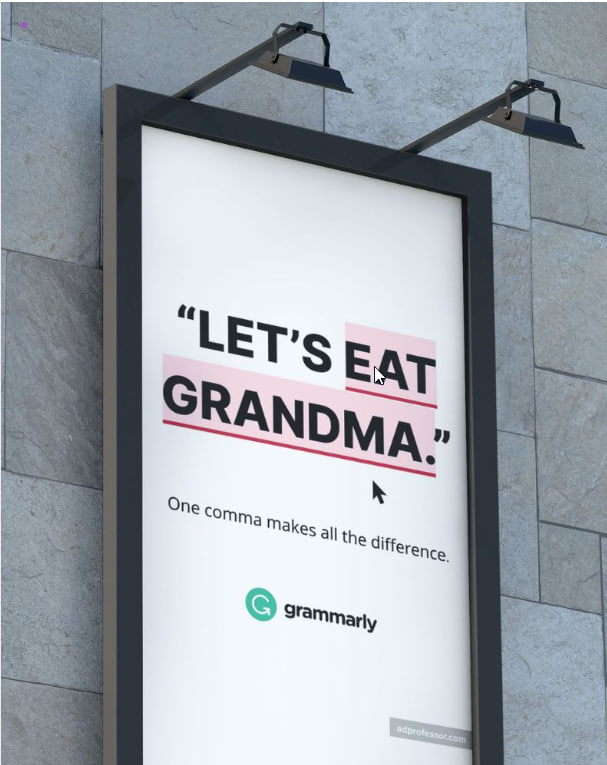
4. Witty Wordplay and Clever Copy
This is where brands with strong copywriting teams shine. It works especially well in formats where you only get a second or two to land the joke, such as billboards, print, and social cards.
Example: Grammar tools and writing apps (like Grammarly) often lean on light wordplay and “almost wrong” sentences in their social posts. They tease you with a line that’s slightly off, then flip it to the correct version and tie it back to the product. The joke is simple, but it proves the value in the copy itself.
Why it works: Clever copy rewards people for paying attention. That tiny “aha” moment feels earned, not forced, so the brand comes across as smart rather than try‑hard.
Humor doesn’t work in marketing just because it’s funny. It quietly changes how people make decisions. When someone laughs, they stop pushing your message away, stop overanalyzing it, and simply feel something. That’s the moment marketing can actually do its job.
There is one important condition: humor only works if it is clearly tied to your product or insight. If people remember the joke but not the brand, that wasn’t advertising; it was just a performance. Effective humor isn’t about being the loudest or the most “creative”; it is about being immediately recognizable as you.
Bottom line: humor doesn’t decorate your message; it closes the gap between you and your customer. When a joke sharpens the core idea of the campaign, it sells. When it lives on its own, it fades into noise.
Nova Express Resources
- AI Tools for Marketers in 2026
- NotebookLM for Marketers
- Nano Banana Pro: The Complete Guide for Marketers 2026
- Storytelling elements for high-converting marketing campaigns
- 7 Midjourney V7 Prompts for Marketing Ads
- NotebookLM Infographic: The Complete Guide to Turning Your Data Into Visual Stories
- Stop Selling to People Who Don’t Know They Have a Problem
- Customer Pain Points: Why Your Marketing Isn’t Working
- Why AI Cites Some Brands and Ignores Others: The Citation Stack Explained
About the author
Serafima Osovitny is a Marketing Manager at Nova Express, where she focuses on digital marketing, search visibility, content strategy, and marketing workflows. She writes practical guides that help marketing teams research their audiences, develop strategies, and put their plans into action.
Explore her work at serafima.digital and follow her on X: @OSerafimaA.








Leave a Comment