

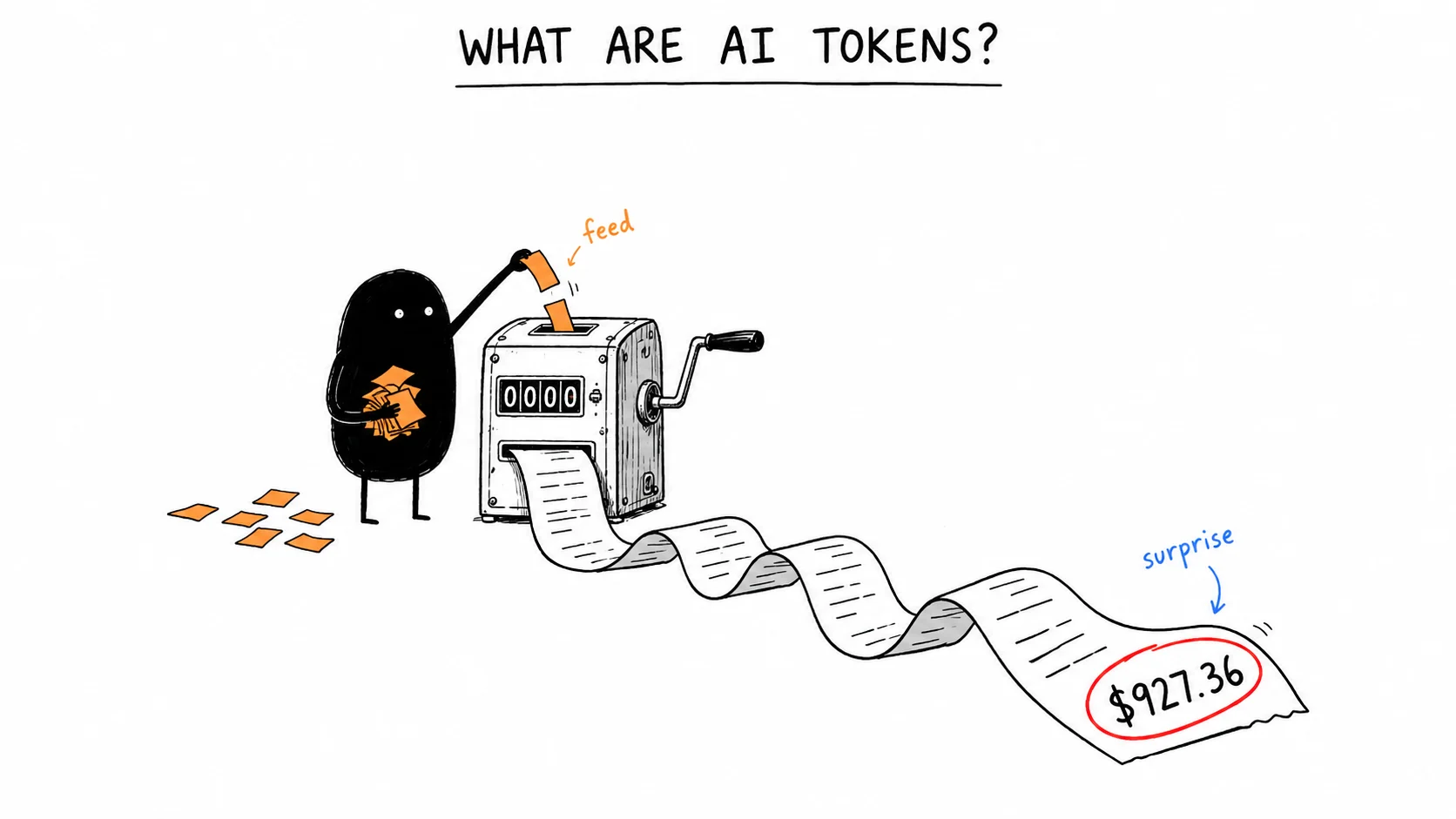
Most marketers can use AI for months without ever thinking about tokens. You open ChatGPT or Claude, paste a brief, get a draft, and move on.
Then something changes. Someone on the team connects a model to an API, or builds an automation that reviews every inbound lead, or sets up an agent that monitors competitors every morning. A month later there is a bill, and nobody can explain why one workflow costs eleven dollars and another costs four hundred.
The usual reaction is to look for a cheaper model. More often, the real answer is in the tokens: how much context goes into the model, how much comes back, and how much of that context genuinely needs to be there. Tokens are not a developer detail. They determine how much context a model can process, how much a request costs, and how large an AI workflow can become before its economics start to change.
A Token Is a Piece of Text, Not a Word
A model does not read text the way you do. Before anything else happens, your text gets split into small units called tokens. For a deeper explanation of tokenization, vocabulary, and why models do not process text word by word, see What Is a Token?.
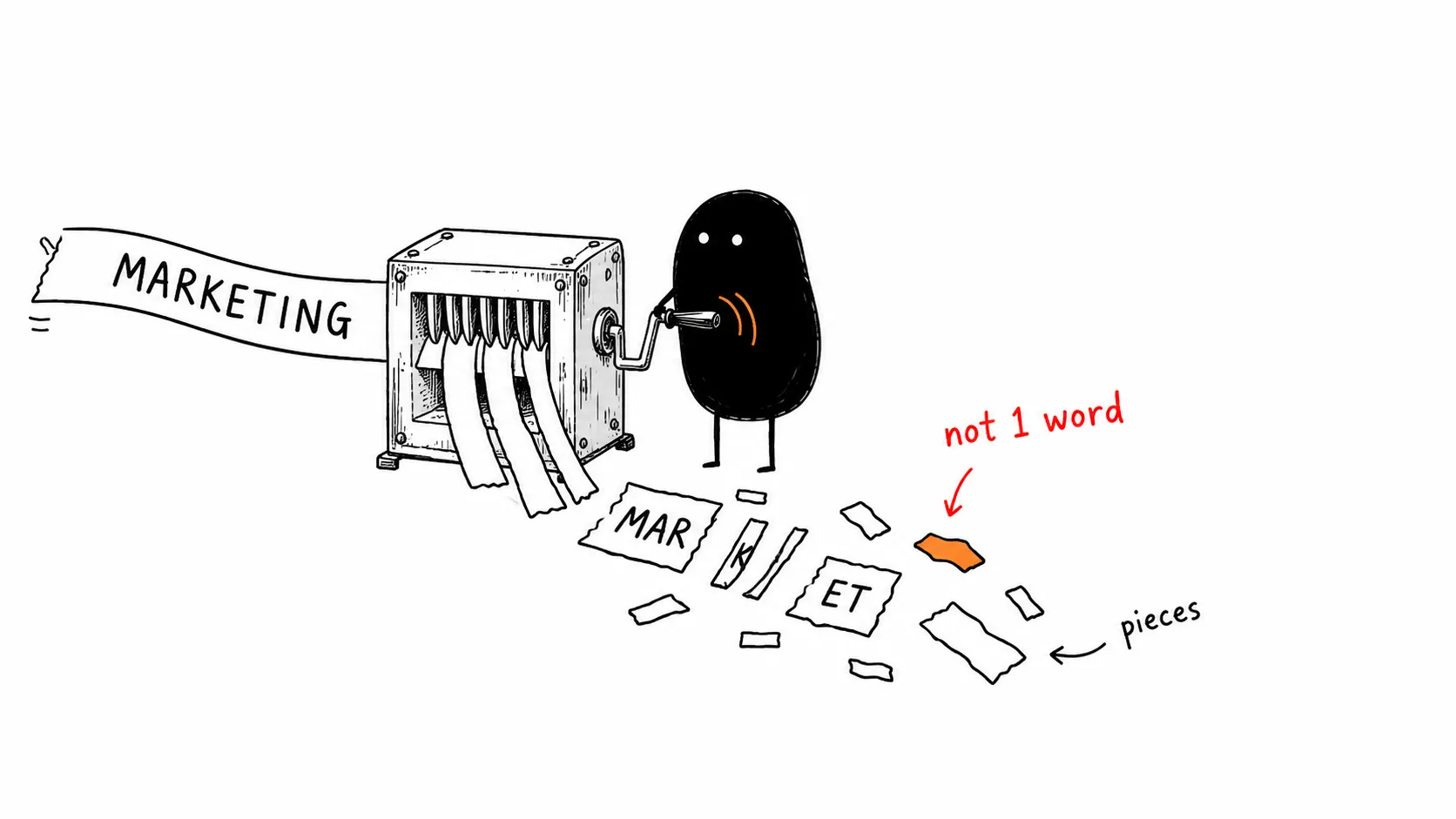
A token can be a whole word, part of a word, a number, or a punctuation mark. “Marketing” might be one token. A longer or less common word may be broken into multiple tokens. Spaces and line breaks affect how text is tokenized too.
The rough rule most people use in English is that one token is about four characters, so 1,000 tokens lands somewhere near 750 words. That ratio shifts by language. The same paragraph translated into Russian, Japanese, or Polish can take noticeably more tokens than the English original, which is why multilingual campaigns often cost more per output than teams expect.
So counting words tells you very little about what a model is actually processing.
Input Tokens and Output Tokens Are Priced Differently
Every API request has two parts: what you send to the model and what it generates in return. They are not billed the same way.
Input tokens cover everything you send: the prompt itself, system instructions, uploaded documents, retrieved data, and the conversation history up to that point. That last item surprises people. In multi-turn work, earlier messages can remain part of the model’s input context, so a thread that felt lightweight at the start may be carrying a great deal more text forty messages later.
Output tokens cover what the model generates: the analysis, the headlines, and the recommendations. With some reasoning models, usage can also include hidden reasoning tokens. They do not appear in the final response, but depending on the provider and model, they can still count toward usage and generation limits.
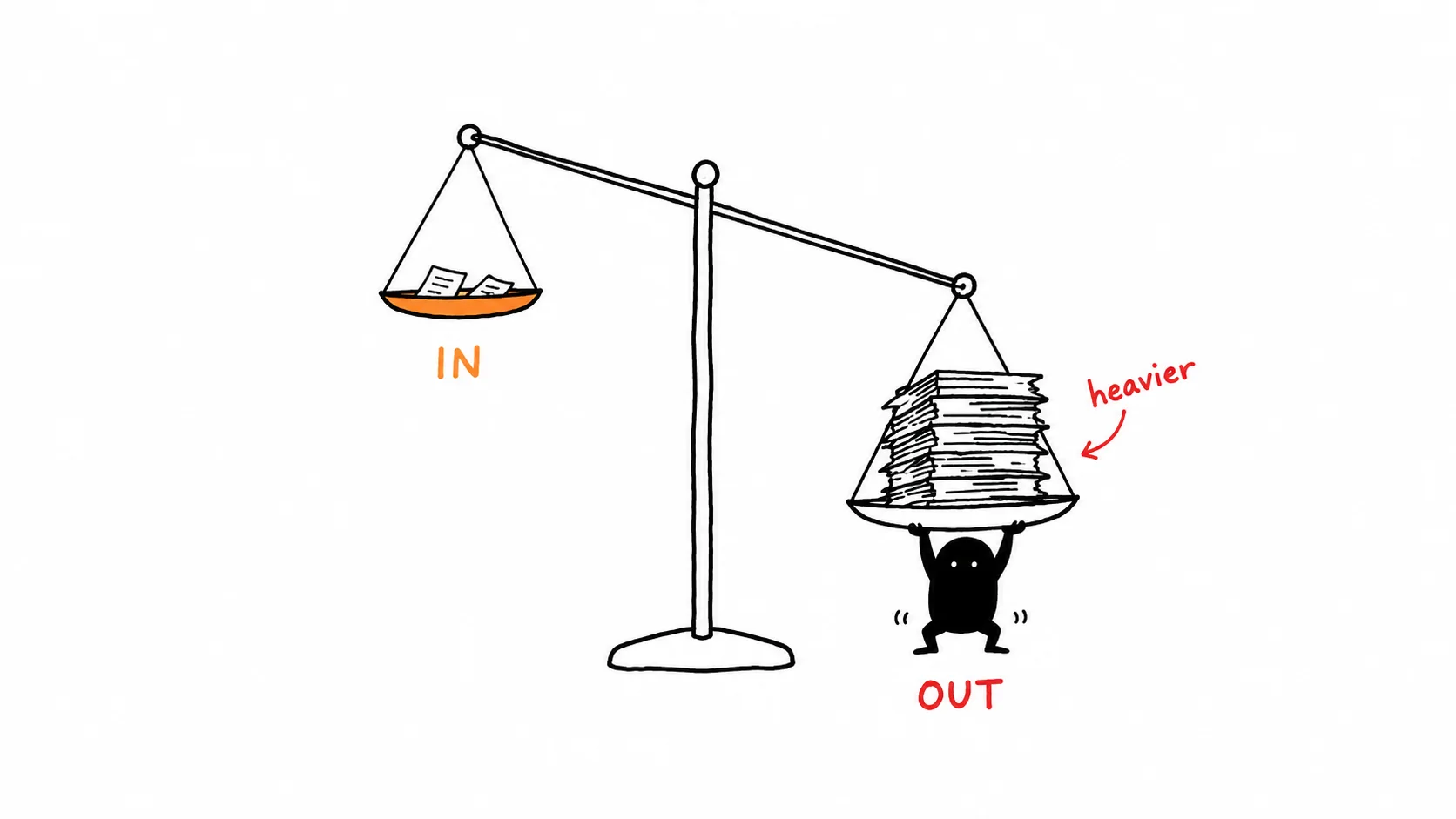
On many current API models, output tokens cost more than input tokens. As of September 2026, OpenAI lists GPT‑5.6 Sol at $4 per million input tokens and $20 per million output tokens, a fivefold difference. OpenAI says this promotional pricing will remain available at least through November 21, 2026.
That difference directly affects how you design AI work. A workflow that asks a model to read substantial context and return a concise answer will generally cost less than one that sends a short prompt and generates twenty long variations.
The math is simple: input tokens times the input rate, plus output tokens times the output rate. A workflow that sends 20,000 input tokens and generates 2,000 output tokens costs about 12 cents per run at those rates. Run it 10,000 times a month, and the monthly model cost is roughly $1,200 before tools, storage, and the platform around it.
There is a third rate most teams never look at. Prompt caching can reduce the cost of a stable request prefix, typically system instructions, brand rules, or a shared reference block, by allowing the provider to reuse eligible repeated content rather than processing it from scratch each time. On GPT-5.6 Sol, cached input costs $0.40 per million tokens against $4 for standard input.
Caching does not create automatic savings for anything that repeats. OpenAI documents cacheable prefixes from 1,024 tokens on GPT-5.6 and later. The first time a reusable block is written to the cache, it can cost more than ordinary input, so caching pays off most clearly when the same context is reused across many requests rather than one or two. Exact behavior depends on the provider and how the request is configured.
One Prompt Can Be Tiny or Enormous
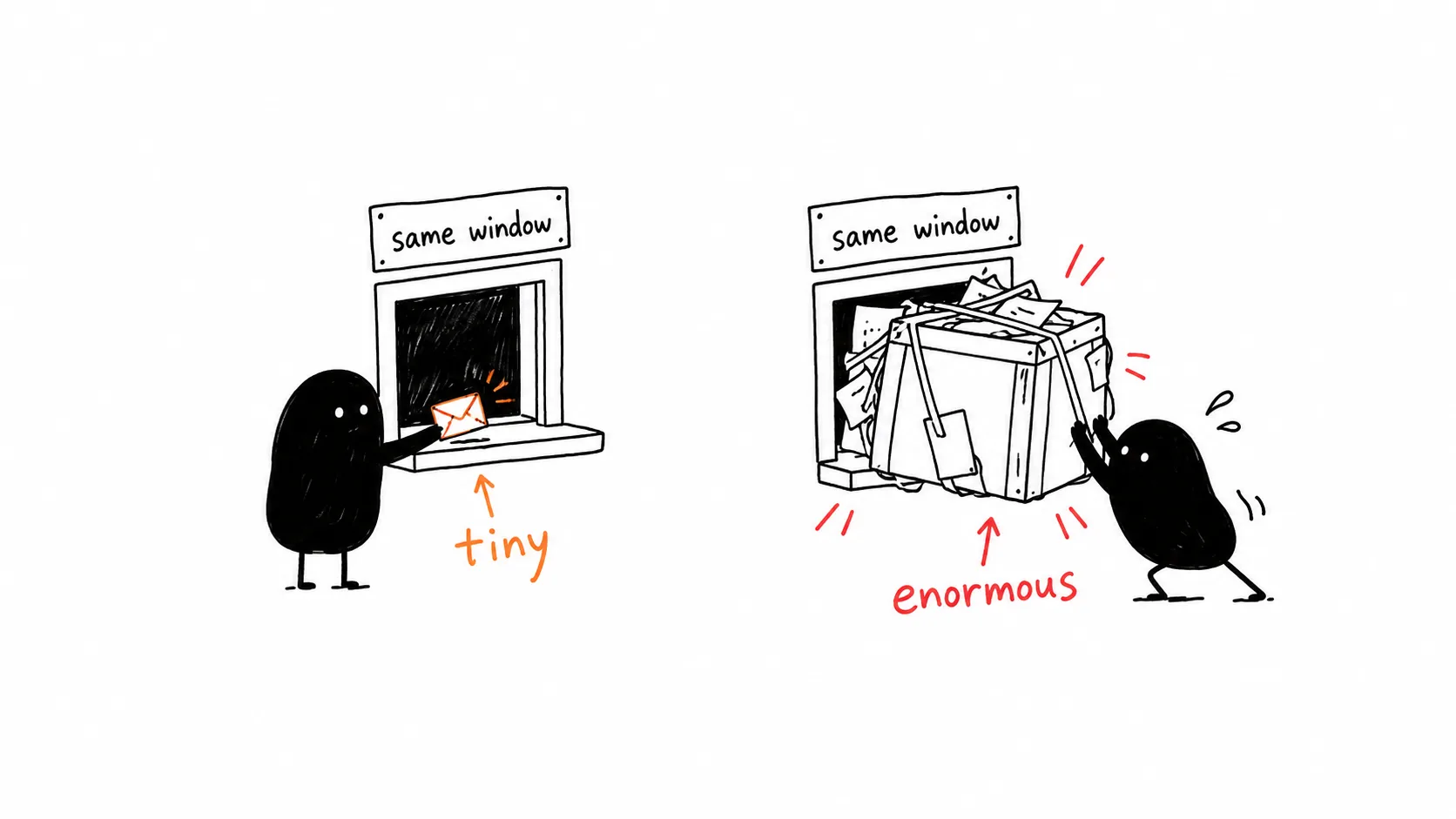
Two requests can both look like “one prompt” to a marketer while carrying radically different token loads.
The first:
Write five ad headline options for a new CRM.
There is almost no context. The input is tiny, and the output stays short.
The second:
Review our product description, the transcripts from 30 customer interviews, campaign results from the past year, the brand book, and our competitor analysis. Then propose new positioning and 20 campaign concepts.
To the person typing, that is still one prompt. To the model, it is a different category of work: a large body of material to process, followed by a substantially longer and more structured answer.
This is why “we only send one request” tells you nothing about cost or load. The useful question is how much information passes through the model on each run.
What a Context Window Actually Limits
The context window is the total amount of tokenized information a model can work with during a single request. It determines how much input you can send and how much room remains for the model’s response. Models usually also have a separate maximum-output limit.
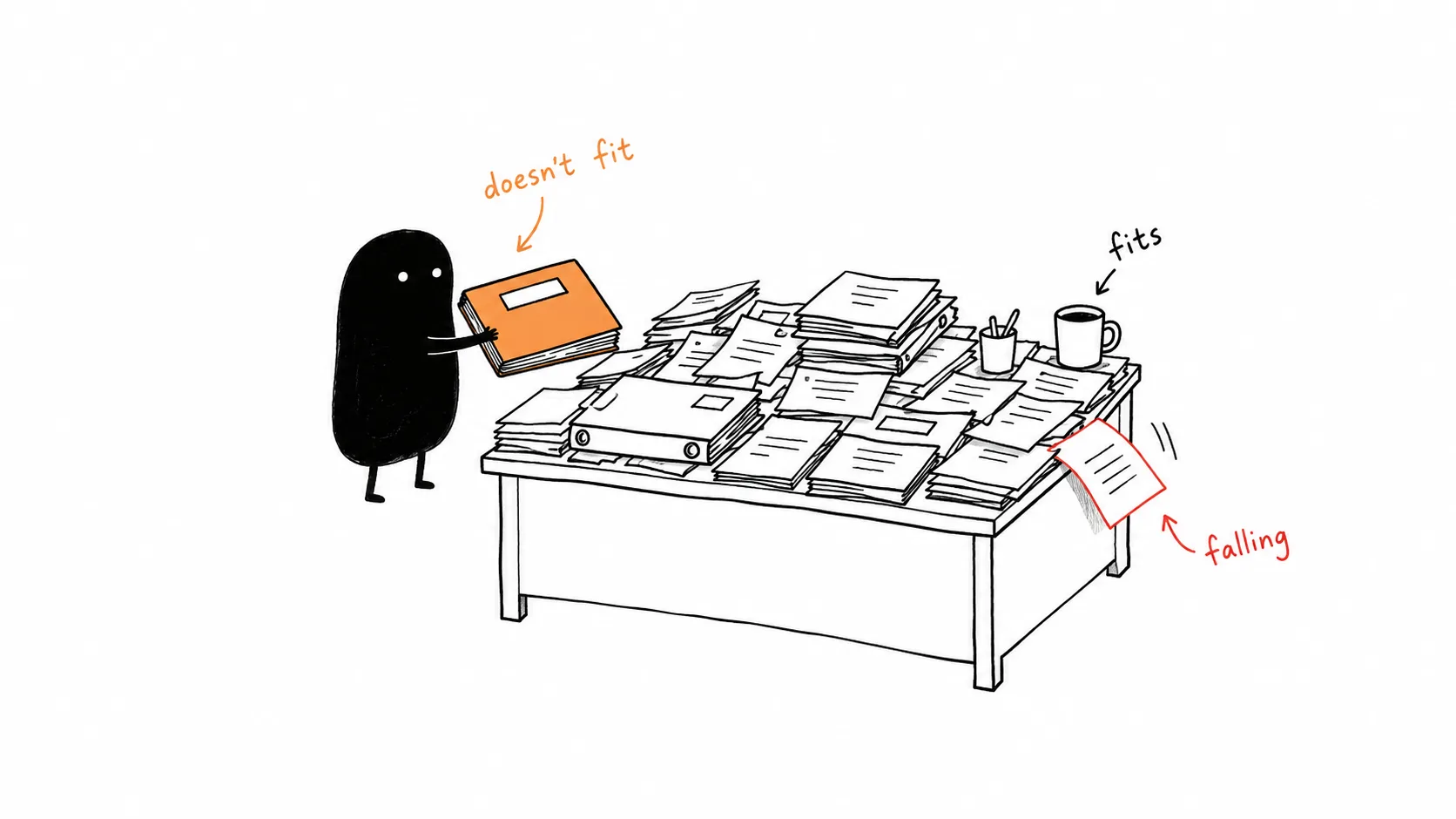
Think of a desk holding a brief, audience research, campaign results, a customer email thread, and three earlier drafts. As long as everything fits, you can work across it all at once. When the desk fills up, something has to come off.
Modern context windows are large. GPT‑5.6 Sol currently lists a 1,050,000-token context window and a maximum output of 128,000 tokens. That capacity enables genuinely new workflows, such as analyzing an entire year of campaign data in one pass or reviewing a full content library without breaking it into smaller pieces.
But a larger window is a ceiling, not a guarantee of better work. It tells you how much a model can accept in one request, not that every document inside it will shape the answer equally. More context can expand what the model is able to consider, but it does not guarantee that it will focus on the evidence, instruction, or customer insight that matters most.
More Context Is Not Automatically Better
This is one of the most expensive misunderstandings in AI marketing work, and it sounds reasonable right up until you test it.
Say you want a campaign concept. Instead of writing a real brief, someone uploads 200 pages of old decks, three years of company posts, a stack of internal reports, and several hundred reviews. Technically, the model now knows more. Practically, the signal is competing with a lot of material that has nothing to do with the decision in front of it.
It is the equivalent of onboarding a new marketer by pointing at the shared drive and saying, “Read all of this, then bring me a campaign.” Maybe they surface the right three files, or maybe they spend half a day inside a deck nobody has opened since 2023. The model is in the same position, with less ability to ask which folder matters.
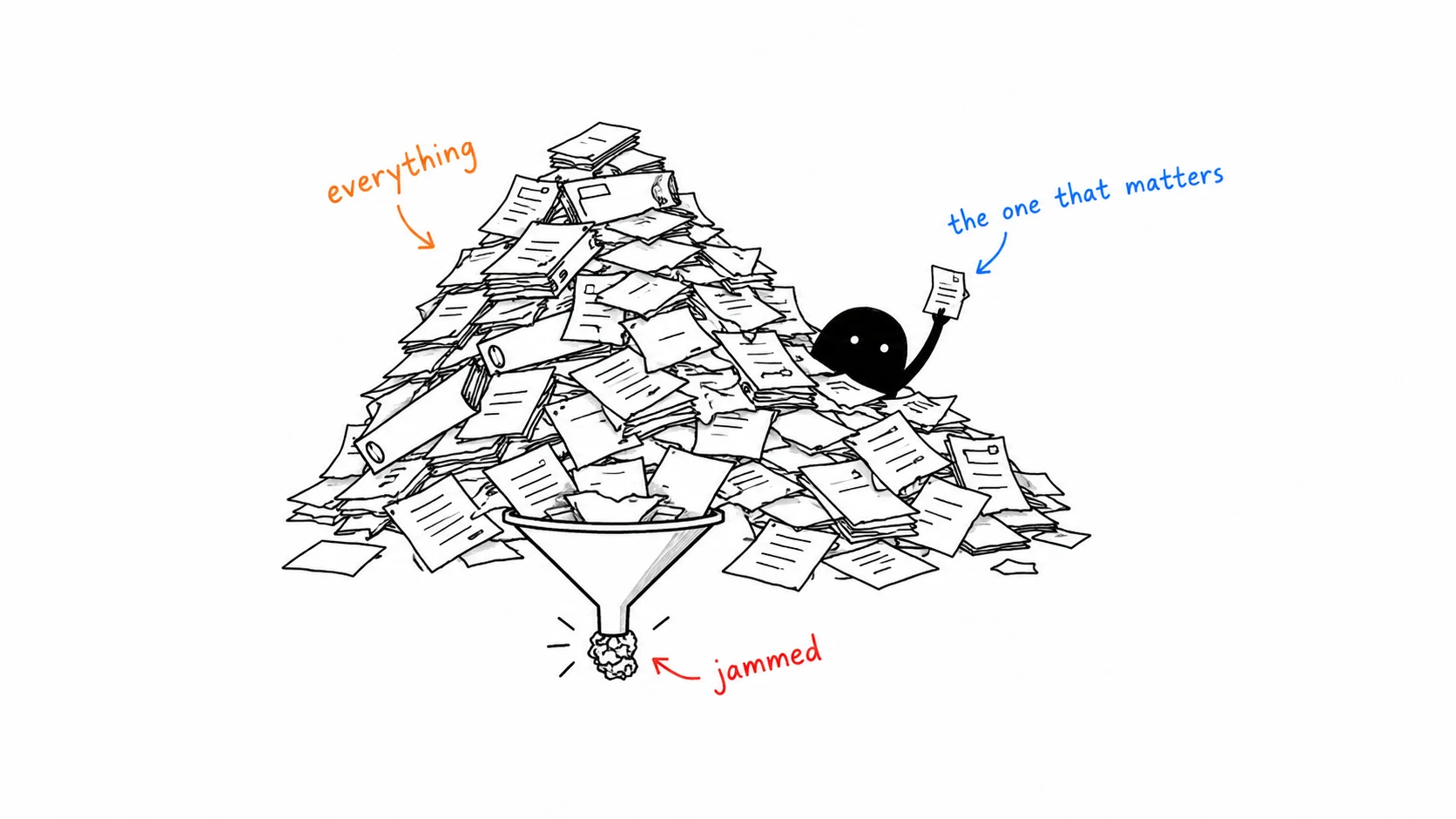
The fix is not smaller inputs for their own sake. The distinction worth making is between context that helps the decision and context that merely happens to exist.
Two customer interviews where people describe the problem in their own words will usually beat fifty pages of persona documentation. Last quarter’s results matter more than the archive. This is the practical core of context engineering: deciding what the model needs to know before you ask it to work, rather than sending everything and hoping.
There is a quick test for any block of context before it goes into a prompt. Is it relevant to this specific task, specific about the outcome you want, current rather than carried over from last quarter, and sufficient to answer without guessing? Garbage in, garbage out frames the working rule as giving the model the least that is sufficient, which is a more useful target than simply sending less.
A well-maintained Brand DNA document does exactly this job. It gives the model a compact, current version of voice, audience, and positioning instead of making it infer those things from a pile of old collateral.
Where the Money Actually Leaks
At the level of one person in one chat window, none of this matters much. The economics change when the same call runs on a schedule.
Picture an e-commerce team running an automation that drafts a first-pass reply to every incoming support ticket, a thousand times a day. Before each run, it sends a long system instruction, a company description, tone of voice rules, the brand book, product details, and a few example outputs. If that block is genuinely required for the task, fine. If half of it never changes the answer, you are paying to process the same unused text a thousand times daily, then thirty thousand times a month.
There is a second, sharper version of this problem. OpenAI prices requests above 272,000 input tokens at double the input rate and 1.5 times the output rate for the entire request, not just the portion over the line. A workflow that gradually accumulates conversation history can cross that threshold without anyone noticing, and the cost step is not gentle.
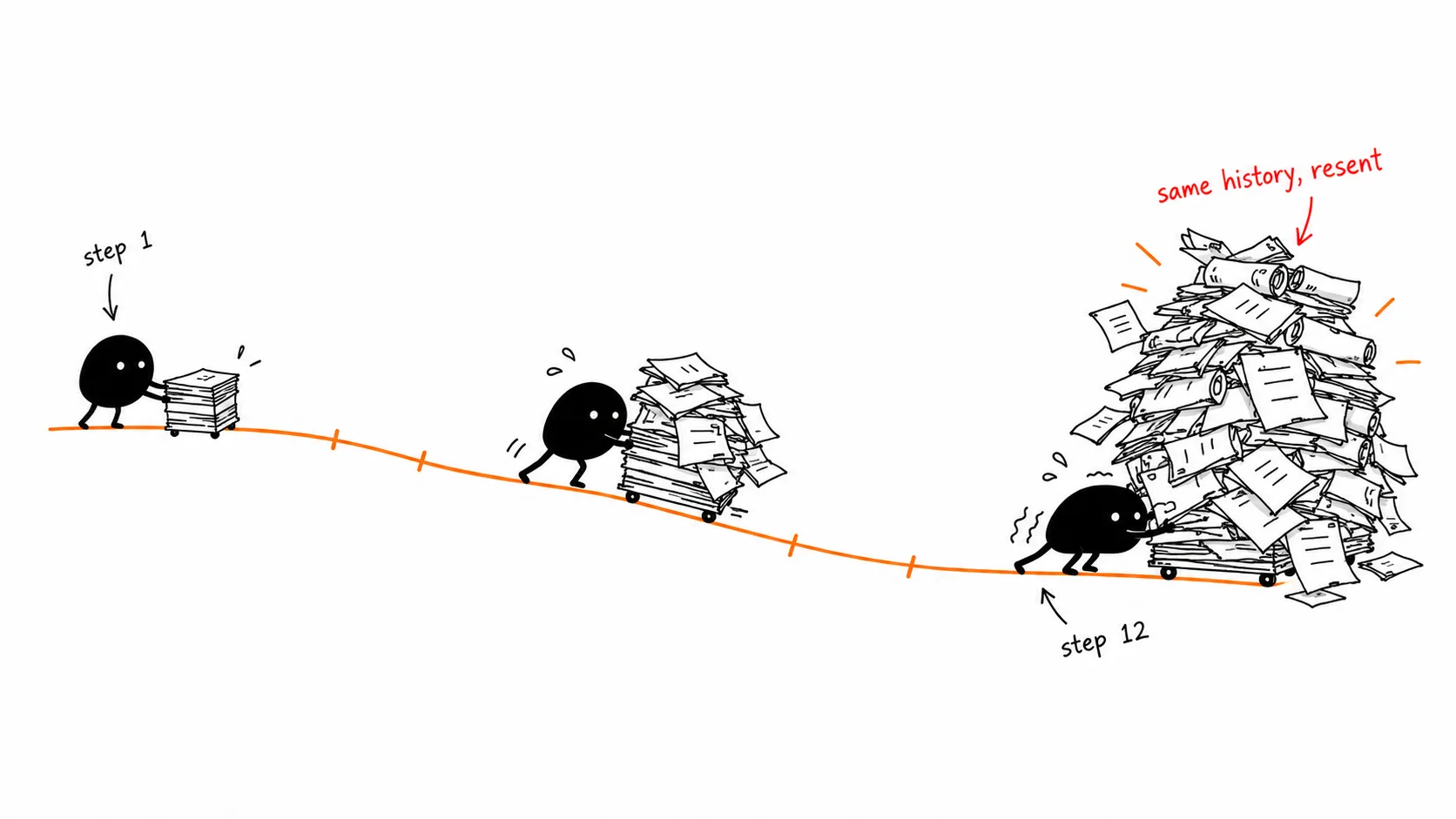
Agents make this effect much bigger. An agent works in several steps, and the model has no memory between them, so each new step has to be given the earlier messages, instructions, and tool results it needs to continue. The text processed across a whole run ends up far larger than the context you can see at the end of it.
In a simplified example, assume each of the 12 steps adds 5,000 tokens and every call resends the accumulated history. The visible context grows from 5,000 tokens at step one to 60,000 by step twelve. Across all twelve requests, the model processes about 390,000 input tokens, because the total is 5,000 plus 10,000 plus 15,000 and so on up to 60,000. That is before counting system instructions, generated output, or tool results. A tool that returns a full document instead of the three relevant lines gets charged again on every later step. The engineering version of this is what an agent actually costs.
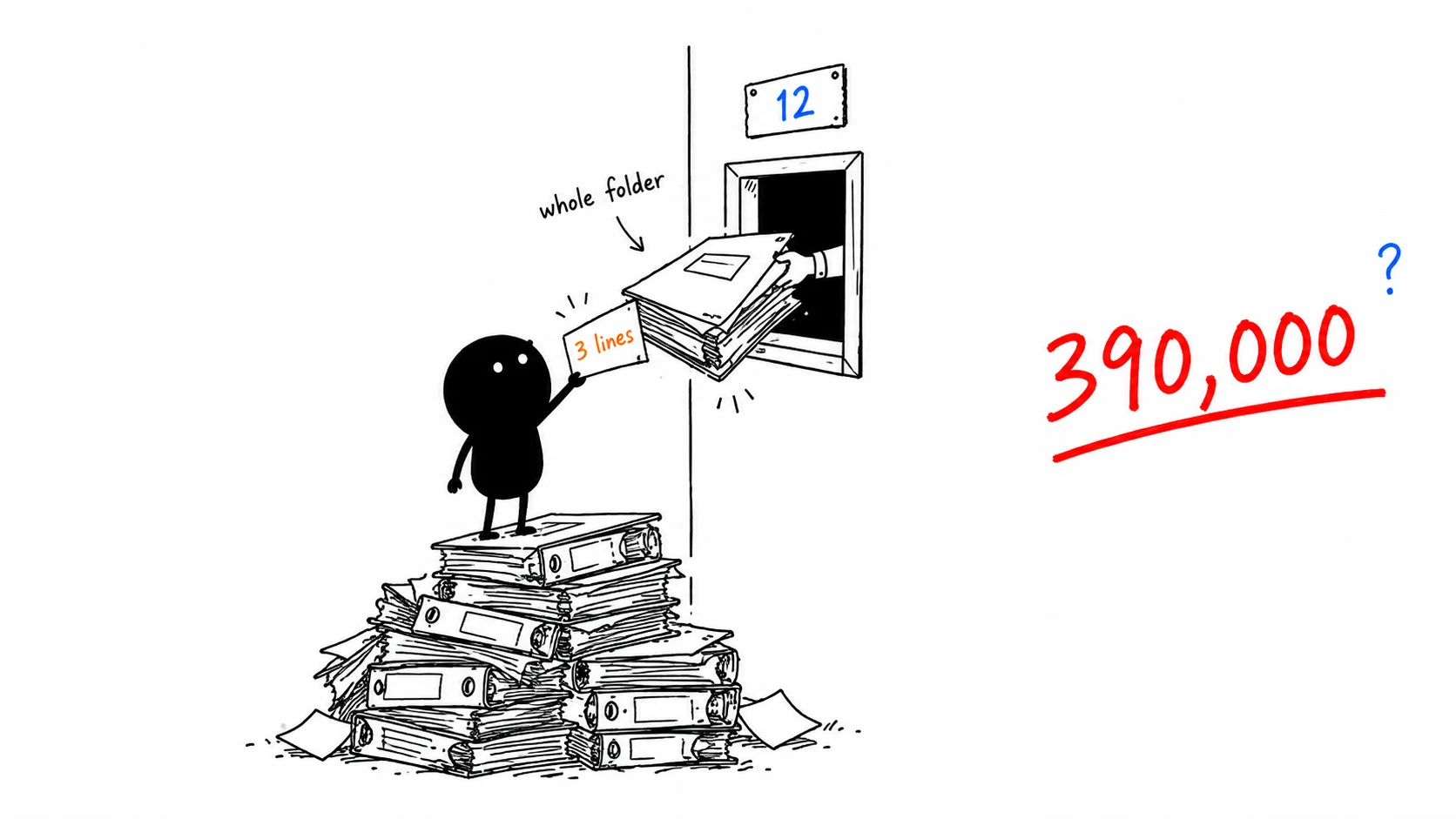
None of this argues for starving the model. The first optimization question is not whether there is a cheaper model. It is whether this prompt needs all of this context every single time.
What This Changes About How You Brief AI
Once tokens make sense, a few things change about how you write a brief.
Send the current version of things, not the archive. One updated positioning document beats six historical ones that still contain claims you retired last spring.
Start new chats for new tasks. Long-running conversations can carry a large amount of earlier context into each new request, increasing token usage and making the current task compete with older information.
Watch for repeated blocks. Anything your system sends on every call is worth evaluating as a caching candidate.
Ask for the output shape you actually want. “Give me three options, two sentences each” and “give me a full campaign plan” differ by an order of magnitude on the expensive side of the ledger.
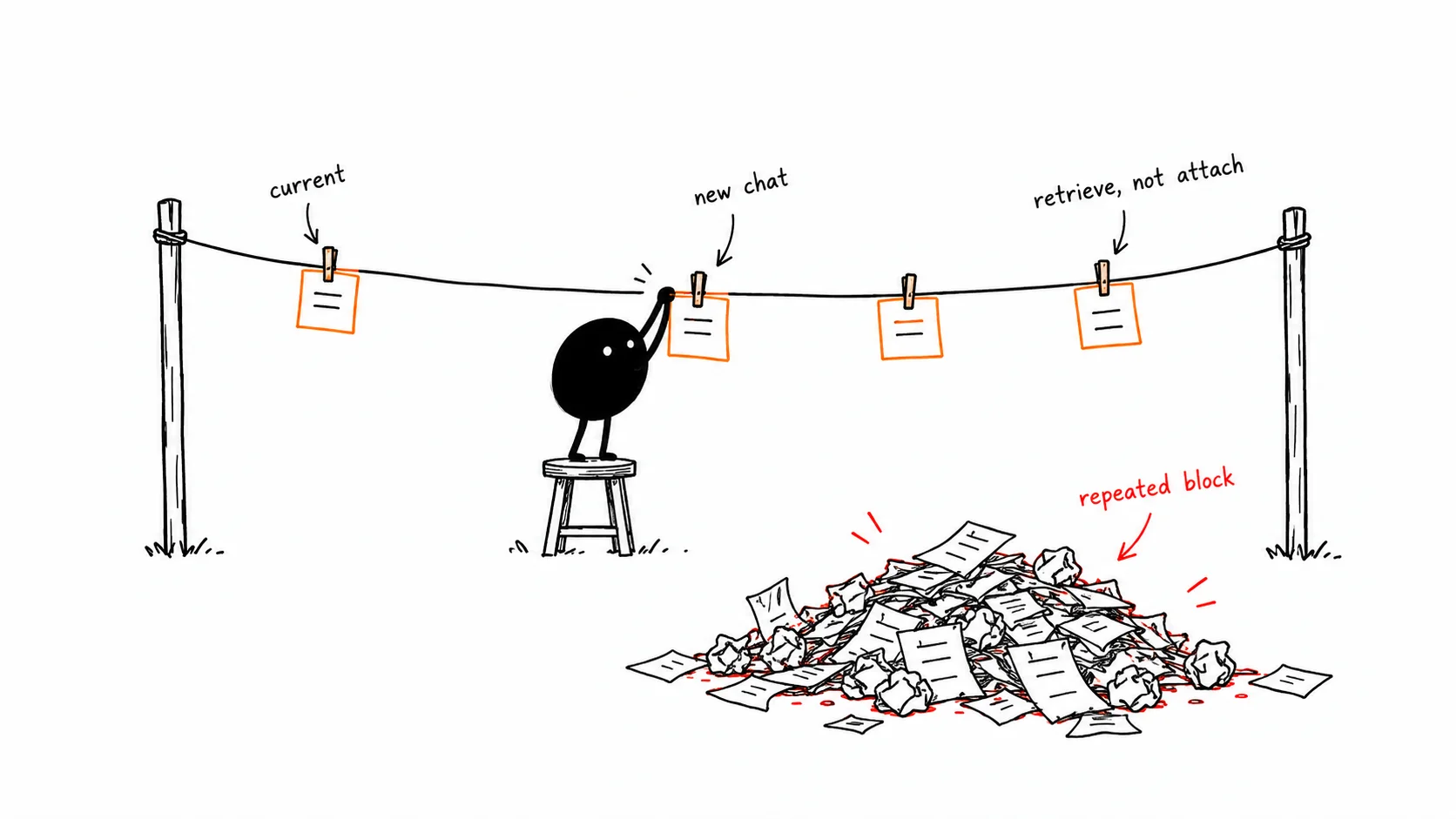
Retrieve instead of attaching. A system that fetches the two relevant passages at the moment a task needs them costs less and usually answers better than one that carries the whole knowledge base into every request.
This becomes more important, not less, when work moves from single prompts to AI marketing workflows with several connected steps, and more important again with AI marketing agents, where the system built around the model decides what context to retrieve, preserve, and reuse across tasks.
At Nova Express, we are building around this problem directly: how a small team keeps one reliable set of brand, product, and audience context available across AI-assisted work, instead of rebuilding it inside every prompt.
You Do Not Need to Count Tokens
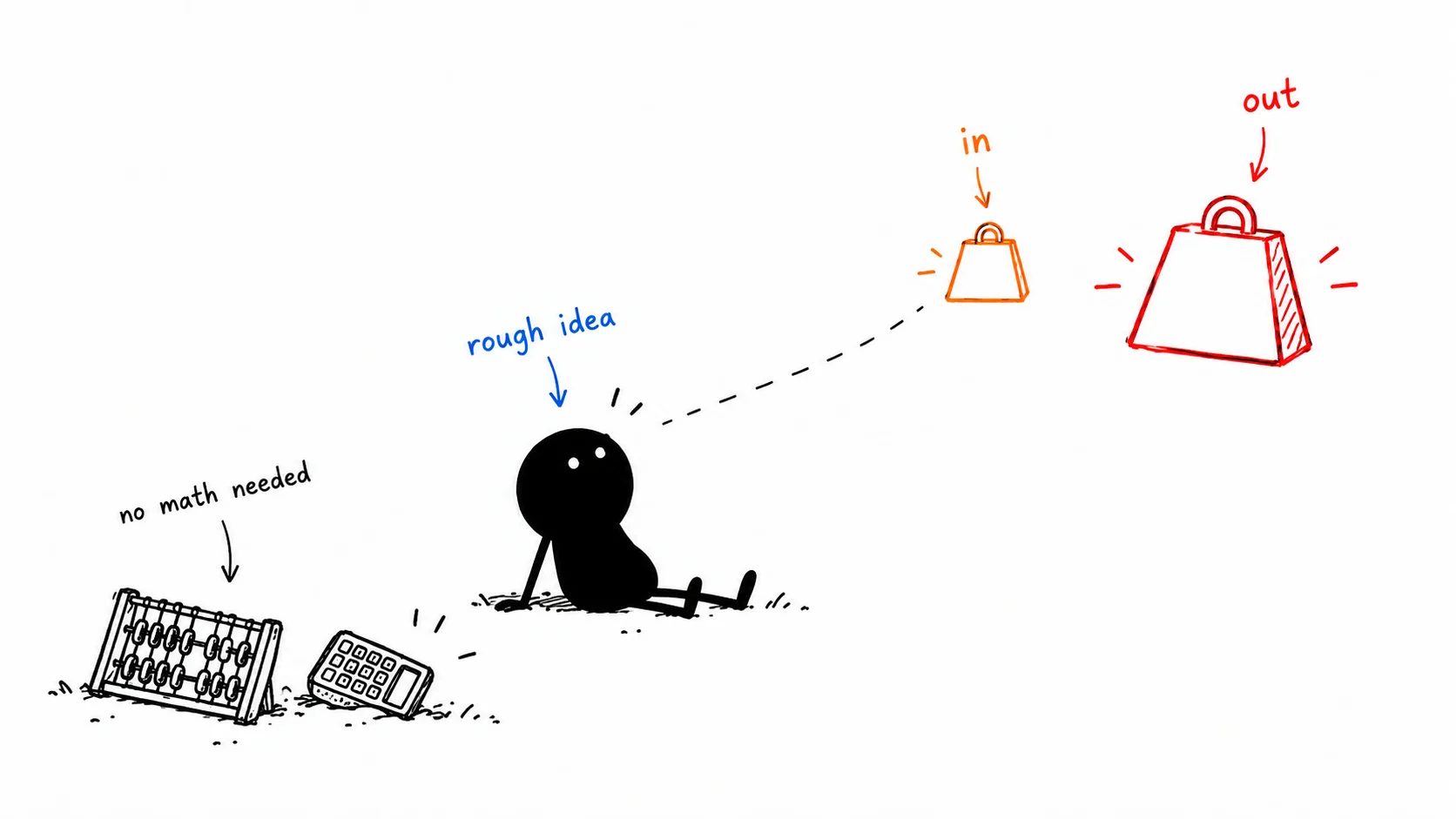
Nobody should sit with a calculator before writing a prompt. For everyday chat use, the number is irrelevant.
The rough picture is enough. Everything you send occupies space and costs something. On many API models, output costs more than input, and repeated context repeats its cost every time it runs.
A few years ago, the vocabulary a marketer needed was CPC, CPM, CTR, and CAC. Tokens, context windows, and caching are joining that list for the same reason those did: AI is becoming marketing infrastructure, and infrastructure has an economics.
You don’t need to count tokens; just carry a rough sense of cost.
So the next time someone suggests loading the entire knowledge base into AI and asking it to figure things out, two questions are worth asking. How much of this does the model actually need for this task? And what is the rest of it doing?
FAQ
How many tokens is a typical prompt?
There is no useful typical number, because prompts vary enormously. For English, one token averages about four characters, so roughly 750 words per 1,000 tokens. A short chat message might be 50 tokens. A 2,000-word brief is around 2,700. A text-heavy 50-page PDF can easily run past 25,000 once its text is extracted. Most model providers publish a tokenizer tool where you can paste text and see the exact count.
Do input and output tokens cost the same?
No, and the gap is wide. On GPT-5.6 Sol as of September 2026, input runs $4 per million tokens, while output runs $20. Eligible repeated prompt content, such as a stable system instruction block, can be billed at the lower cached-input rate of $0.40. Tasks that read a lot and answer concisely are much cheaper than tasks that generate long outputs from short prompts.
Does a bigger context window mean better results?
Not by itself. A larger window raises the ceiling on what you can send in one request, which genuinely helps for tasks like reviewing a full content library. But the size of the window tells you what the model can accept, not that everything inside it will shape the answer. Relevance still beats volume.
What runs up token costs without anyone noticing?
Long-running threads that carry the whole history into each new request. System prompts and brand documents attached to high-frequency automations without caching. Tool calls that return far more content than the task needed. And requests that cross a provider’s long-context pricing threshold, where the higher rate applies to the entire request rather than just the excess.
Should marketers care about tokens if they only use ChatGPT?
Not at the level of counting them. In a chat window, the useful habit is thinking about which context the model actually needs, not tracking numbers. Tokens start to matter when the work moves to an API, an automation, or an agent that runs the same request repeatedly.
Further Reading:
- Brand DNA: The Missing Piece Between Your Brand and AI
- What Is an AI Marketing Agent?
- AI Marketing Workflows: 7 Practical Examples for 2026
- How to Use AI to Build a Marketing Strategy From Your Website
- GPT-5.6 Sol model documentation, OpenAI
- What an agent actually costs, StackNova
- Garbage in, garbage out, StackNova
- What Is a Token? — StackNova
About the author
Serafima Osovitny is a Marketing Manager at Nova Express, where she focuses on digital marketing, search visibility, content strategy, and marketing workflows. She writes practical guides that help marketing teams research their audiences, develop strategies, and put their plans into action.
Explore her work at serafima.digital and follow her on X: @OSerafimaA.







Leave a Comment