

Why methods from the ’80s outperform modern “hacks” and how to apply them today.
Dan Kennedy sold info products via physical mail long before the digital age. While cassettes and VHS tapes have been replaced by cloud services and online courses, his methods remain effective because they are built on human psychology rather than technology. Techniques like the fear of missing out worked in 1985 and remain just as powerful in 2026.
This approach really pays off in email marketing, which remains one of the highest-ROI channels in marketing. Litmus reports an average of $36 for every $1 invested (36:1), and in 2026, many companies in e-commerce, retail, and agencies are hitting $42–$45:1. Success boils down to writing messages people actually want to read. Sometimes, just tweaking the preheader can boost open rates by 30%.
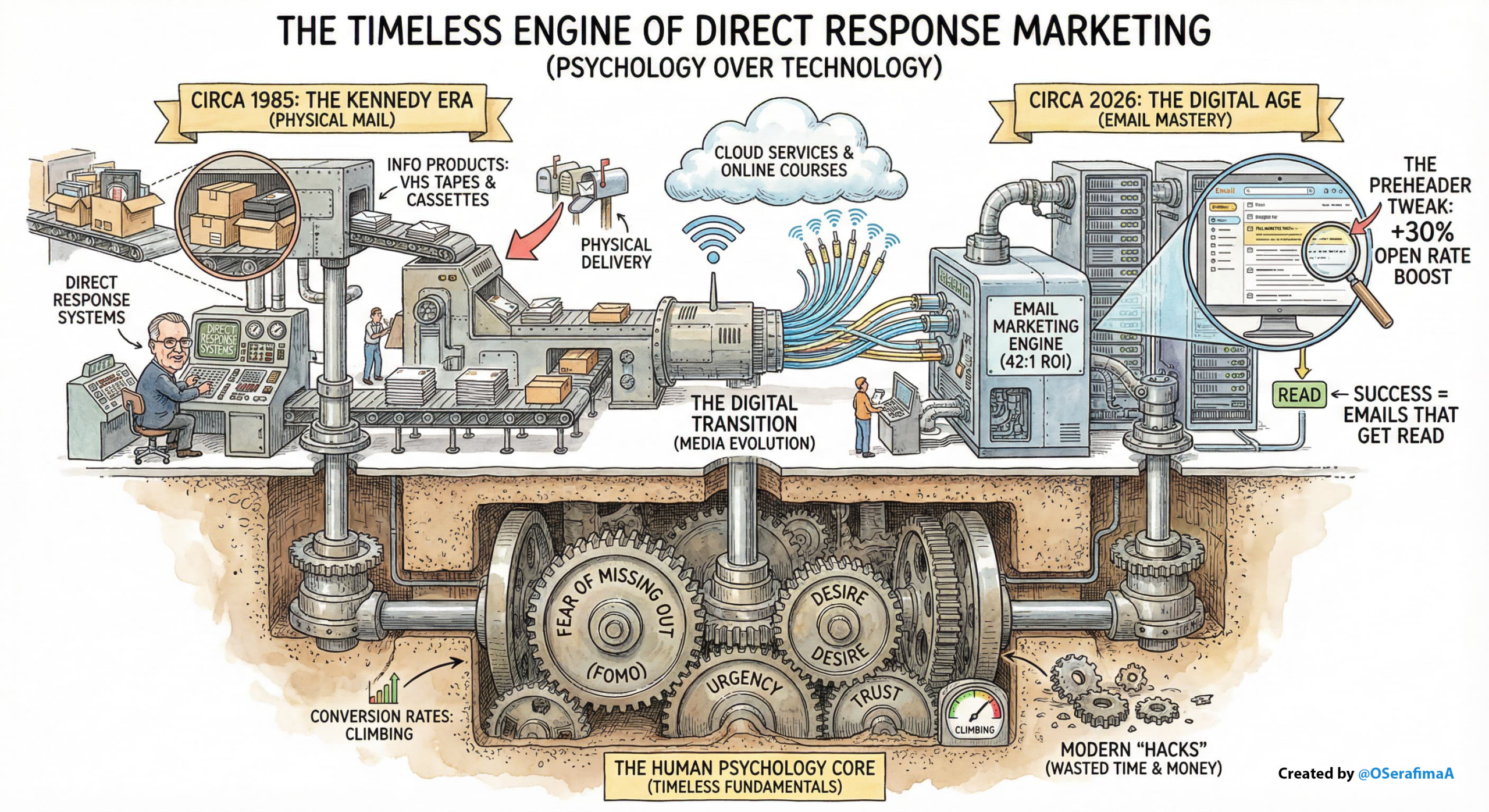
The engine hasn’t changed, only the fuel. Kennedy’s principles still power email marketing in 2026.
1. Your welcome email is boring. Mine got 61% opens.
Six months ago, I ran a welcome sequence for a SaaS client. The first email was… fine. “Thanks for signing up! Here’s what to expect.” Professional. Clean. Forgettable.
Open rate: 34%. Click rate: 8%. Replies: zero.
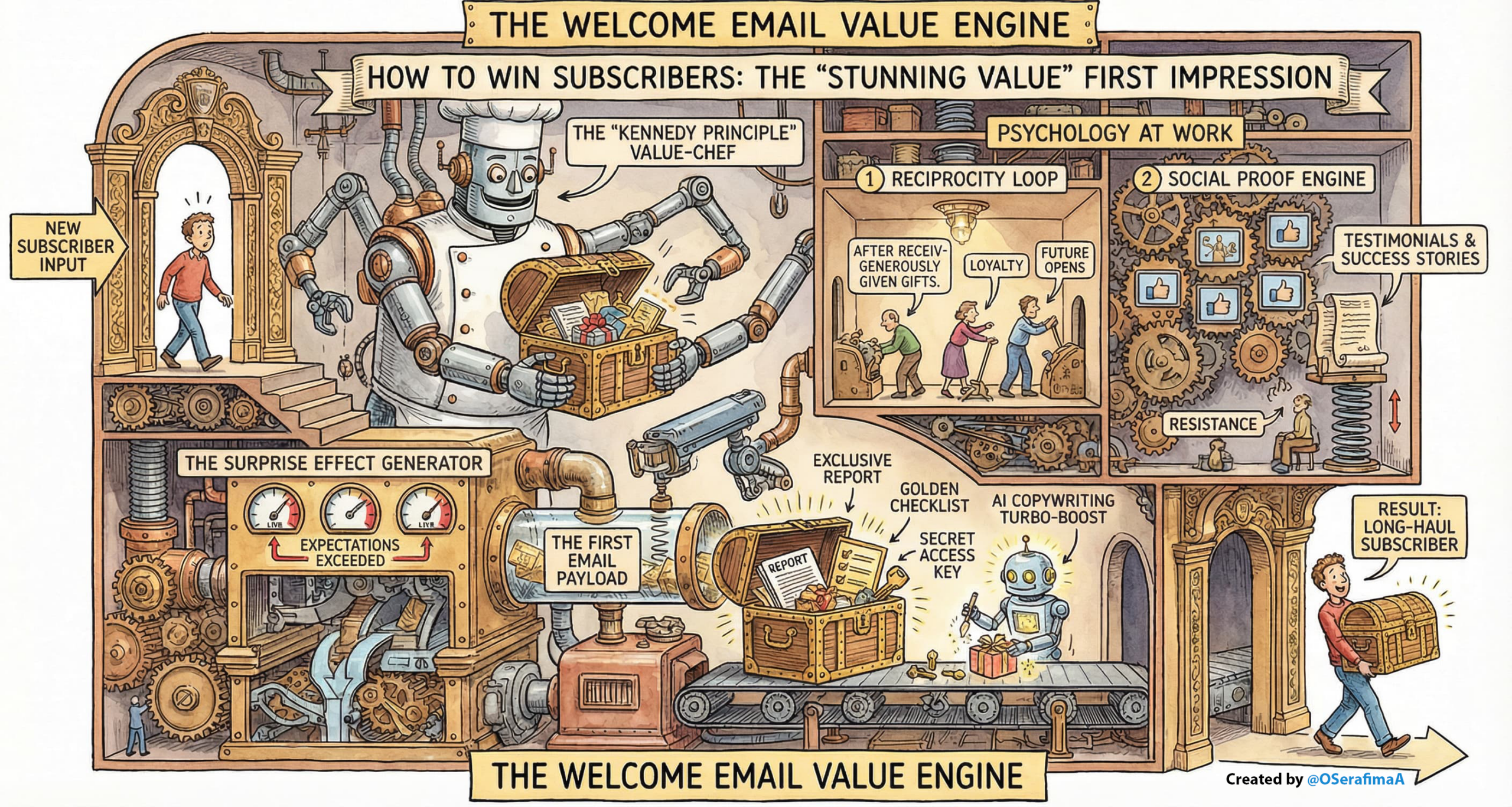
Then I remembered something Kennedy wrote about restaurants. Imagine walking into one, and instead of a menu, the chef himself comes out. He tells you about the dishes, where the ingredients come from, and offers you something made just for you. That’s not a transaction that’s an experience.
So I rewrote the welcome email. Instead of “here’s what to expect,” I packed it with a free 15-minute audit video, a checklist we normally sell for $47, and three case studies from businesses exactly like theirs. The email was twice as long. I was nervous it was “too much.”
The results? Open rate jumped to 61%. Click rate hit 24%. And for the first time, people started replying not to complain, but to say thank you. I had added one simple question at the end: “What’s the #1 thing you’re hoping to solve?” That single line turned a broadcast into a conversation.
That’s when I understood what Kennedy meant by “Shock and Awe.” It’s not about being generous for the sake of it. It’s about breaking the pattern. Every other welcome email says “thanks for subscribing.” Yours should say “here’s more value than you expected – and this is just the beginning.”
The psychology is simple. When you give more than expected, you create surprise. Surprise creates emotion. Emotion creates connection. And connection is what turns a subscriber into a buyer.
Try this: Open your welcome email right now. Ask yourself – would I be impressed if I received this? If the answer is “it’s fine,” that’s the problem. “Fine” doesn’t build loyalty. Overwhelming generosity does. Need inspiration? Check out our free welcome email templates.
2. How “Too Expensive” Stopped Being an Objection
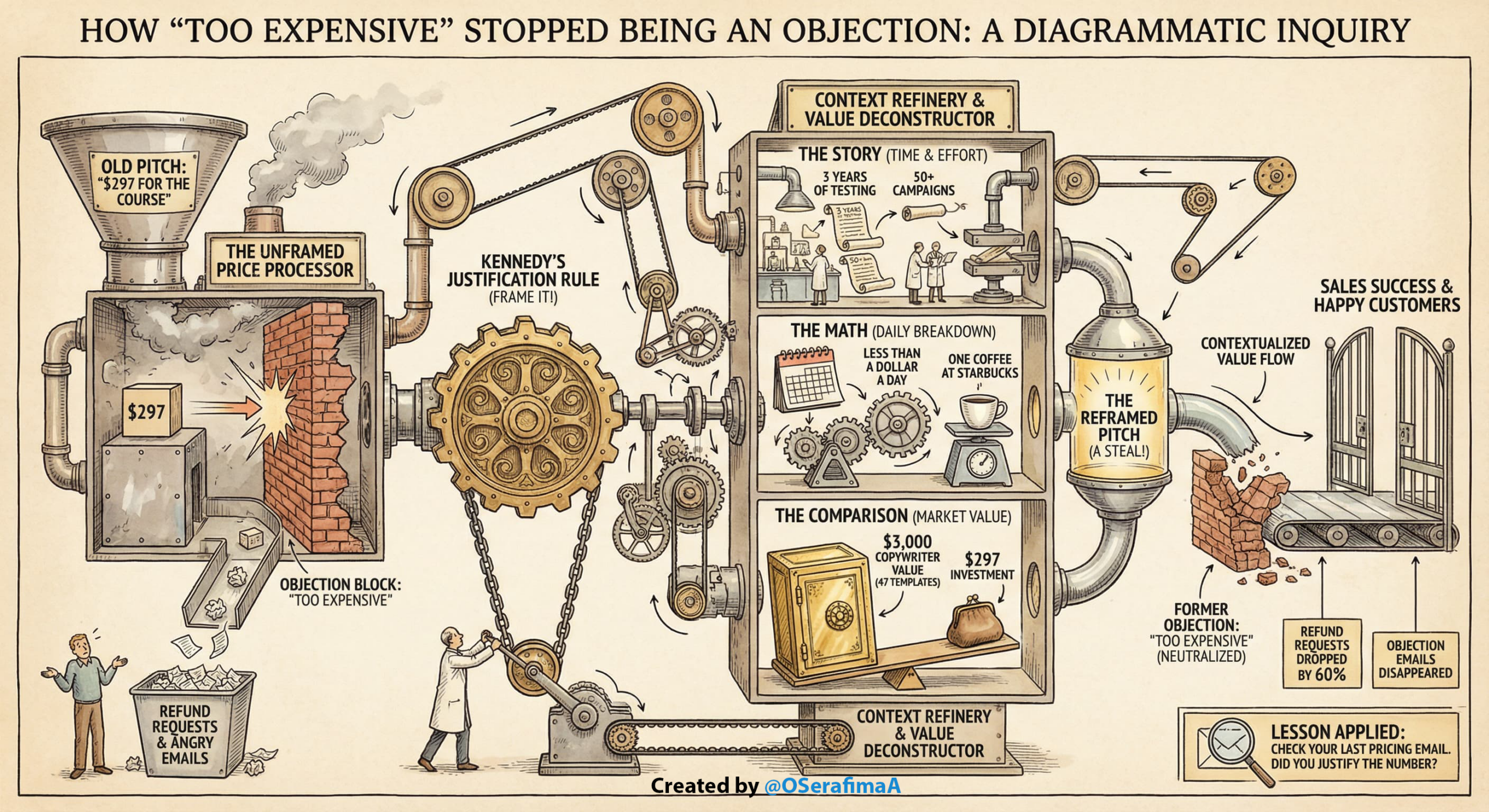
Last fall, I launched a $297 course for a client. The sales page was solid. Traffic was good. But the same objection kept coming back: “Looks great, but it’s too expensive.”
Then I remembered Kennedy’s justification rule: never state a price, frame it. So, I rewrote the pitch. Instead of “$297 for the course,” I broke it down: “Three years of testing across 50+ campaigns. 12 modules. 47 templates you’d pay a copywriter $3,000 to create. That’s less than a dollar a day for a year or one coffee at Starbucks.” Same price. Different frame. Refund requests dropped by 60%, and “too expensive” emails disappeared.
Here’s the lesson: price is never the real problem. Lack of context is. When you show the math, the story, and the comparison, the number stops feeling like a cost and starts feeling like a steal.
Try this: find your last pricing email. Did you just state the number, or did you justify it?
3. The 80/20 Rule in Email: How Segmentation Doubled Results
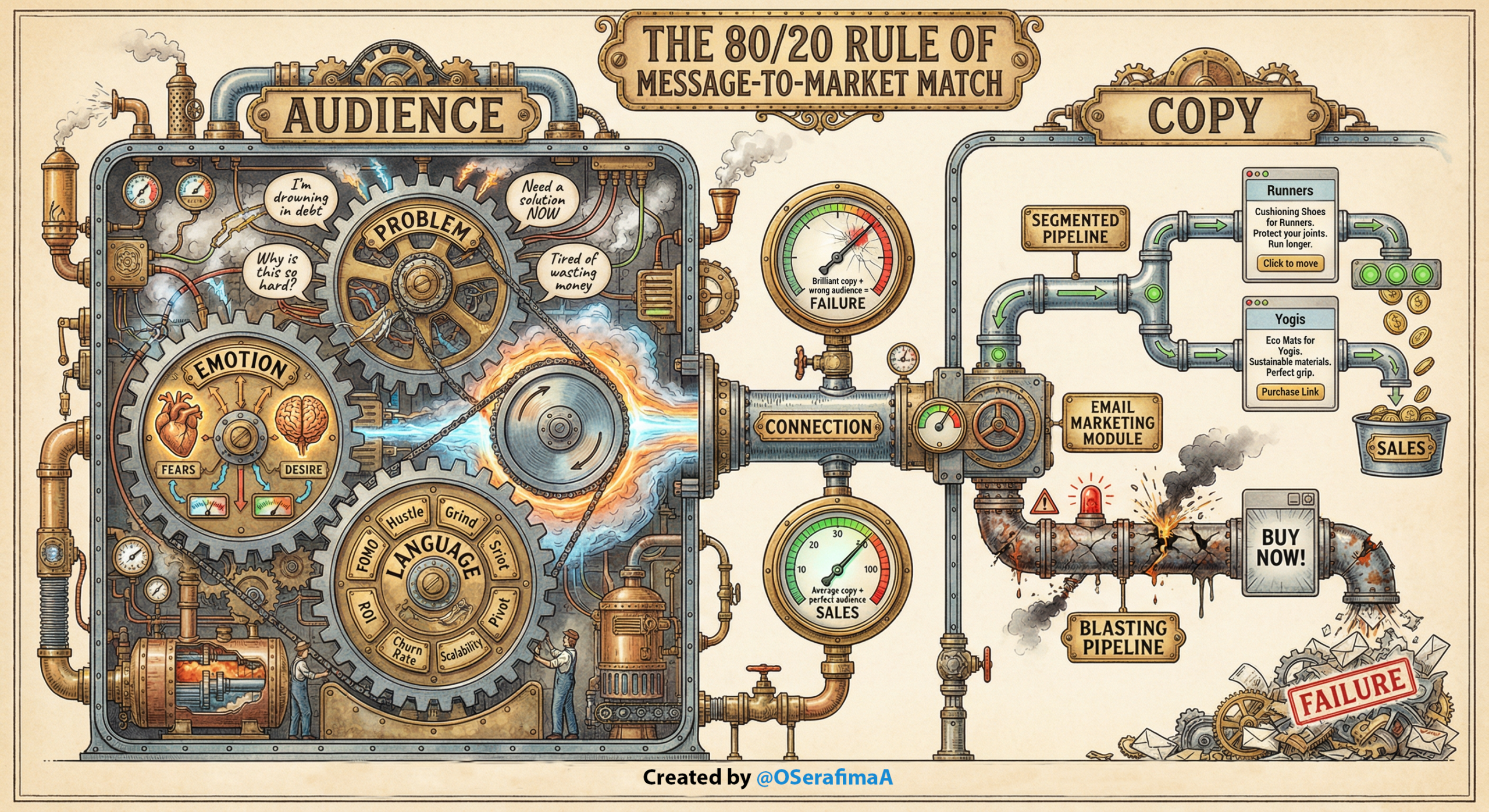
Two years ago, I sent the same promo to my entire list of 12,000 subscribers. The offer was good. The copy was tight. Open rate: 22%. Conversions: 11. Just eleven people out of 12,000 (a miserable 0.09%). I wanted to quit email marketing that day.
Then I split the list. Runners got emails about cushioning and pace tracking. Yogis got emails about eco-mats and flexibility. Same product line, different angles. The next campaign hit a 41% open rate and 340 conversions. Kennedy was right: “Better to be something for someone than nothing for everyone.” The 80/20 rule isn’t a theory; it’s math. 80% of your results come from matching the message to the market, not from clever copy.
Try this: look at your last blast. Did everyone get the same email? If yes, you’re leaving money on the table. Segment by behavior, interest, or purchase history. Then watch what happens. Want to go deeper? See our Email Segmentation Guide.
4. When Fake Urgency Backfires
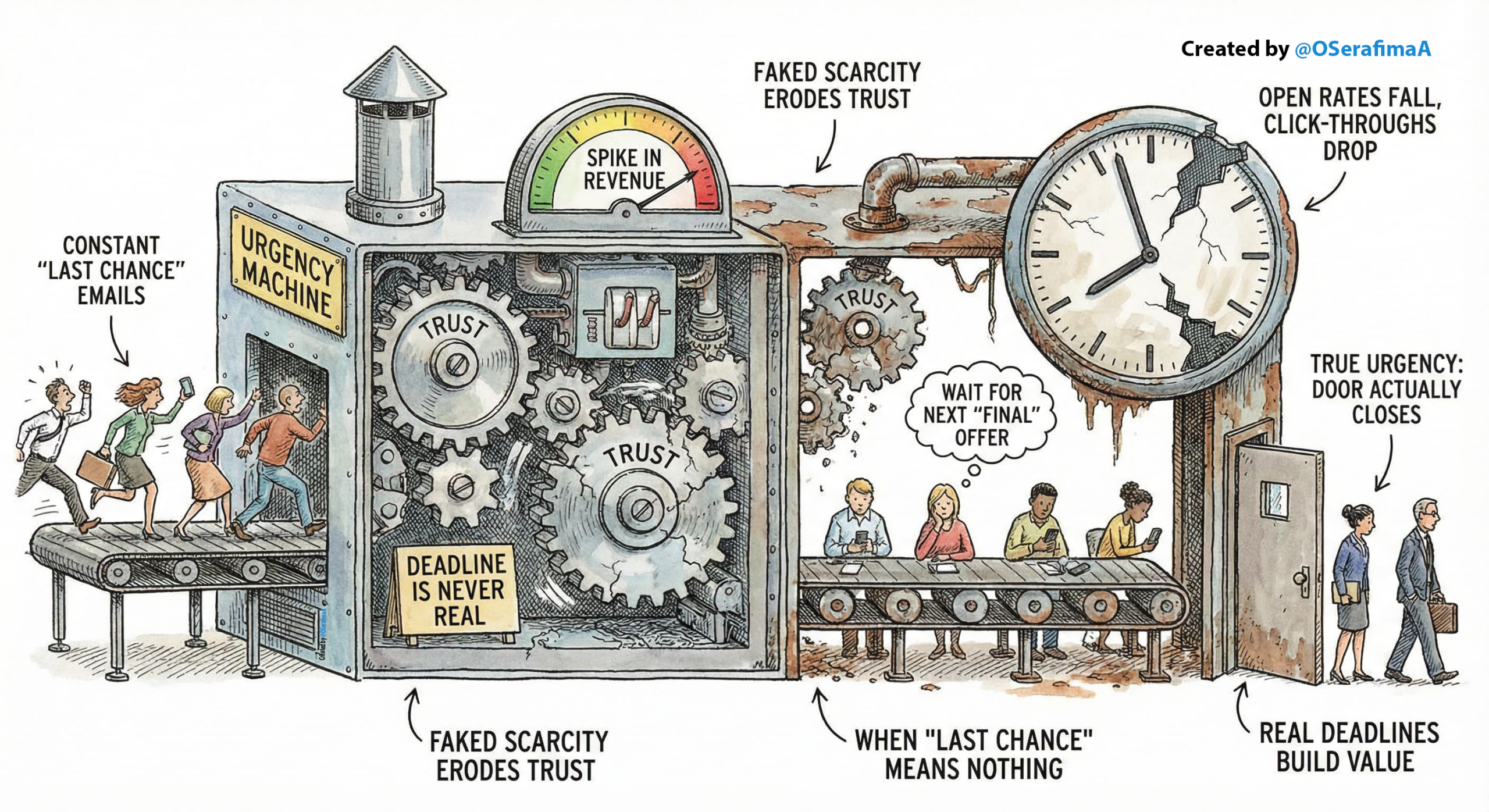
Many brands lean on endless “last chance” and “ends tonight” emails to push sales, but over time, people stop reacting and simply wait for the next “final” offer. At first, these campaigns create a spike in revenue, but then something predictable happens: open rates fall, click‑throughs drop, and subscribers stop taking action. Instead, they wait, because they’ve learned the “final offer” isn’t final at all.
The problem isn’t urgency itself; it’s that the deadline is never real.
5. How to Create Real Urgency That Builds Trust
Dan Kennedy put it plainly: if scarcity is fake, trust erodes. When a “one-day sale” returns every week like clockwork, people stop believing you at all.
True urgency only works when the door actually closes, with limited seats, fixed start dates, and bonuses that vanish for good. Use deadlines sparingly. Make them real. And your audience will learn that when you say “last chance,” it’s worth paying attention.
6. One structural change turned 0.8% into 3.4%
Last spring, I wrote a sales email for a client’s course launch. Clear benefits. Strong CTA. Professional copy. Conversion rate: 0.8%. I knew something was broken.
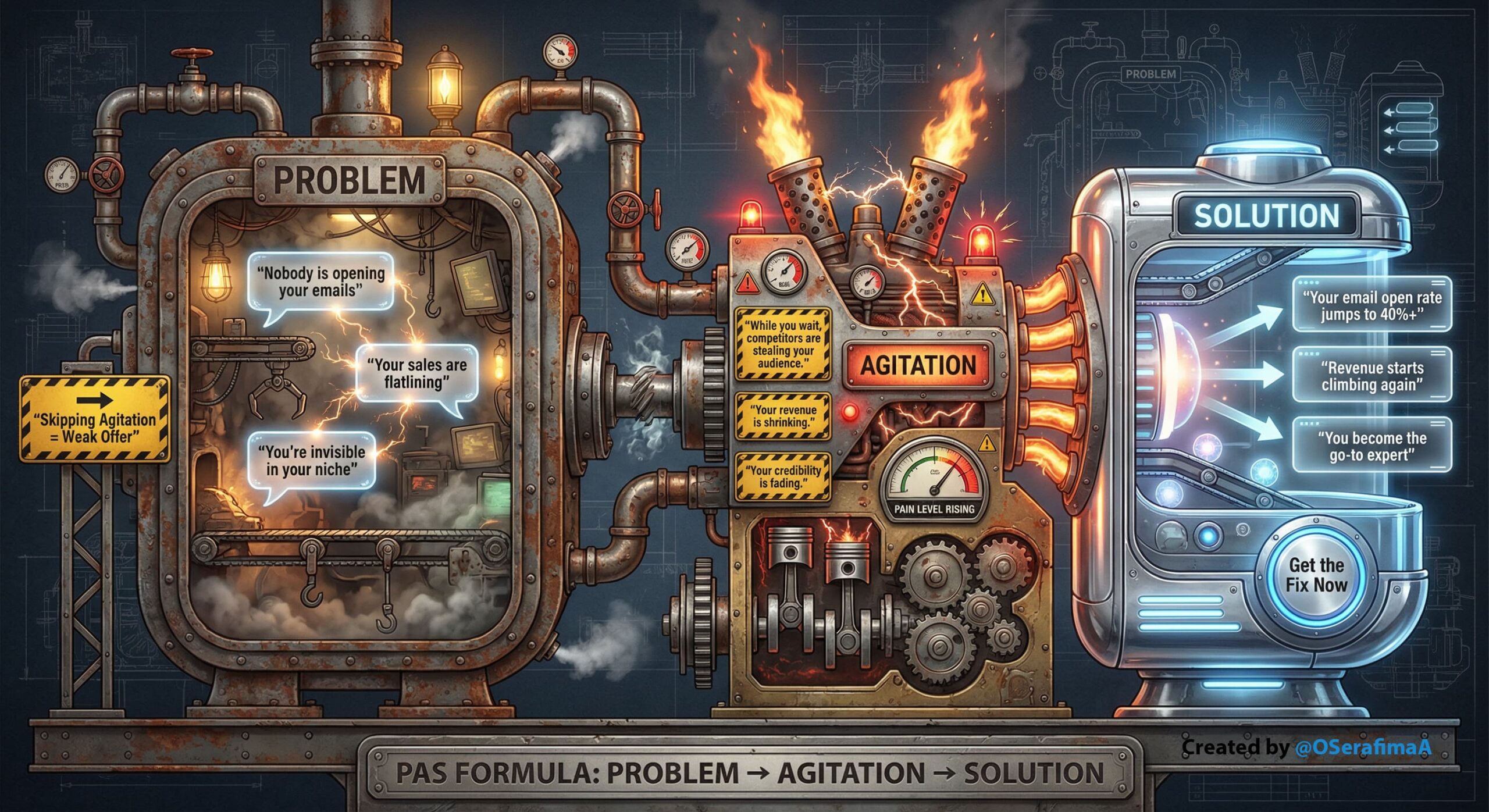
That’s when I recalled Dan Kennedy’s classic PAS structure:
- Problem: Name the reader’s pain.
- Agitation: Make them feel the cost of ignoring it.
- Solution: Only then offer your fix.
My email had skipped the first two steps entirely. No pain. No tension. It was a solution nobody had asked for.
So I rewrote it. New opening: “You’ve sent 47 emails this month. How many replies did you get?” Then the twist: “Every day you wait, your competitors are landing in the inbox while you’re stuck in promotions.” Only then – the solution. Same course. Same list. Conversion rate: 3.4%. A 4x increase from one structural change.
Here’s what I learned: people don’t buy solutions. They buy relief from pain. Most marketers skip “agitation” because it feels negative. But without it, your offer is just another “nice-to-have.”
Try this: Open your last sales email. Did you make them feel the pain before pitching? If not, you know what to fix. For more formulas like this, see 6 Email Copywriting Formulas That Convert.
7. Two Words That Doubled Webinar Signups
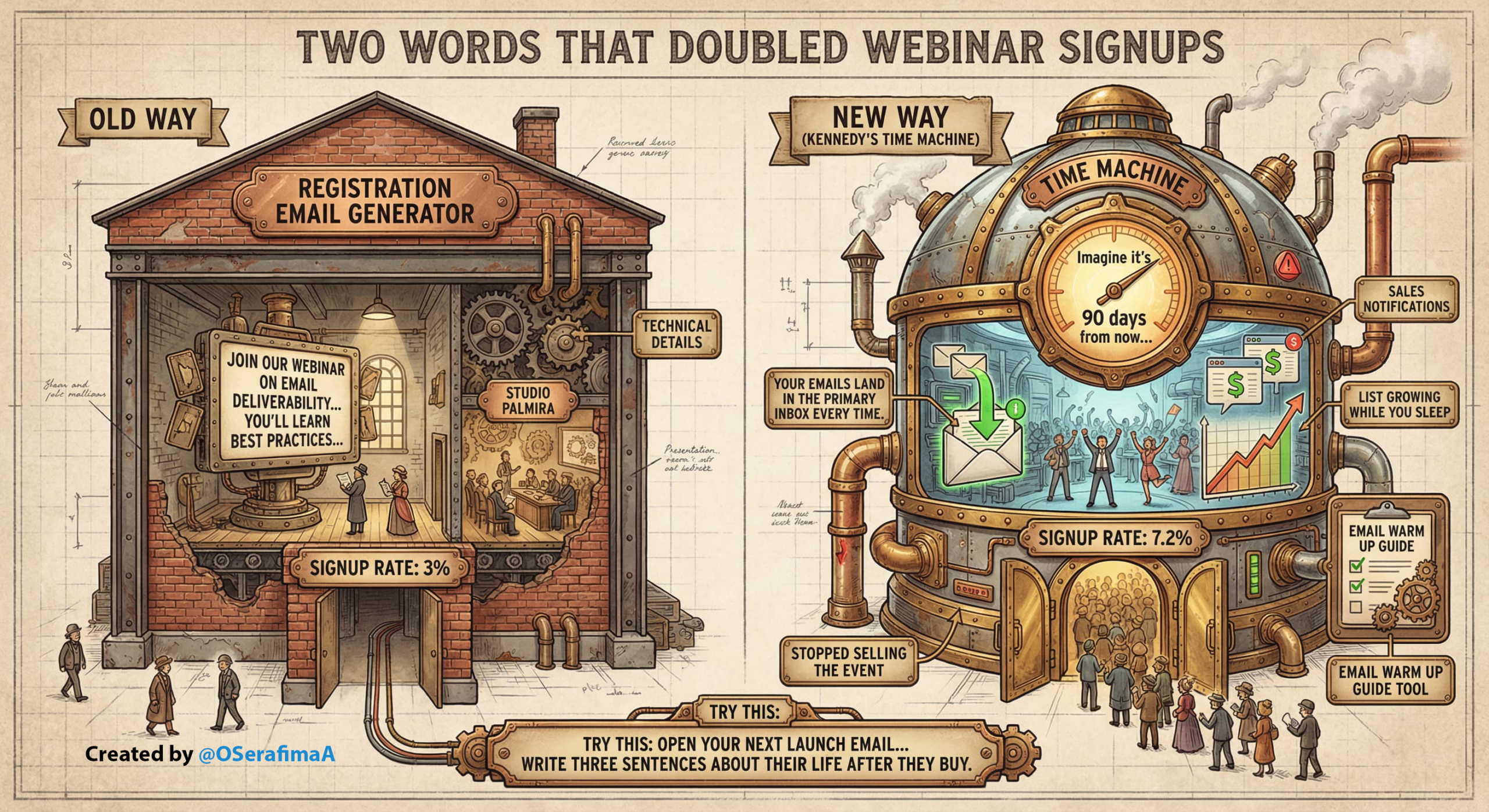
I used to write registration emails like this: “Join our webinar on email deliverability. You’ll learn best practices and get actionable tips.” Professional. Boring. Signup rate: 3%.
Then I tried Kennedy’s Time Machine. New opening: “Imagine it’s 90 days from now. Your emails land in the primary inbox every time.” (Not there yet? Here’s our Email Warm Up Guide.) You wake up to sales notifications. Your list is growing while you sleep.” Same webinar. Same content. Signup rate: 7.2%. The difference? I stopped selling the event and started selling the future. People don’t want a webinar. They want the life after the webinar. When you paint that picture specific, sensory, and emotional, the “register now” button becomes obvious.
Try this: Open your next launch email. Delete everything about features. Write three sentences about what their life looks like AFTER they buy. That’s your new opening.
8. How to Build an Offer Nobody Can Refuse
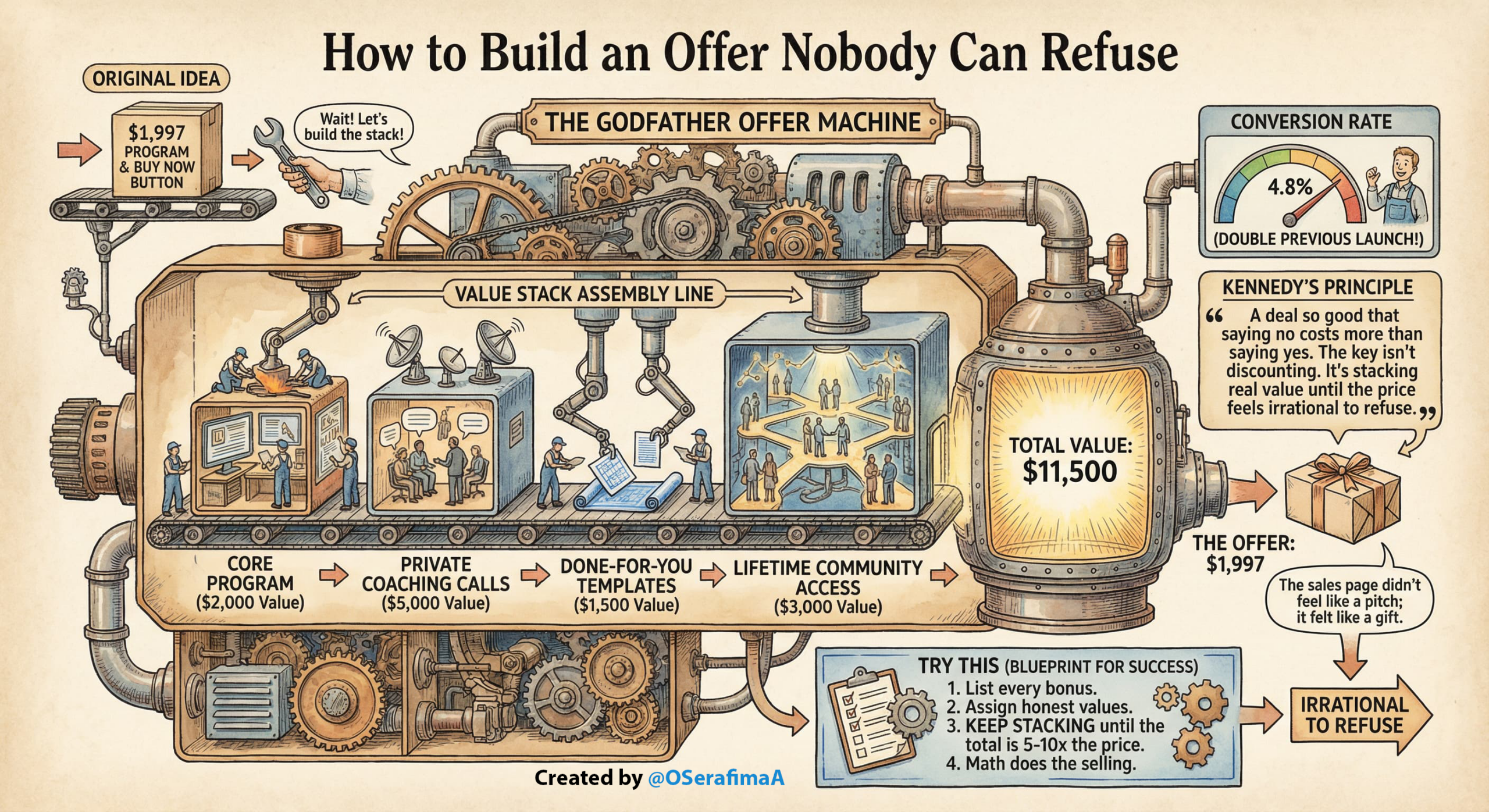
Last year, I helped a coach launch a $1,997 program. She wanted to list the price and add a “buy now” button. I asked her to wait. We spent two days building the stack: core program ($2,000 value), private coaching calls ($5,000 value), done-for-you templates ($1,500 value), and lifetime community access ($3,000 value). Total: $11,500. Price: $1,997.
The sales page didn’t feel like a pitch; it felt like a gift. The conversion rate hit 4.8%, double her previous launch. Kennedy calls this “The Godfather Offer,” a deal so good that saying no costs more than saying yes. The key isn’t discounting. It’s stacking real value until the price feels irrational to refuse.
Try this: before your next launch, list every bonus you could include. Assign honest values. Keep stacking until the total is 5-10x the price. That’s when the math does the selling for you.
9. The Customer Story That Outsold My Landing Page
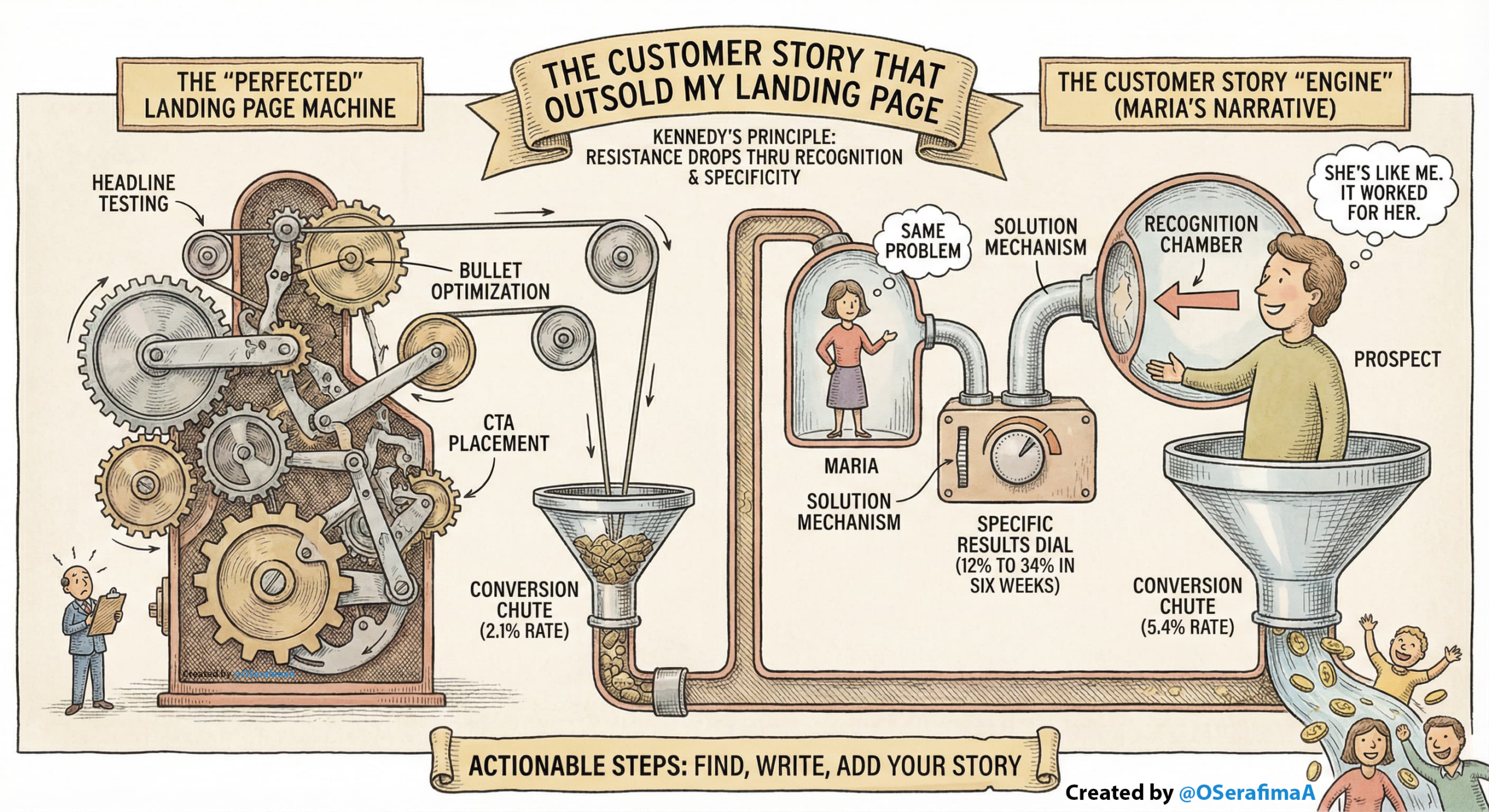
I once spent three weeks perfecting a sales page. Headline testing, bullet optimization, CTA placement, the works. Conversion rate: 2.1%. Then I added one email to the sequence: a simple story about a customer named Maria who had the same problem, tried the same solution, and got specific results. That single email converted at 5.4%.
Kennedy knew this decades ago: when prospects see someone like them succeed, resistance drops. It’s not about fancy copy. It’s about recognition. “She’s like me. It worked for her. Maybe it’ll work for me.” The key is specificity. Not “our clients see great results,” but “Maria went from 12% to 34% open rates in six weeks.”
Try this: find your best customer success story. Write it as a short narrative problem, solution, and outcome. Add it to your sequence. Watch what happens.
10. How One Free PDF Brought a $12,000 Client
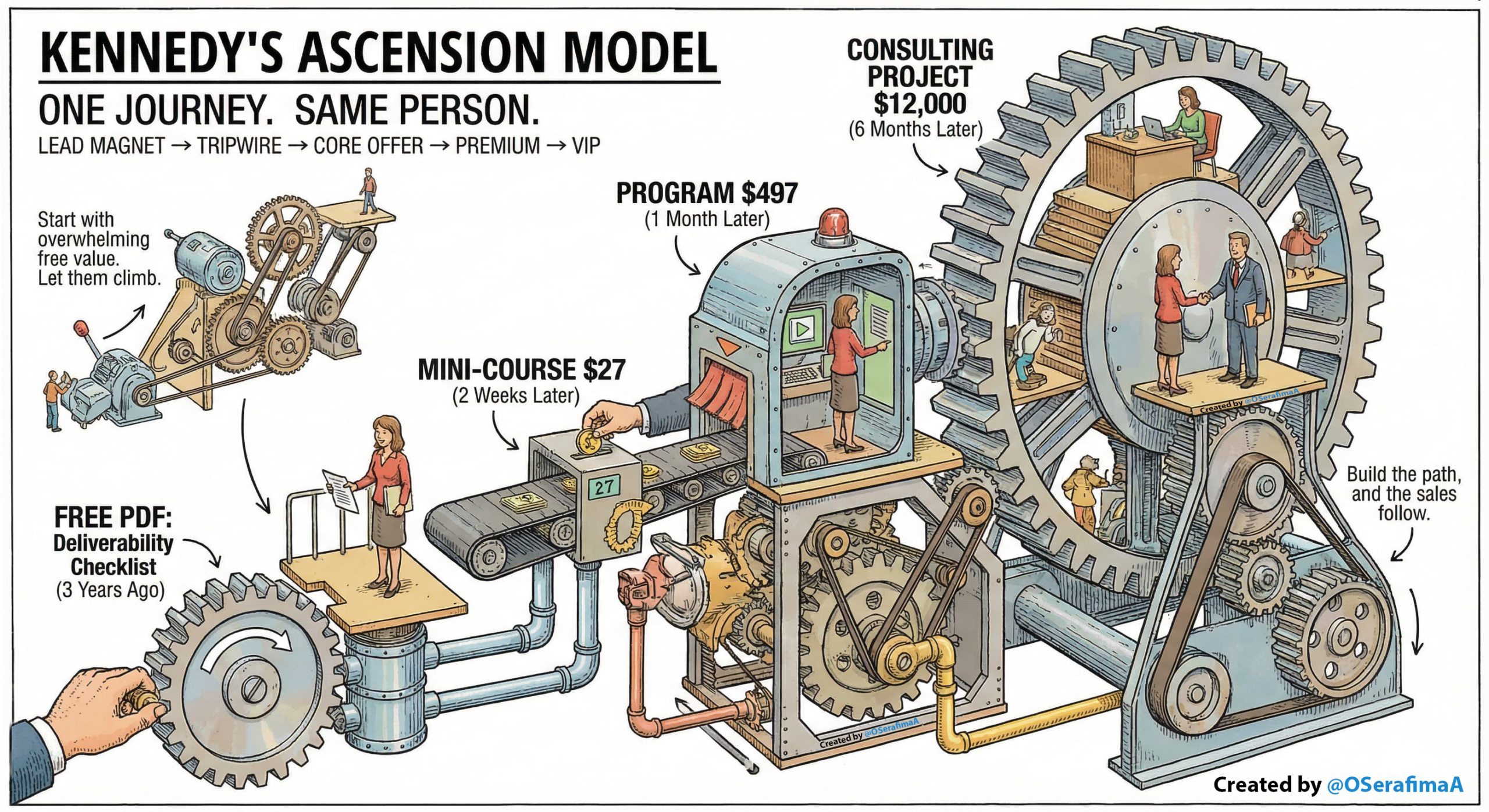
Three years ago, someone downloaded my free deliverability checklist. Two weeks later, she bought my $27 mini-course. A month after that, she joined my $497 program. Six months later, she hired me for a $12,000 consulting project. Same person. One journey.
That’s Kennedy’s Ascension Model in action. Not a single sale, a relationship where each step leads to the next. Lead magnet → tripwire → core offer → premium → VIP. Your email sequences aren’t just selling products. They’re guiding people up a ladder. The mistake most marketers make? Pushing the big offer too early. Start with overwhelming free value. Let them climb.
Try this: Map your current products as a ladder. Is there a clear next step at every level? If someone buys your cheapest offer, what email do they get next? Build the path, and the sales follow.
A System, Not a Set of Techniques
It is important to understand that all 10 of these principles are not separate “tricks” but a unified system of influence. Each strategy reinforces the others, creating a powerful cumulative effect. From the initial “Shock & Awe” to the building of the “Ascension Model,” everything works toward a single goal: the creation and demonstration of superior value.
There are three key takeaways for practical application. First, justify everything, because every word and every price must have a reason. Second, worth is above all; your main task is to create and convey disproportionately high benefit. Third, speak to “someone” rather than “everyone,” as precise audience targeting determines 80% of your results.
This framework has stood the test of time because it is built on a deep understanding of psychology rather than momentary gimmicks. The key to winning is not manipulation; it is creating genuine impact and mastering its presentation.
Start building that story today. Grab our 270+ free email templates and launch your first campaign in minutes. → Try Nova Express Free
Nova Express Resources
- Customer Pain Points: Why Your Marketing Isn’t Working
- How to Start Email Marketing: Guide for Beginners
- How to Start Your First Email Campaign
- Email Warm-Up Guide
- NotebookLM for Marketers
- AI Tools for Marketers
- Nano Banana Pro: The Complete Guide for Marketers 2026
- 2026 Holiday Marketing Calendar
- Gary Halbert’s 10 Email Copywriting Rules
- Storytelling elements for high-converting marketing campaigns
- NotebookLM Infographic: The Complete Guide to Turning Your Data Into Visual Stories
- How Humor in Advertising Boosts Engagement
- 6 Psychology Triggers That Make People Share Your Brand
About the author
Serafima Osovitny is a Marketing Manager at Nova Express, where she focuses on digital marketing, search visibility, content strategy, and marketing workflows. She writes practical guides that help marketing teams research their audiences, develop strategies, and put their plans into action.
Explore her work at serafima.digital and follow her on X: @OSerafimaA.








Leave a Comment