
Imagine opening your inbox and seeing an email that feels like it was written just for you. It mentions your name, highlights products you’ve been eyeing, and even offers a discount on something you love.
If you’re just getting started with email campaigns, learning how to start your first email campaign will give you the foundation you need before diving into advanced personalization tactics.
Personalized emails like this stand out because they feel thoughtful and relevant, making them far more likely to grab attention and drive action. In this guide, we’ll break down why personalization works and how you can use it to make your email marketing more effective.
Why Personalization Makes a Difference
Personalization helps to turn generic emails into meaningful interactions. It helps you connect with your audience, build trust, and deliver messages that feel relevant. Let’s explore the key ways it makes an impact.
Enhances Engagement
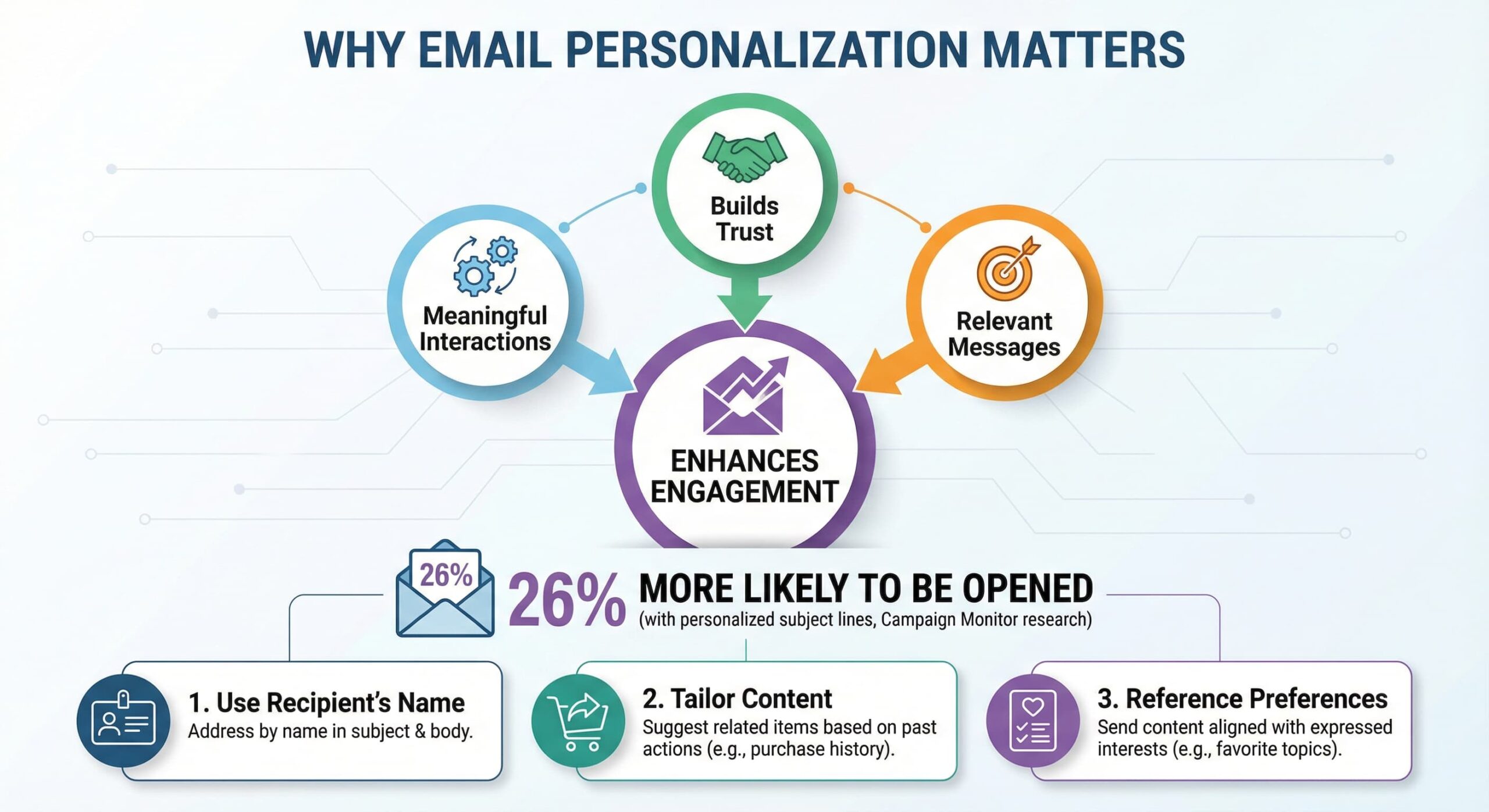
Personalized emails grab attention in a crowded inbox by speaking directly to the recipient. In fact, research from Campaign Monitor shows that emails with personalized subject lines are 26% more likely to be opened. Here’s how you can leverage personalization for better engagement:
- Use the recipient’s name: Start with the basics by addressing the recipient by name in both the subject line and the email body.
- Tailor content based on past interactions: If a subscriber has previously purchased a product or browsed a specific category, mention related items or content. For example, if a customer bought a camera from your store, your next email could highlight a special offer on lenses or photography workshops.
- Reference their preferences: If your subscriber has expressed interest in a particular topic or product type, send content that aligns with those interests. With this, you could send a book recommendation email to someone who has purchased several novels from the same genre.
Strengthens Connections
Personalization makes your emails feel intentional and relevant, showing subscribers that you understand their needs. This sense of recognition builds trust, encourages loyalty, and keeps your audience engaged. Here are a few ways to create lasting connections:
- Content customization: Provide content that answers common questions or addresses frequent concerns that are relevant to specific segments of your audience.
- Feedback requests: Show that you value their opinion by asking for feedback through personalized emails, which can also provide you with more data to further refine your personalization tactics.
- Celebrate milestones: Send personalized greetings on birthdays, anniversaries, or after significant purchases, making each subscriber feel recognized and valued.
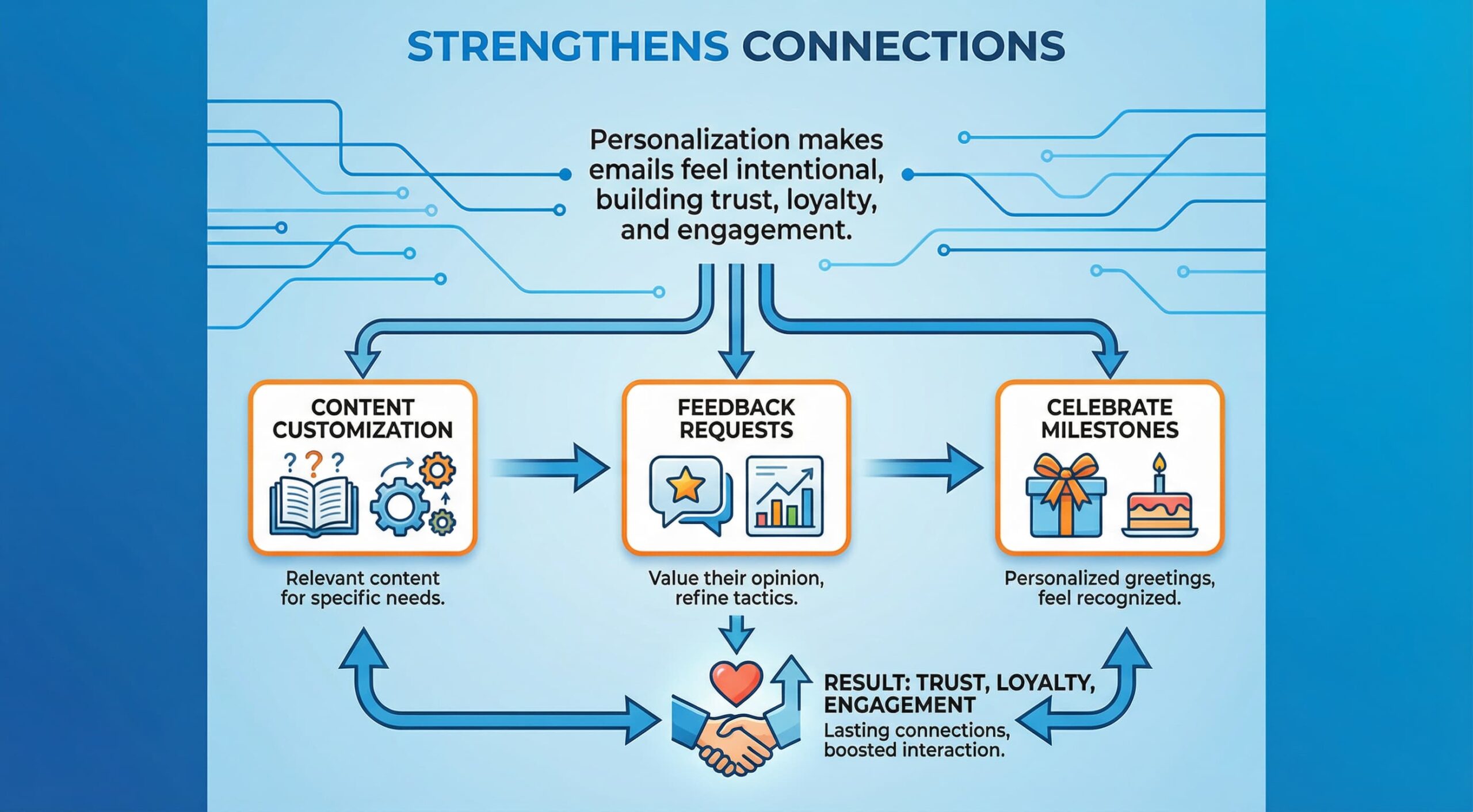
Customize content → ask for feedback → celebrate milestones → build trust & loyalty.
Drives Conversions
Custom-tailored messages resonate more effectively because they are highly relevant, thus increasing the likelihood of conversion. Here are a few ways to put personalization into practice:
- Product recommendations: Use past purchases or browsing habits to recommend items your audience is likely to love. For example, if a customer recently bought a thriller novel, you could highlight upcoming releases or bundle deals featuring similar books.
- Special offers tailored to interests: Reward loyal customers with targeted discounts that match their interests. If someone frequently buys organic products, offer them a limited-time discount on a new organic collection or related items.
- Urgency triggers: Use data like browsing history to create urgency (e.g., “Hurry, only 2 left in stock!” for items they’ve looked at).
Implementing Personalization: A Step-by-Step Guide
Creating personalized email campaigns doesn’t have to be complicated. Below, we’ll walk you through a few simple steps to help you get started.
Step 1: Segment Your Audience
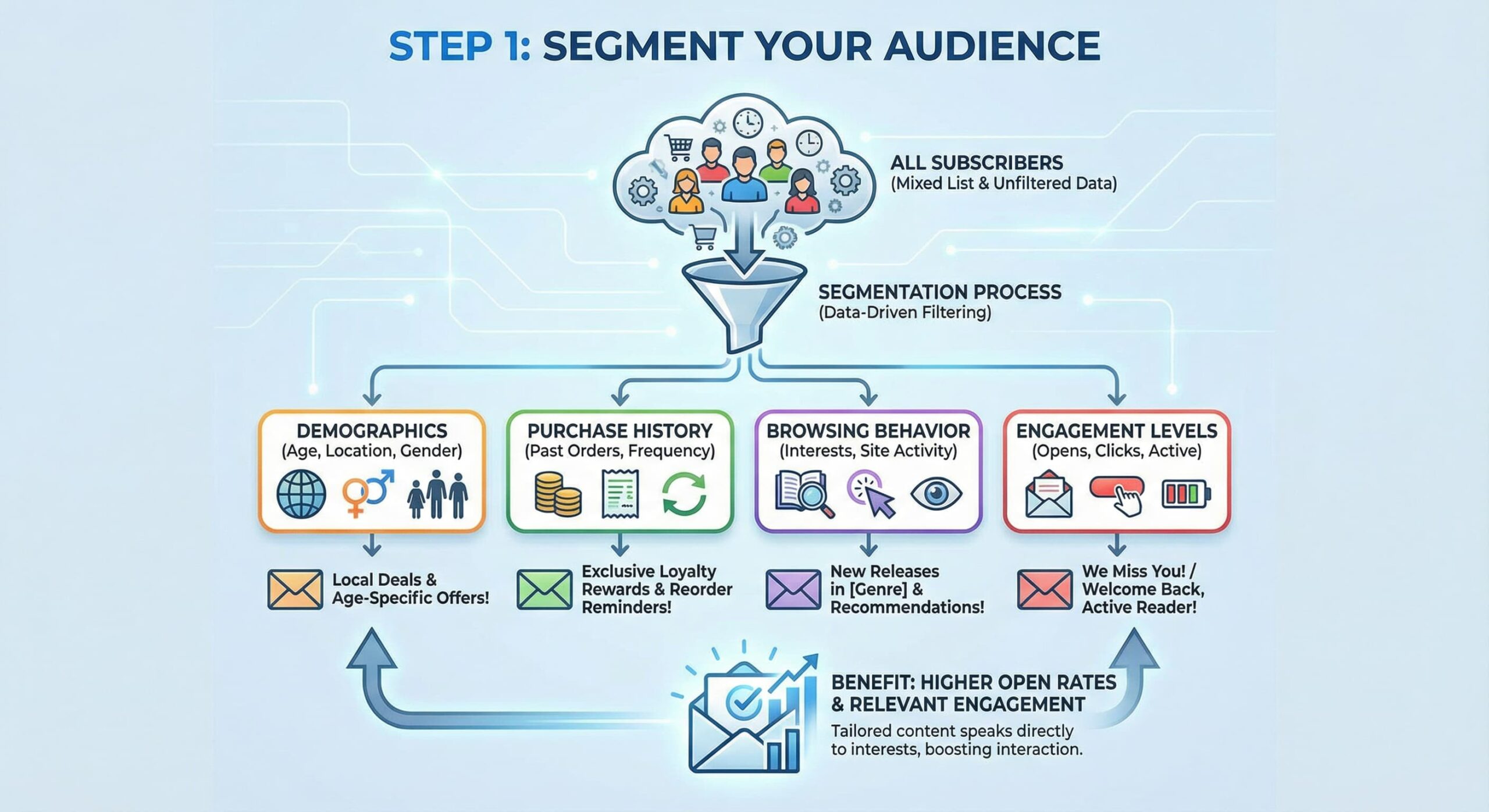
Effective personalization starts with knowing who your audience is. Break your email list into segments based on demographics, purchase history, browsing behavior, or engagement levels. This allows you to deliver messages that feel relevant to each group.
Email segmentation is a powerful strategy that can significantly improve your open rates and engagement. Learn more about why segmentation is key to higher open rates and how to implement it effectively.
For example, an online bookstore could group readers by genre preferences (such as mystery, romance, or science fiction) and send tailored emails featuring new releases, author spotlights, or exclusive deals within those categories. Segmenting ensures your content speaks directly to what interests your subscribers most.
Step 2: Collect and Use Relevant Data
Data is the backbone of effective personalization. Gather as much information as possible through sign-up forms, website interactions, and past email responses. It’s important to handle this data with care, respecting privacy regulations and user consent. Learn more about data privacy and security in email marketing to ensure compliance and build trust.
This information helps you build detailed profiles of your subscribers. For example, a travel agency might track which destinations or vacation types a subscriber has shown interest in and send them offers and content that align with those interests.
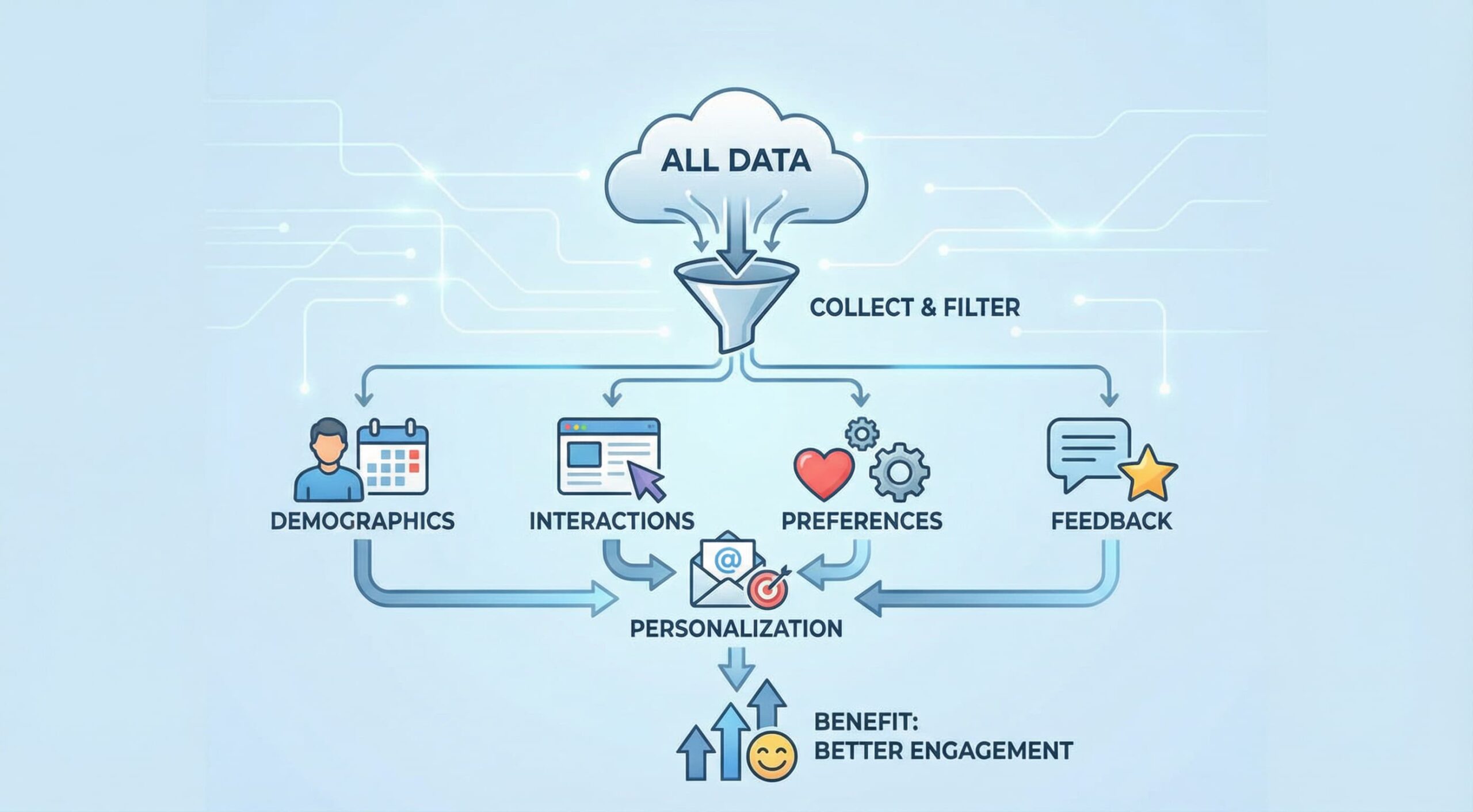
Gather demographics, interactions, preferences, feedback → send emails they actually care about.
Step 3: Personalize Your Content
Once you have segmented your audience and collected relevant data, start tailoring your content to match the specific interests and needs of each segment. Using ready-made email templates can speed up your content creation while maintaining personalization. Explore our collection of 270+ free email templates that you can customize for different segments.
If a customer recently purchased a laptop from your tech store, a follow-up email might include accessory recommendations like cases or external hard drives or tips on maximizing laptop performance.
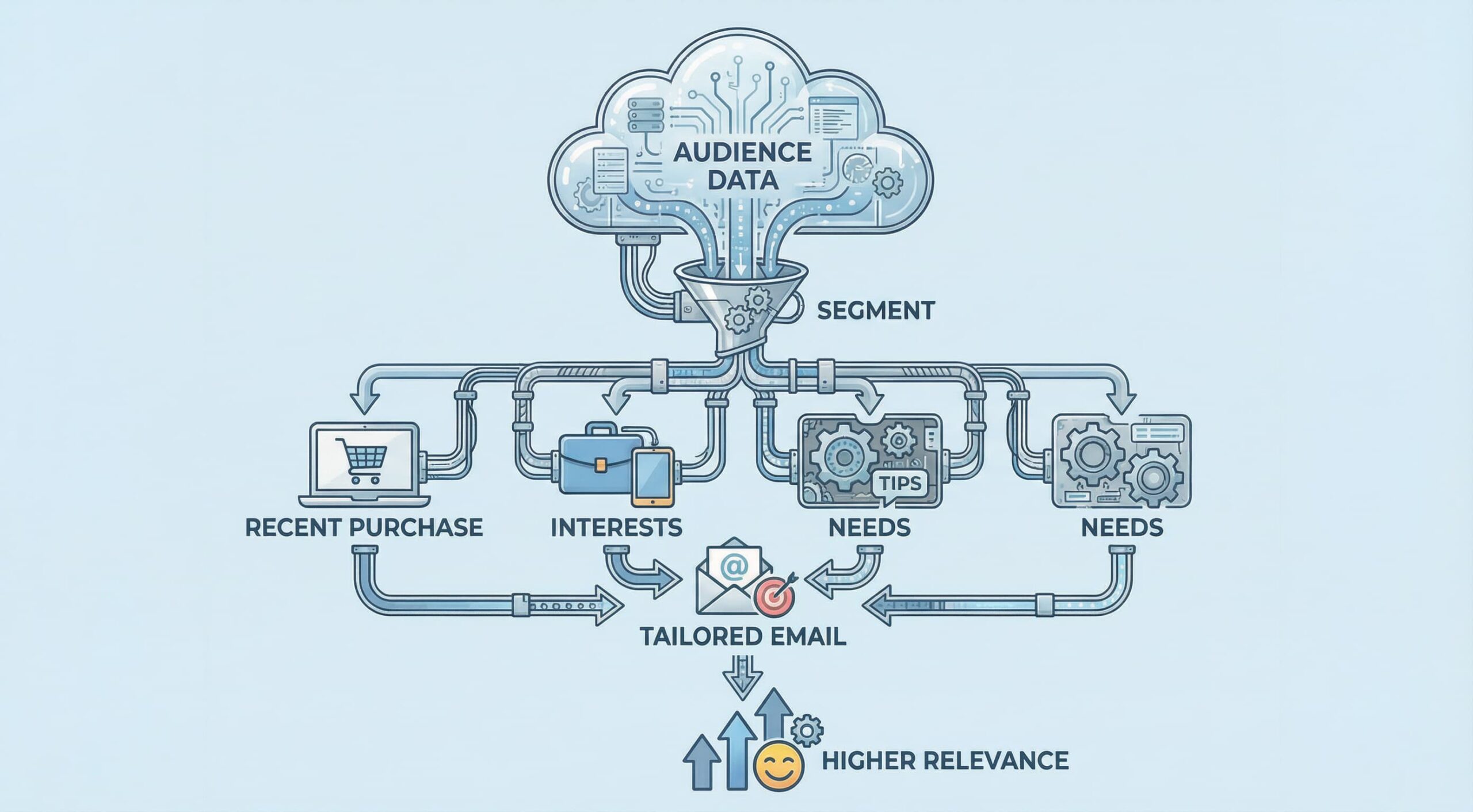
Use purchase history, interests, needs → send tailored emails → boost engagement.
Step 4: Optimize Subject Lines and Email Timing
Subject lines are your first opportunity to catch a reader’s attention. Understanding how to write subject lines that get opened is crucial for maximizing the impact of your personalization efforts.
Personalizing them can make a significant difference in open rates. For instance, using the recipient’s first name or mentioning a recent interaction can make the email feel more relevant and timely. Additionally, optimizing the timing of your emails to match when different segments are most likely to engage can dramatically improve your results. Learn more about email marketing efficiency and how to scale your personalized campaigns without breaking the bank.
Tools like Google Analytics can provide insights into the best times to send emails based on historical engagement data.
Step 5: Test and Refine
Personalization is an ongoing process. Evaluating different elements of your emails, such as personalized details or delivery times, can help fine-tune your strategy. A/B testing is especially effective, whether you’re comparing subject lines to boost open rates or experimenting with layouts to improve click-through performance.
To track the success of your personalization efforts, you need to monitor the right metrics. Discover the 10 key email marketing metrics to analyze for data-driven optimization.
Real-World Example: Effective Personalization in Action
Before we close this out, let’s explore a real-world example of how personalization can boost customer engagement and sales. For more inspiration, check out these email marketing examples that convert using personalization strategies.
Imagine a fitness apparel company that segments its customers based on recent purchases to deliver more targeted email campaigns. After a customer buys a pair of running shoes online, the company uses that purchase data to launch a personalized email campaign tailored to their interests.
This is a perfect welcome sequence in action. Study Best Welcome Email Examples: Personalized Customer Journeys to see how top brands structure these multi-email sequences for maximum engagement.
Here’s How the Email Campaign Strategy Might Look:
- Thank You Message (Sent Immediately After Purchase): The first email the customer receives thanks them for their purchase, making the interaction start on a positive and personal note.
- Useful Tips (Sent 2–3 Days After Delivery): A follow-up email offers helpful advice on selecting the right running apparel and accessories to complement their new shoes. This added value enhances the customer’s experience and builds trust.
- Personalized Recommendations (Sent 5–7 Days Later): The email includes personalized product suggestions such as athletic socks, hydration packs, or even specialized running apparel. These recommendations are carefully chosen based on the style and type of running shoes purchased, ensuring relevance.
- Special Discount Offer (Sent 10–14 Days After Delivery): To encourage further purchases, the email provides a special discount on the next purchase. This discount is exclusive to the email recipient, adding a sense of value and exclusivity to the offer.
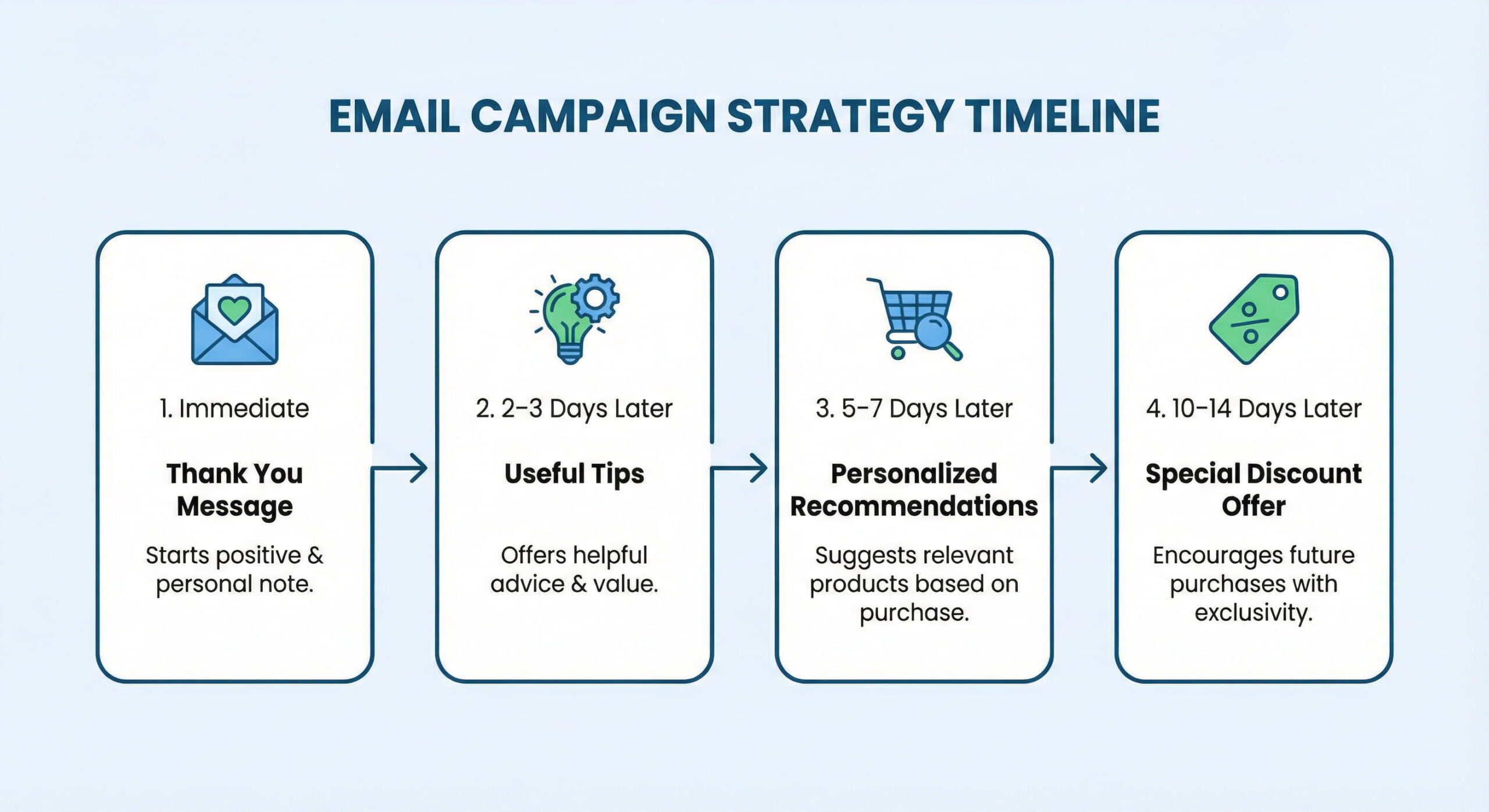
As you can see, this personalized approach goes beyond just thanking the customer. It transforms a single purchase into an ongoing engagement loop. Suggesting relevant products and offering a discount increases the chances of additional sales while strengthening customer loyalty. This approach makes customers feel valued and understood, helping to build a deeper connection with the brand and encouraging them to return for future fitness needs.
Final Thoughts
At the end of the day, personalization is about knowing your audience and creating emails that feel relevant and valuable. Using the strategies outlined in this guide, you can build campaigns that connect with subscribers and deliver real results.
However, avoid common email marketing mistakes that can undermine even the best personalization efforts, such as over-personalizing or using outdated data.
So, start small, test what works, and don’t stop refining your approach. With the right focus, personalization can turn your emails into a powerful tool for growth and loyalty.
Ready to transform your emails with powerful personalization? Sign up for Nova Express for free and start crafting personalized campaigns that boost engagement and drive loyalty. Create Your Free Account →
❓ Frequently Asked Questions (FAQ)
What is email personalization and why does it matter?
Email personalization means tailoring messages to individual subscribers based on their data like name, behavior, preferences, or purchase history. It matters because personalized emails have higher open rates (up to 26% more), better click-through rates, and stronger conversions by making recipients feel seen and understood.
How can I start personalizing my email campaigns?
Begin with simple steps:
- Use the recipient’s name in the subject line and greeting.
- Segment your audience by behavior or interests.
- Recommend products based on past purchases.
- Send emails at the right time using engagement data.
Tools like NovaExpress.ai make it easy to automate personalization at scale.
Does personalization really increase conversions?
Yes. Personalized emails feel relevant and timely, which builds trust and encourages action. Studies show that personalized product recommendations and targeted offers can increase conversion rates by 20–50% compared to generic emails.
What data do I need for effective personalization?
Key data includes:
- Name and location
- Purchase history
- Browsing behavior
- Email engagement (opens, clicks)
- Preferences (collected via signup forms or surveys)
Always collect and use data ethically, respecting privacy laws like GDPR and CCPA. Building your email list the right way from the start ensures you have quality subscribers who want to receive your personalized messages.
Nova Express Resources
- What is Nova Express?
- How to Start Email Marketing
- How to Start Your First Email Campaign
- Amazon SES Integration Guide
- Mailgun Integration Guide
- Email Warm-Up Guide
- AI Tools for Marketers
- NotebookLM for Marketers
- Nano Banana Pro: The Complete Guide for Marketers 2026
- 2026 Holiday Marketing Calendar
Start building that story today
Updated in 2026.
About the author
Serafima Osovitny is a Marketing Manager at Nova Express, where she focuses on digital marketing, search visibility, content strategy, and marketing workflows. She writes practical guides that help marketing teams research their audiences, develop strategies, and put their plans into action.
Explore her work at serafima.digital and follow her on X: @OSerafimaA.







This article helped me understand how personalization makes email marketing more engaging and effective, and it gave me clear steps I can actually start using. Thank you.
I liked that it focuses on practical actions and long-term customer relationships, not just tactics.